
For carpentry in Dubai, MDF is a useful choice for smooth painted doors and decorative panels. Plywood is worth considering for cabinet boxes and shelves, with its grade and supports checked for the job. Neither material name guarantees quality. Choose by the part being built, its exposure to moisture and how it will be finished.
Whether you are planning a wardrobe, kitchen cabinet or TV unit, ask what sits beneath the visible finish. You can compare verified carpentry professionals on Taamir, then use the questions below to compare their proposed materials rather than just their final prices.
Need a carpentry professional?
Click Here
What is the difference between MDF and plywood?
MDF is made from fine wood fibres bonded into a board. Plywood is made from thin sheets of wood bonded in layers, usually with the grain direction alternating between layers. Look at an unfinished edge and the difference becomes clear: MDF has a fine, uniform core; plywood has visible layers.
That difference matters when a carpenter shapes a door, finishes an exposed edge or plans a shelf. But it does not tell you everything.
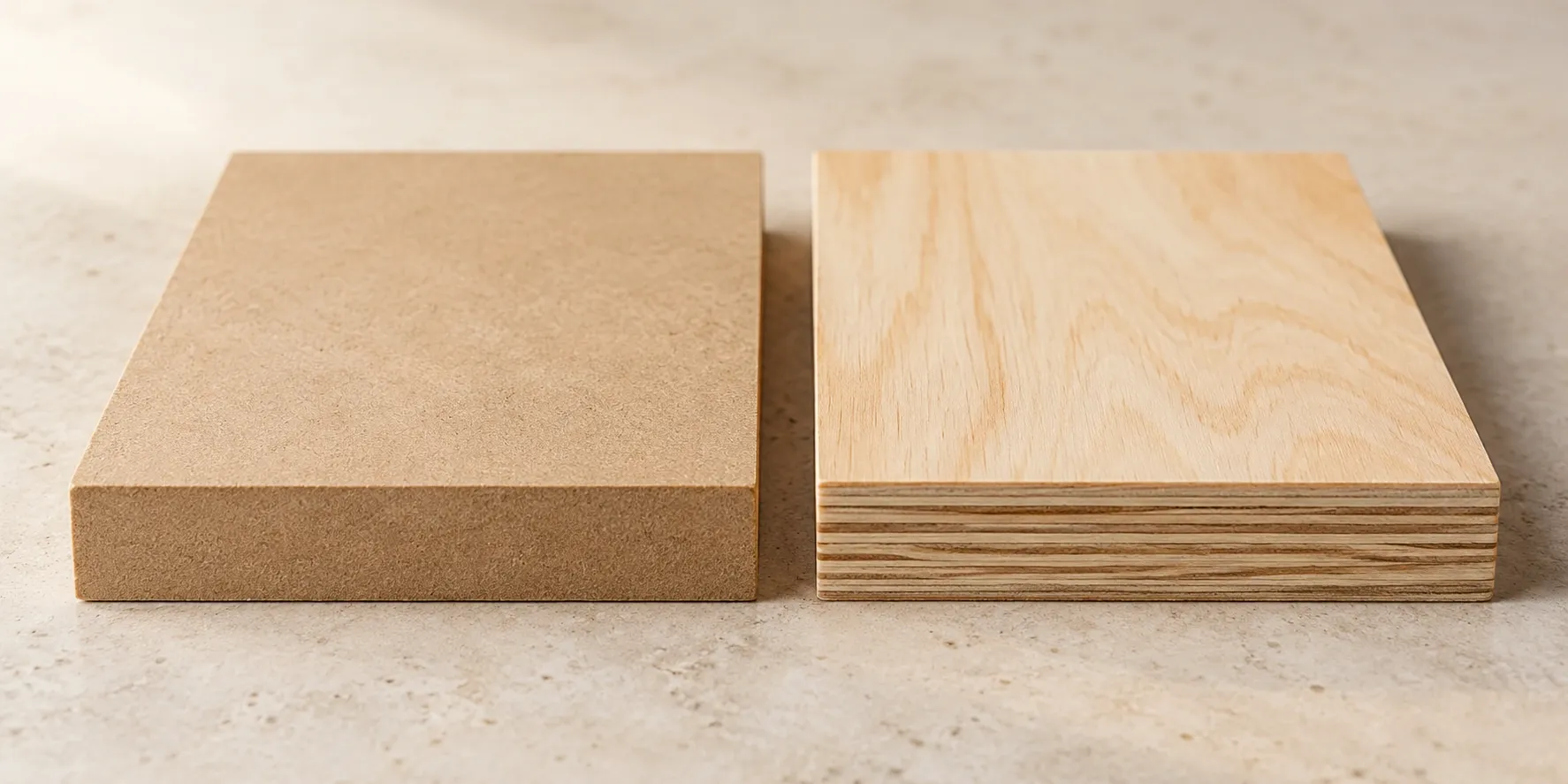
The product grade, thickness, joints and finish still need to suit the job.
MDF: useful for painted and shaped details
MDF has a smooth surface without a natural grain pattern. It is a practical material to discuss for painted wardrobe doors, shaped cabinet fronts and decorative TV-wall panels.
Ask to see a finished sample, including its edges. A good-looking front does not show how carefully the sides, corners and handle openings have been prepared. Ask which MDF product will be used, rather than accepting a description such as "high-quality board".
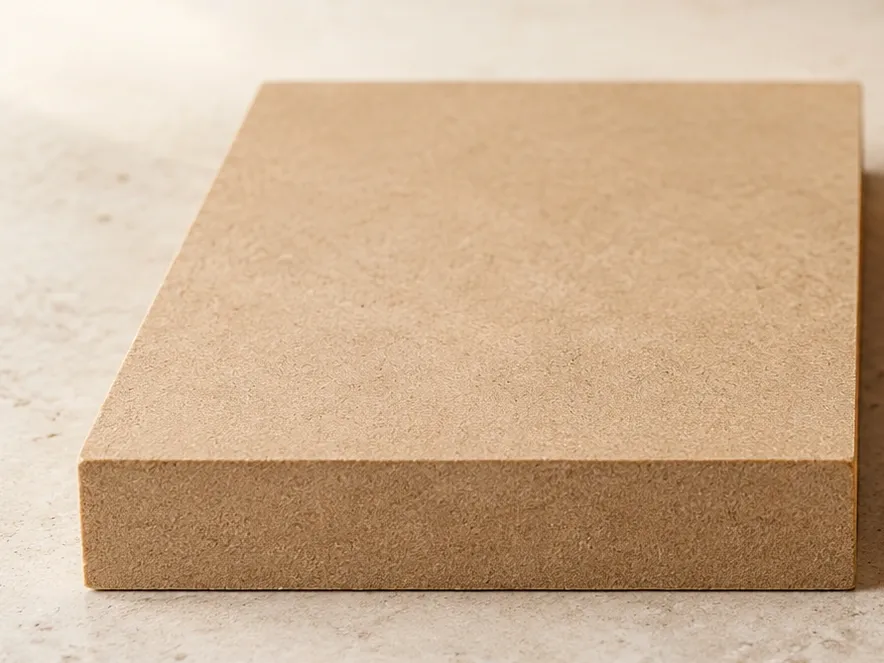
Inspect the cut edge as well as the face when comparing material samples.
Plywood: useful where the construction matters
Plywood's layered construction makes it a useful option for cabinet boxes, shelving and furniture components. It comes in different grades and surface qualities, so "plywood" is not a complete specification either.
Ask about the intended use of the particular panel. A board sold for construction is not automatically the right choice for a visible wardrobe interior. Ask how exposed edges will be finished and whether the face is suitable for your chosen coating or covering.
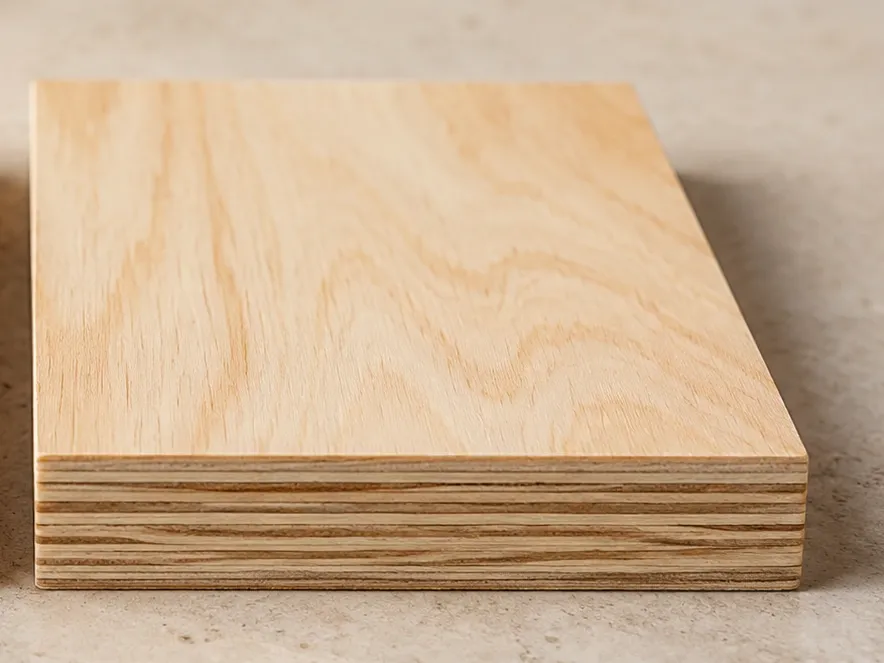
The layers identify plywood, but the product information tells you its intended use.
Is the wood-look finish the same as the board underneath?
No. Separate the core board from the surface finish when comparing quotes.
A wood-look cabinet might have a thin real-wood veneer over MDF or plywood. A laminate is another surface option. Neither the colour nor a photograph tells you which board is underneath.
Ask the carpenter to name both parts: "What is the core, and what is the finish?" For a wider look at visible timber choices, read our guide to types of wood for kitchen cabinets.
This also helps when comparing samples. Two oak-look doors may appear similar while using different cores, coverings and edge details. Keep an approved sample so you can compare it with the delivered work.
Which material should you choose for each carpentry job?
Specify each part separately. You do not have to use one board throughout a wardrobe, cabinet or TV unit.
Wardrobes and fitted storage
For painted doors, discuss MDF with the carpenter. For the box, shelves and drawers, ask for a separate specification that accounts for what you will store.
Describe the contents before agreeing on the layout. Folded clothes, suitcases and a row of heavy books call for different storage arrangements. Ask how wide shelves will be supported and how the hinges will be selected for the door size and weight.
In a bedroom, check how far doors and drawers can open around the bed. A material upgrade will not solve a layout that blocks your walking space.
Kitchen cabinets
Treat the cabinet doors, cabinet boxes and sink unit as separate decisions. A painted front and the cupboard beneath a sink do not face the same conditions.
Ask which product is proposed around plumbing, how cut edges will be protected and how connections will remain accessible. Do not accept "waterproof kitchen" as a substitute for the board name and installation details.
For a full kitchen renovation, settle the cabinetry specification alongside the appliance layout. Confirm the appliance clearances and service access before manufacture, not after installation.
TV units, media walls and shelves
MDF can be considered for painted decorative panels. For storage below the television, ask separately about the cabinet construction, door hardware and access to cables.
Keep a clear distinction between a decorative panel and whatever supports the television. Ask the installer to confirm the wall type, mounting arrangement and access requirements rather than assuming the panel itself is suitable.
For shelves, explain the intended contents and ask for the proposed load limit. Our guide to floating shelf construction is a useful starting point for discussing the support system, not just the visible board.
Does moisture-resistant mean waterproof?
No. Moisture-resistant MDF is not waterproof, and plywood should not be treated as immune to water damage. The exact product and its permitted use matter.
For either material, ask how the design deals with splashes, damp cleaning and possible plumbing leaks. Request details for exposed edges, joints and cut-outs. A protective finish does not remove the need to address a leak.
Do not choose a moisture-resistant board by its colour alone. Ask for the manufacturer's product identification and intended-use information.
After installation, follow the care instructions for the actual finish supplied. Our guide to caring for wood furniture and joinery in Dubai covers cleaning and moisture management. Report any leak before arranging cosmetic repairs to the cabinet around it.
What should you ask about indoor material quality?
Ask for documentation for the exact board, not just a claim that it is "eco-friendly" or "premium".
Dubai Municipality's Type 1 product certification information includes a scheme covering formaldehyde in composite wood. This gives you a relevant question to ask: what test report or certification supports the proposed product?
Request the manufacturer, product name and applicable test information. A generic certificate for another board does not identify the material in your quote. Ask the company to explain any grade or label it uses, and keep the agreed product details with your order.
How do you compare MDF and plywood quotes fairly?
Compare the complete finished job, not the board name on the first line. Changing the core while also changing the doors, hardware and finish makes the price difference difficult to judge.
When comparing carpentry companies on Taamir, send each company the same measurements, reference images and storage requirements. Ask for a breakdown covering:
Materials: the core, product grade and thickness for the box, doors, shelves and back panels; the surface finish and edge treatment.
Construction: the proposed joints, shelf supports, hinges, drawer runners and fixing arrangement.
Delivery: site measurement, drawings, installation, removal of old units where needed, protection of the room and the written warranty terms.
Ask for two options with the same dimensions and finish when you want to compare materials. Any change between those options should be identified, not hidden inside a new total.
If the carpentry sits within a larger project, our guide to choosing a renovation company in Dubai can help you assess the wider scope and written commitments.
Before approving production, check the drawing against your room and approve a physical finish sample. Ask who pays for a remake if the supplied work does not match those agreed details.
Frequently Asked Questions
Is MDF or plywood better for wardrobes?
Neither is automatically better for the whole wardrobe. MDF is worth considering for painted doors, while the boxes and shelves should be specified around their size, supports and intended contents. Ask for each part to be listed separately.
Can MDF be used for kitchen cabinets?
Yes, appropriately specified MDF can be used in cabinetry, including painted fronts. Ask which grade is proposed and how the design avoids direct wetting; moisture-resistant does not mean waterproof.
Is plywood always stronger than MDF?
Do not treat that as a rule for every finished unit. Performance depends on the particular product, thickness, load, joints and supports. Ask the carpenter to confirm that the proposed construction suits the intended use.
Which material is cheaper for custom carpentry?
Compare current, like-for-like quotations rather than assuming a fixed saving. The finished price includes more than the board: machining, coverings, paint, hardware, installation and the agreed scope all need to be compared.
Choose the specification, not just the material name
The useful question is not simply "MDF or plywood?" It is "Which product is right for this part of the job, and how will it be built and protected?"
Find and compare verified carpentry professionals on Taamir, review their work.