
Types of Wood for Kitchen Cabinets: A Dubai Guide
Kitchen cabinets are made from three different things, and knowing which is which explains most of the price and most of the performance: solid wood, veneer over an engineered core, and engineered board with a printed or laminated surface. Within those, the woods you will actually be offered in Dubai are oak, walnut, ash, maple, birch, teak and bamboo. This guide shows what each one looks like, how it behaves, and where it belongs in a kitchen.
Wood is the finish people fall in love with, and the one they know least about. Two kitchens can both be described as "oak" and be completely different products at completely different prices. So it is worth being able to ask the right question. When you are ready to talk to someone, you can compare verified carpentry professionals on Taamir and put these questions to them directly.
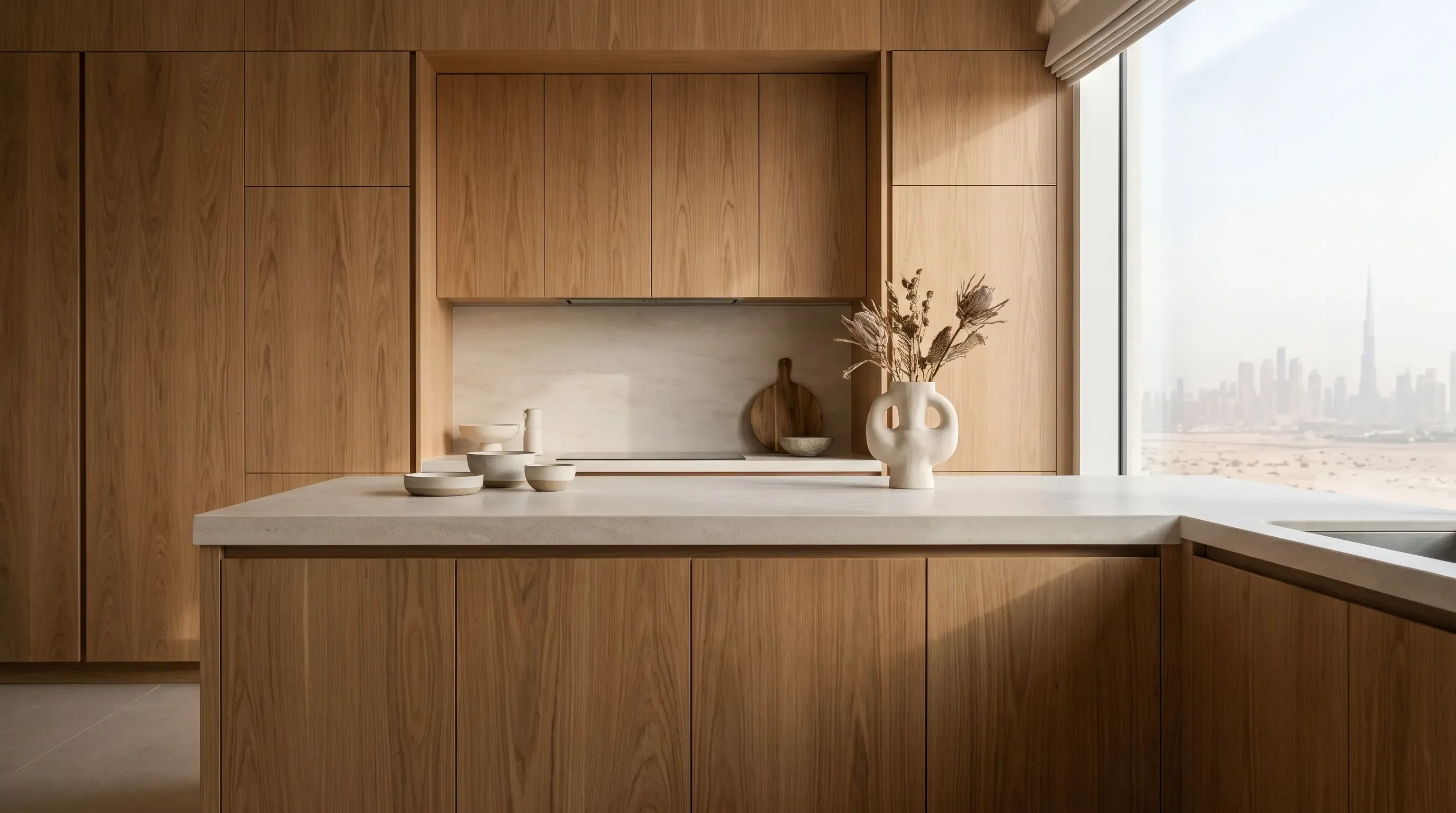
The same kitchen can be built three very different ways. The difference is in the material behind the door.
First, the three categories
Everything below fits into one of these. Get this right and the rest is detail.
Solid wood is exactly that — planks of real timber. It is beautiful, it can be sanded and repaired years later, and it is the most expensive. It also moves: wood expands and contracts as the air around it changes, which matters more here than in a mild climate.
Veneer over an engineered core is a thin layer of real wood bonded to a stable board underneath. You get genuine grain on the surface with far less movement. For most Dubai kitchens this is the sweet spot.
Engineered board with a laminate or printed surface has no real wood on show at all. Modern versions copy timber convincingly, wipe clean easily and cope well with kitchen conditions. It is the practical, hard-wearing choice.
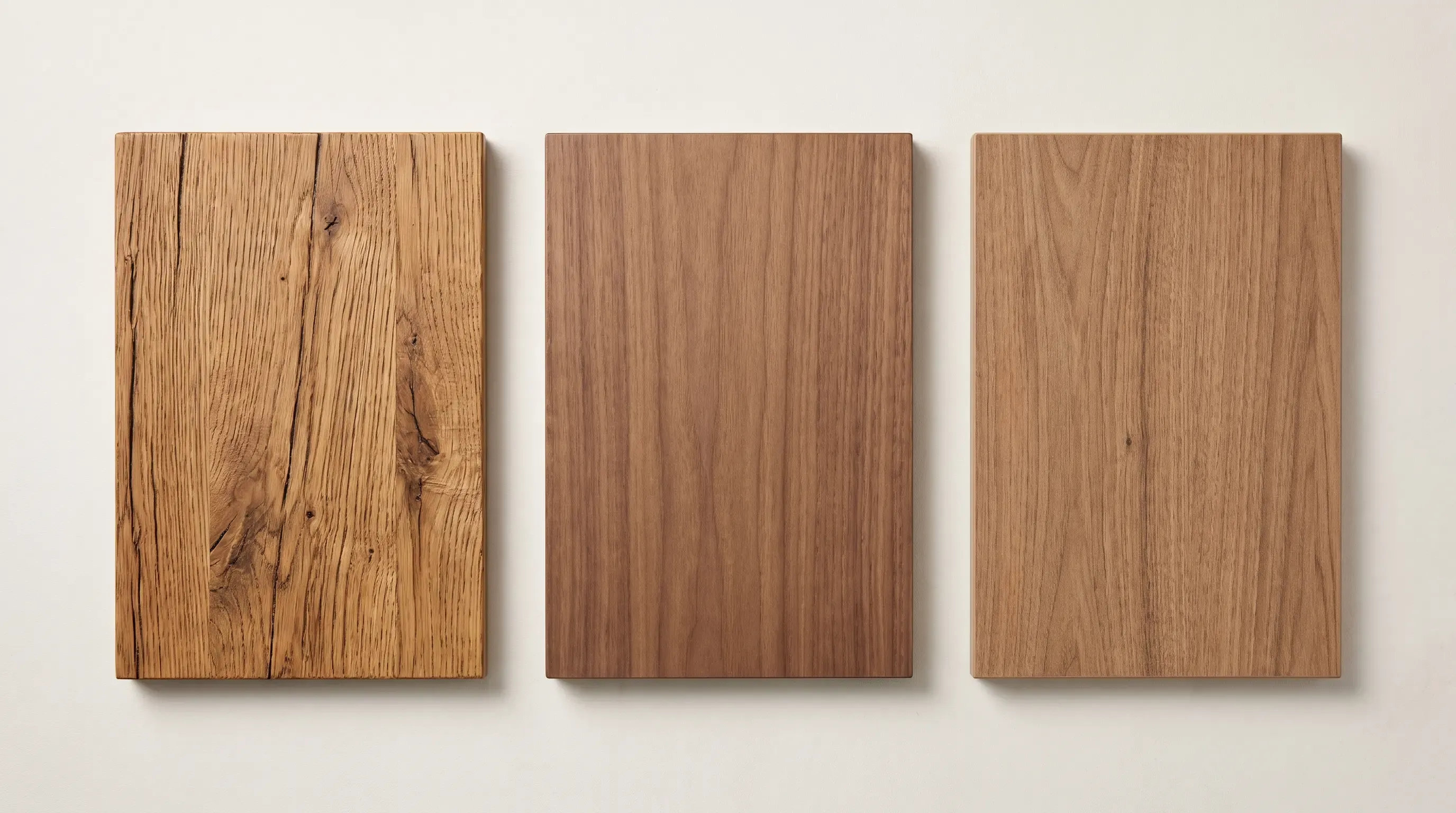
Left to right: solid timber, real-wood veneer, and laminate. All three can look like wood. They do not behave alike.
How Dubai conditions shape the choice
This is the part that changes the answer here compared with anywhere else. Wood takes on moisture from the air and gives it back, and as it does, it swells and shrinks slightly. Indoors your air conditioning keeps things dry and stable. Step outside and the air is very different — the National Center of Meteorology's climate reporting notes that maximum humidity in the UAE through August generally runs between 63 and 80 per cent.
That gap is not a problem in a normally cooled home. What wood dislikes is the swing — a home left closed up and unconditioned for weeks, then cooled hard. Two practical conclusions:
Large flat panels in solid wood are the riskiest choice. A wide solid door has the most room to move and cup. Solid wood works better in frames, edges and details.
A stable core is your friend. Veneer and laminate over moisture-resistant board give you the look with far less movement, which is why most fitted kitchens here are built that way.
The woods you will be offered
Oak
The most popular timber in kitchens, and for good reason. It is hard, durable, and has an open grain with a visible texture you can feel. European and white oak run from pale honey to soft greyish tones, and it takes almost any finish — natural oil, a light stain, or a smoked treatment for something darker.
Best for: almost any kitchen. It is the safe, timeless answer, and it hides small marks well.
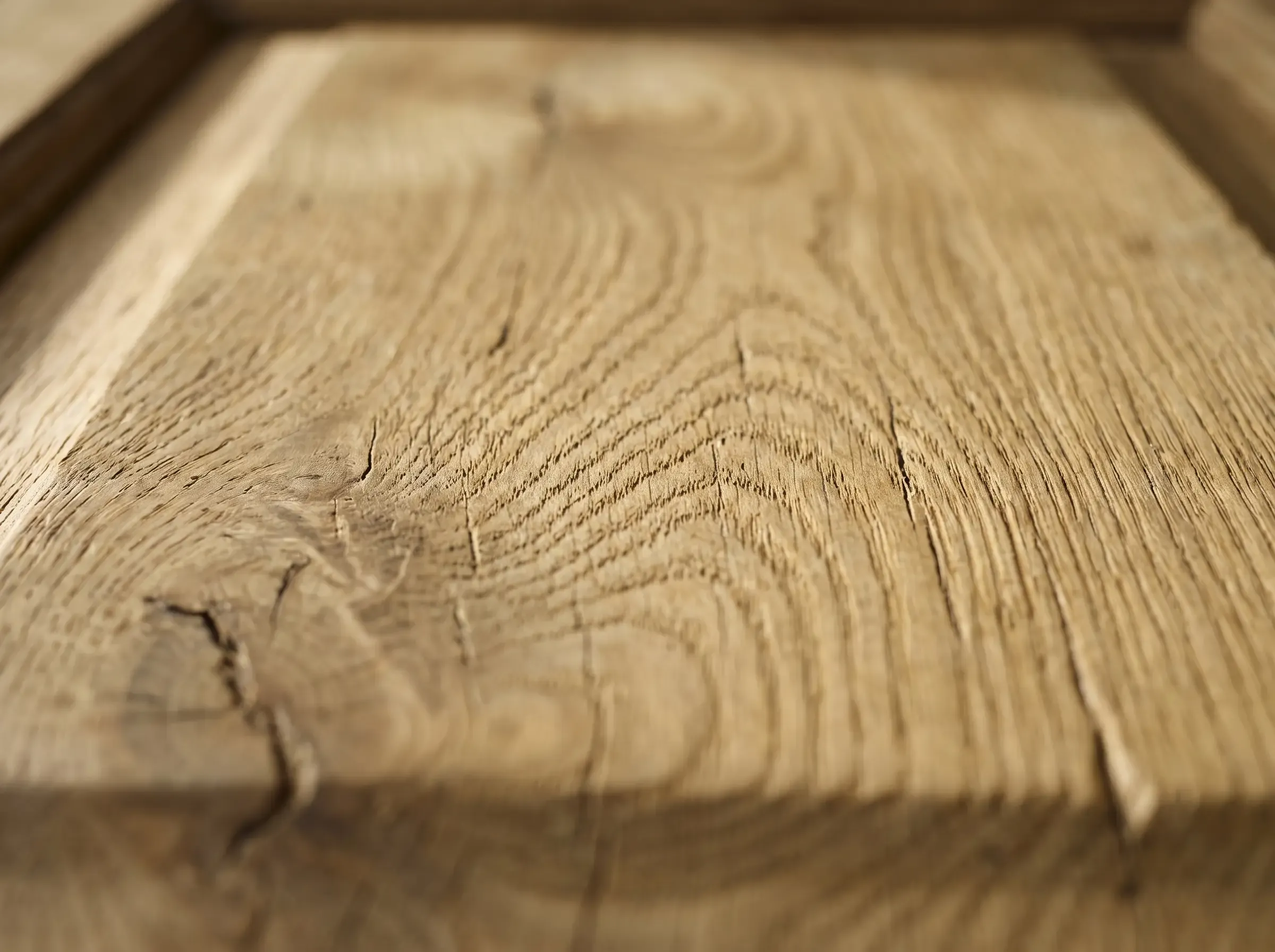
Oak: open grain, warm tone, and forgiving with daily marks.
Walnut
The premium choice. Deep chocolate brown with dark streaks and a rich, almost velvety look. It is naturally stable for a hardwood, and it makes a kitchen feel immediately expensive.
Best for: islands, tall units and feature runs. Many kitchens use walnut on part of the design rather than everywhere, both for balance and because a full walnut kitchen can feel heavy in a smaller room.
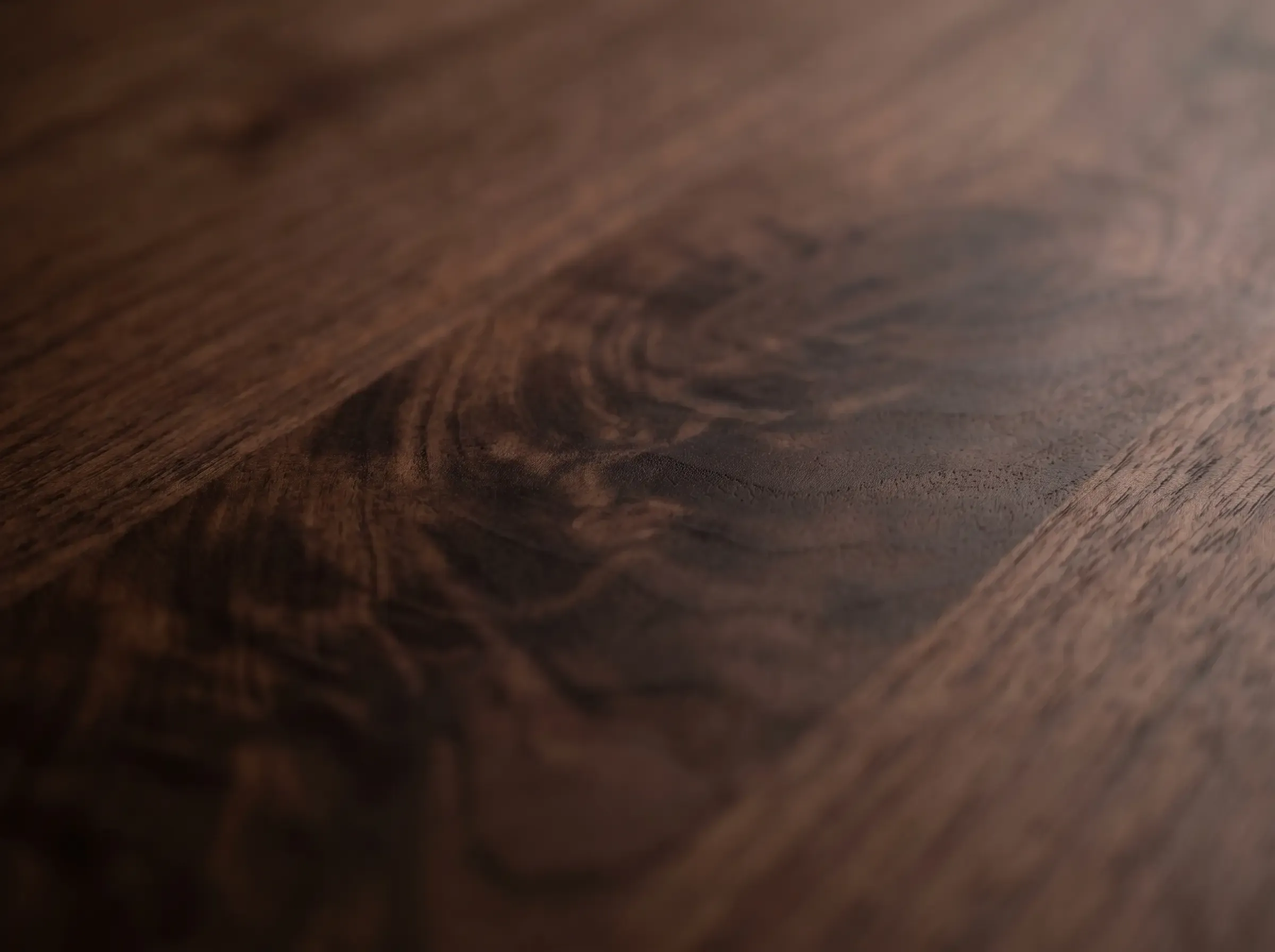
Walnut: dark, rich and dramatic. Often used on part of a kitchen rather than all of it.
Ash
Pale, clean and with a strong, straight, pronounced grain. It looks similar to oak at a glance but is lighter and more graphic, and it takes stains especially well — which is why it turns up in kitchens that want a very pale or a very dark modern look.
Best for: contemporary kitchens, and anywhere you want the grain itself to be the pattern.
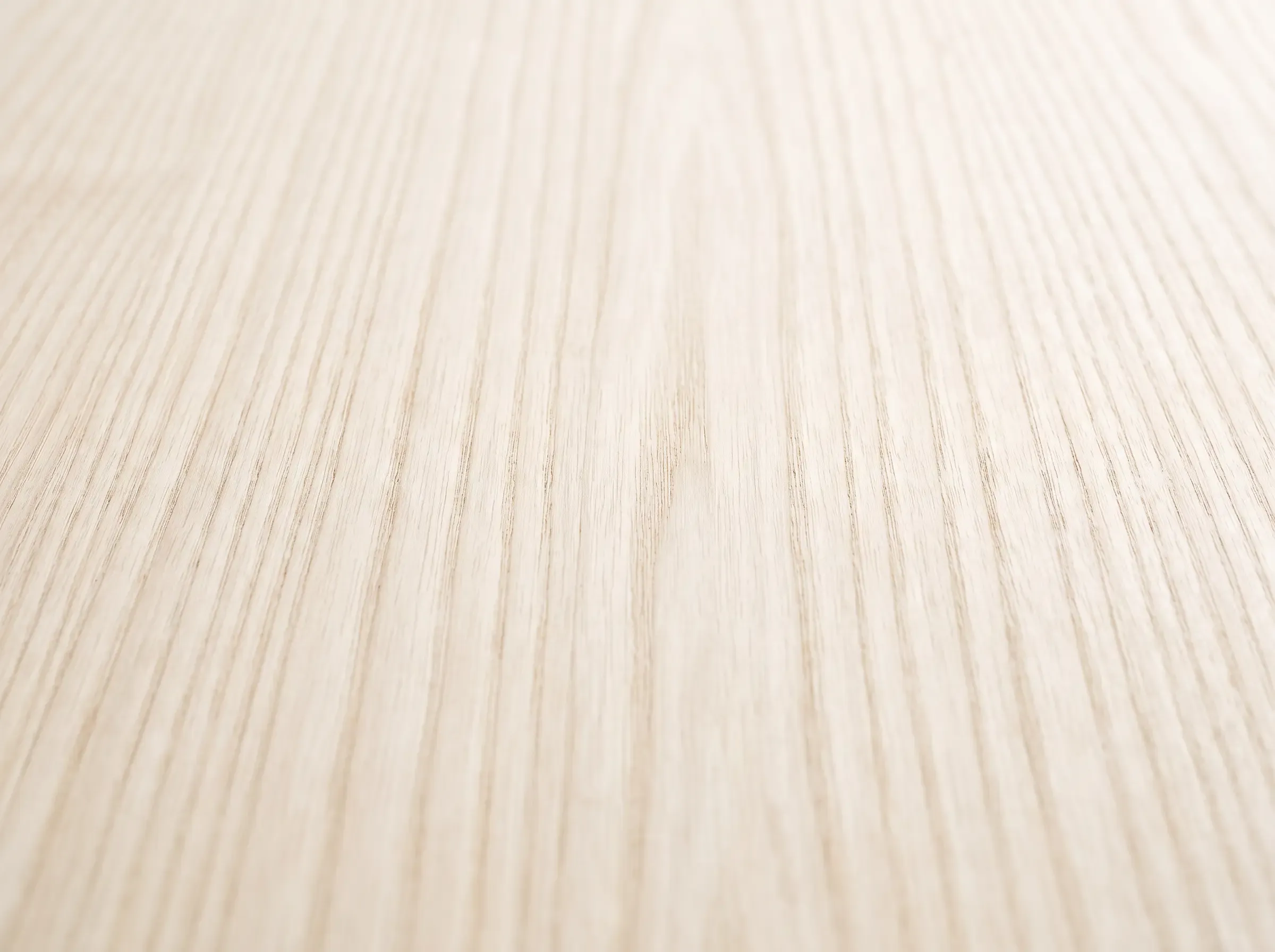
Ash: light and graphic, with the strongest straight grain of the pale woods.
Maple and birch
Both are pale, fine and subtle, with a much smoother, quieter grain than oak or ash. Because the surface is so even, they are the usual choice underneath painted cabinet doors — you want a smooth surface, not a textured one, under a flat colour.
Best for: painted kitchens, and minimal designs where you want calm rather than texture. If you like the idea of colour rather than grain, this is where to look, alongside a good painting professional for the finish.
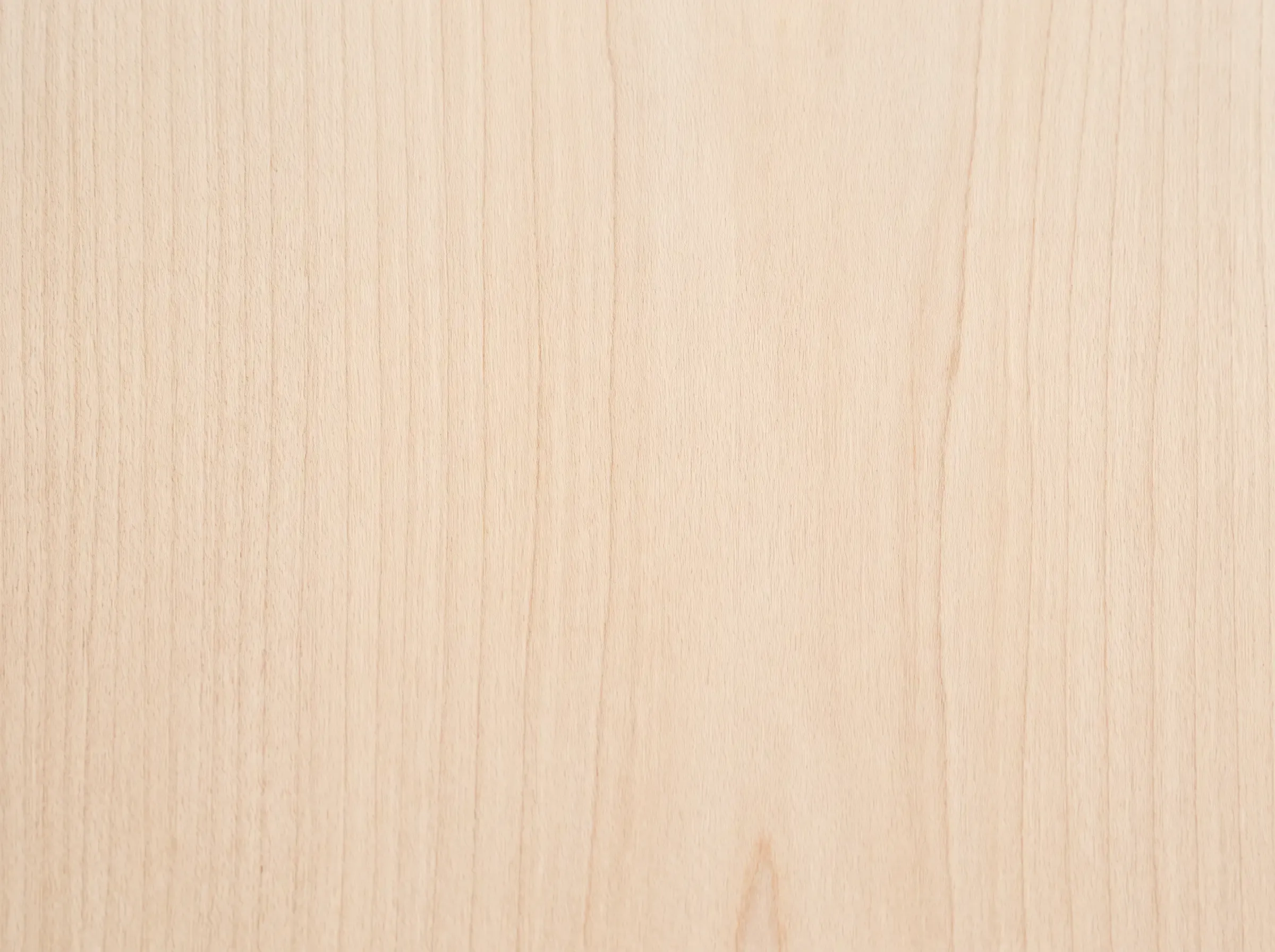
Maple and birch: fine and even, which is exactly what you want under paint.
Teak
The traditional choice in this region, and still a good one. Teak contains natural oils that make it unusually resistant to moisture, which is why it has always been used on boats and outdoor furniture. Warm golden brown, close grained, and extremely durable.
Best for: anywhere moisture is a factor, and outdoor or semi-outdoor kitchens. It is a premium material and priced accordingly.
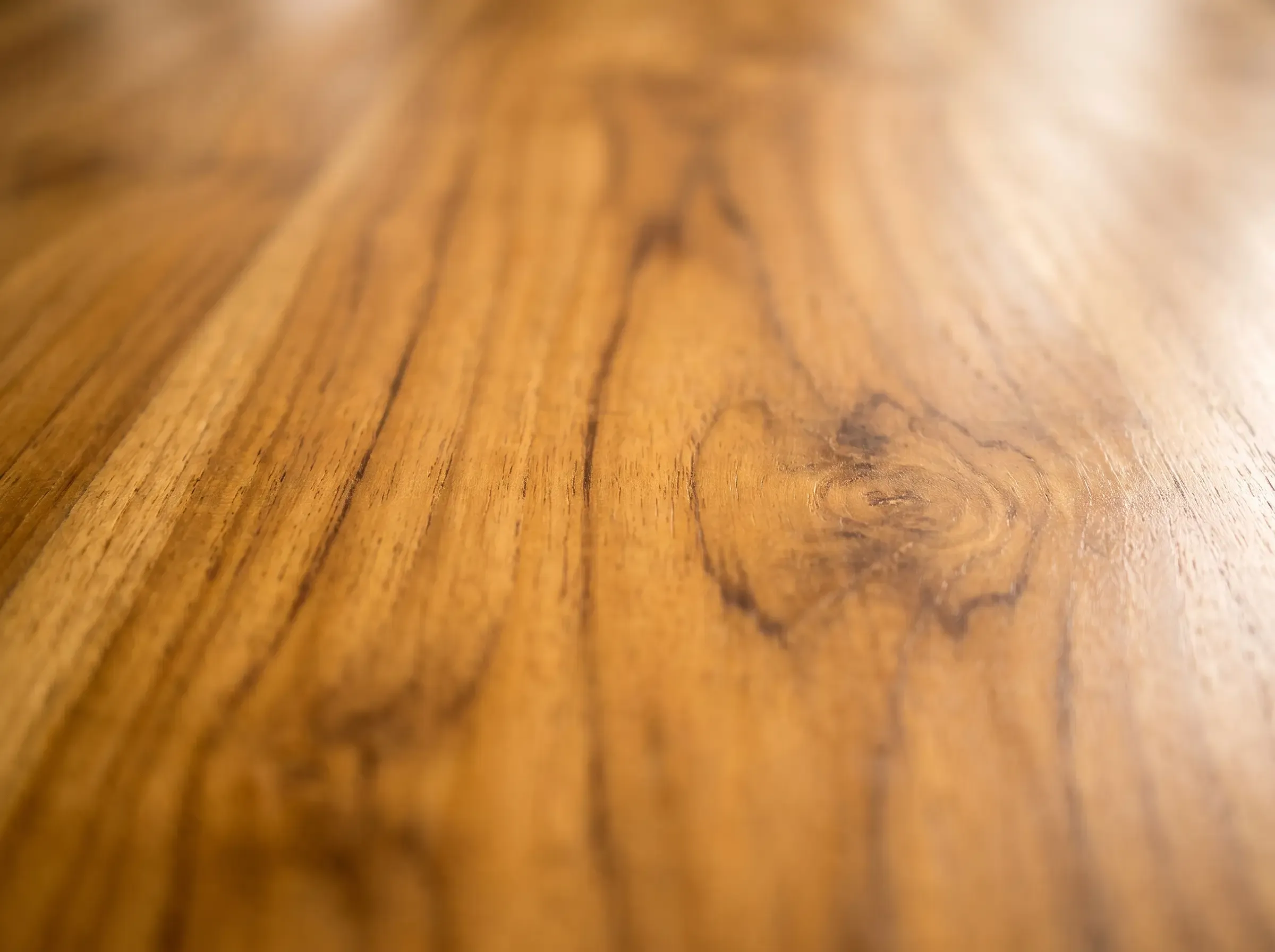
Teak: naturally oily, which makes it far happier around water than most timbers.
Bamboo
Technically a grass rather than a wood, but it is sold and used like one. It is very hard, grows back quickly so it appeals on sustainability grounds, and has a distinctive linear look from the way the strips are laminated together.
Best for: modern kitchens, and anyone prioritising a fast-renewing material. The look is specific — you either like it or you do not.
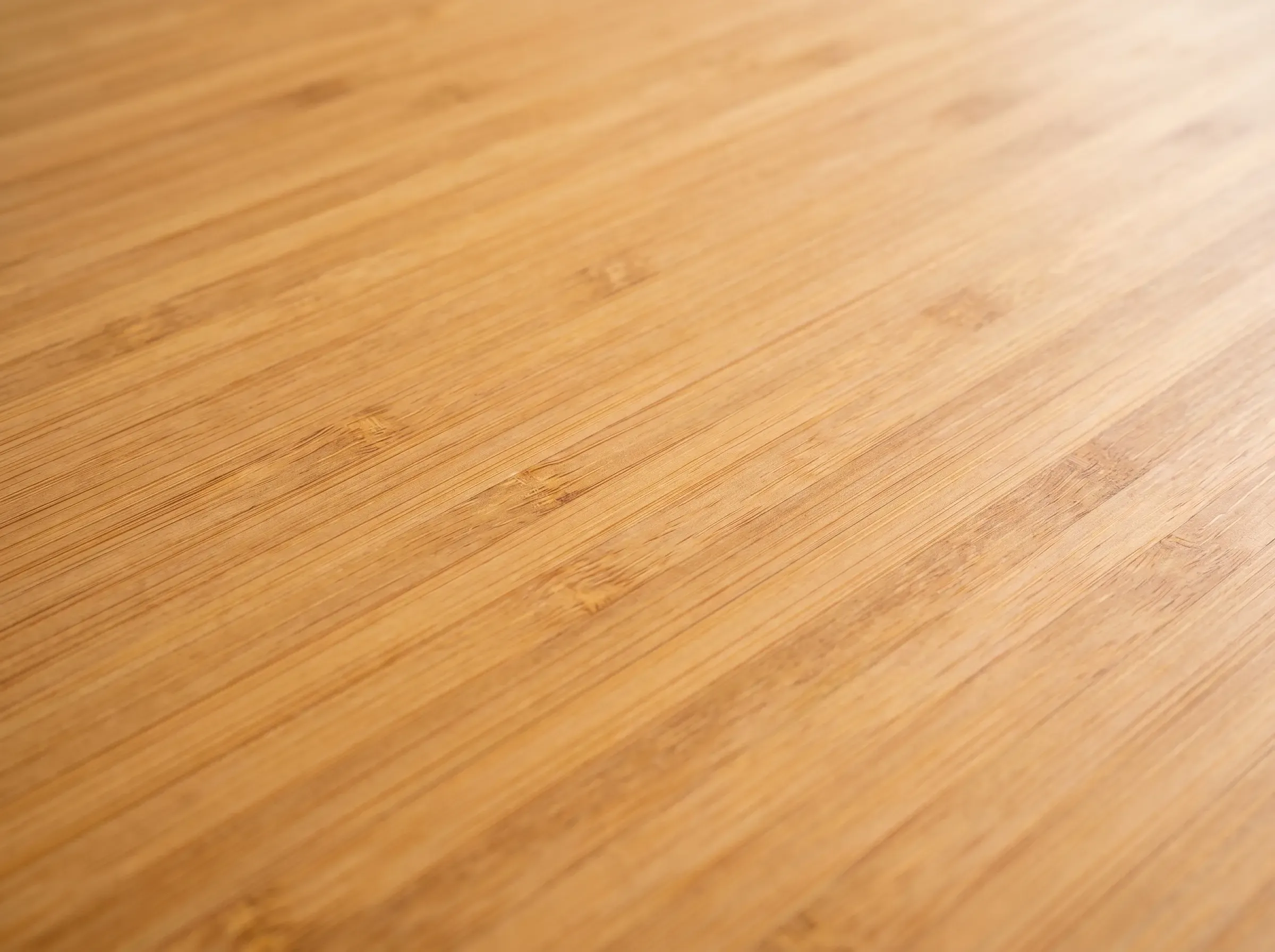
Bamboo: hard, fast-growing, and unmistakably linear.
Veneer: real wood, less movement
Worth its own section because it is the option most people misunderstand. Veneer is not fake wood — it is real timber, sliced thin and bonded to a stable board. You get the genuine grain of walnut or oak on the surface, without the movement that a wide solid panel brings.
Two things decide whether veneer is good or disappointing:
The core underneath. A moisture-resistant board keeps everything flat and stable. Ask what it is.
Grain matching. On a good job, the grain runs continuously across neighbouring doors and drawers, so a run of cabinets reads as one piece of timber. On a cheap job, every door is random. This is the single clearest sign of quality in a veneered kitchen.
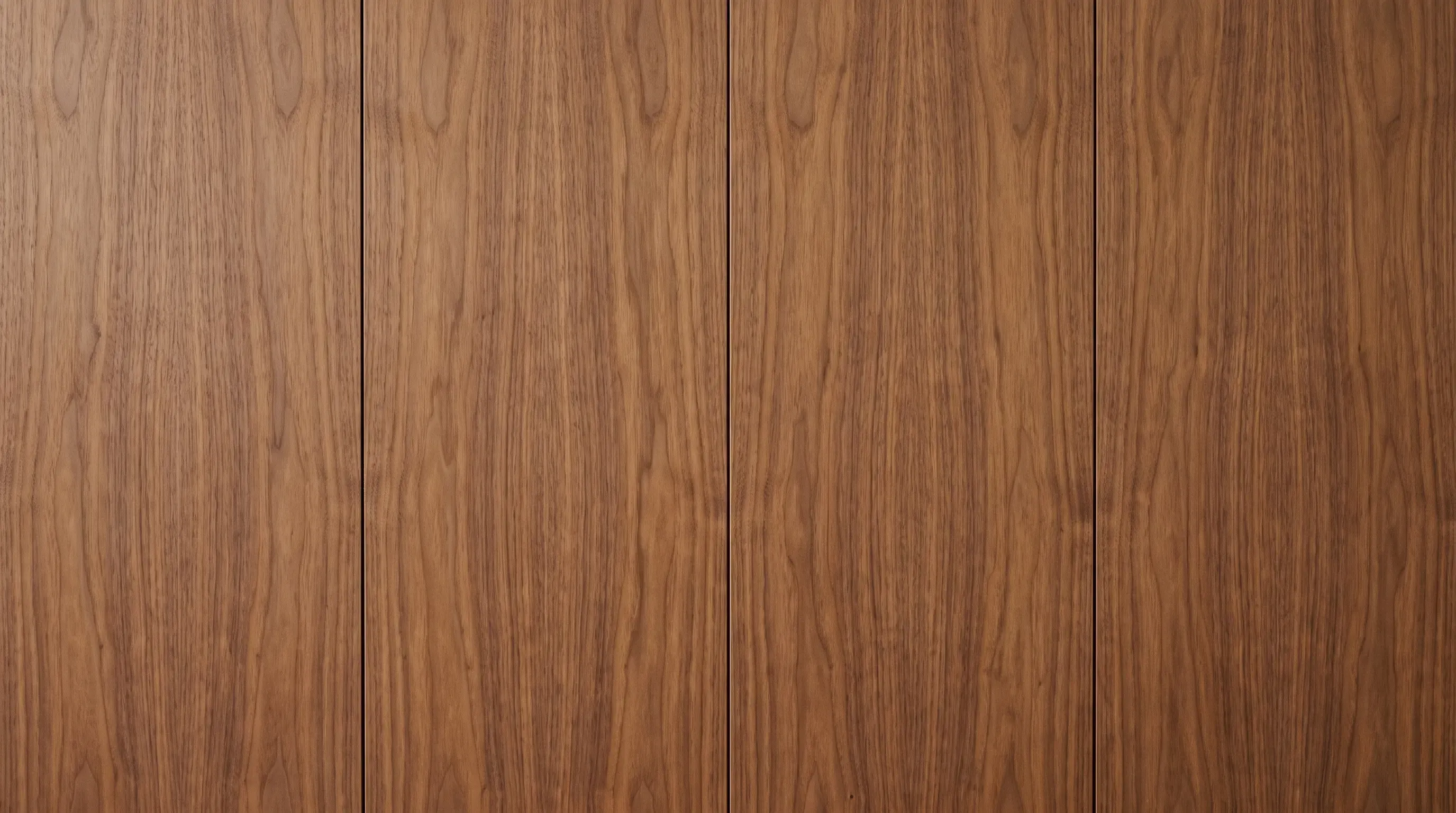
Grain running across the whole run, not door by door. This is what separates good veneer from cheap veneer.
The boards behind the doors
Whatever the front is made of, the box behind it is almost always engineered board. Moisture-resistant MDF is the sensible standard, plywood is stronger and copes best with damp, and melamine-faced board is a practical, easy-clean choice for interiors.
One request worth making: ask for low-emission board, usually described as E1 or E0 grade. It is a large amount of engineered material in the room where you prepare food, and any good carpenter will have an answer.
Matching the wood to the spot
Kitchens are not uniform, and the smart approach uses different materials in different places. If you are planning a full kitchen renovation, decide these spot by spot rather than picking one material for everything:
Under the sink — the one cabinet that will get wet. Plywood, ideally marine grade, or a well-sealed moisture-resistant box.
Beside the hob — heat and grease. A wipeable, heat-tolerant finish rather than an oiled natural surface.
The island — the place to spend. This is where walnut or a well-matched veneer earns its money, because everyone looks at it.
Tall and wall units — lighter woods keep the room feeling open, especially in an apartment.
Finish changes everything
The same timber looks completely different depending on how it is finished. Oiled finishes look and feel natural, show the grain most, and can be topped up in place — but they mark more easily. Lacquered finishes give a harder, more protected surface that wipes clean, which suits a busy kitchen. Stains shift the colour without hiding the grain, and pale woods like ash and maple take them best.
Ask to see a sample of your chosen wood in your chosen finish before you commit. Wood samples in a showroom are often finished differently to what you will actually receive.
What to ask your carpenter
Is this solid wood, veneer, or laminate? Ask plainly. "Oak kitchen" does not answer it.
What is the core board, and is it moisture-resistant?
Will the grain be matched across the run of doors?
What goes under the sink, specifically?
What finish, and can I see a sample in it?
Is the board low-emission, E1 or E0 grade?
How do I care for it, and can it be repaired later?
Frequently Asked Questions
What is the best wood for kitchen cabinets in Dubai?
Oak is the reliable all-rounder — hard, durable and forgiving. Walnut is the premium look, usually used on part of a kitchen. Teak is the best natural performer around moisture. For most fitted kitchens, real-wood veneer over a moisture-resistant core gives the look of any of them with far less movement.
Is solid wood better than veneer?
Not automatically. Solid wood can be sanded and repaired years later, but wide solid panels move the most as conditions change. Veneer is real timber over a stable core, so you get genuine grain with much better stability — which is why it is used in most fitted kitchens here.
Which wood suits a painted kitchen?
Maple or birch. Both have a fine, even, quiet grain, which is what you want under a flat colour. Strongly textured woods like oak and ash will show their grain through paint, which may or may not be the effect you are after.
What should the cabinet under the sink be made of?
Plywood, ideally marine grade, or a well-sealed moisture-resistant board with a solid base. It is the one cabinet in the kitchen that is likely to meet water at some point, so it is worth specifying separately from the rest.
What is grain matching and why does it matter?
It means the grain pattern flows continuously across neighbouring doors and drawers, so a run of cabinets looks like one piece of timber rather than several. It is the clearest visible difference between a well-made veneered kitchen and a cheap one, and it is worth asking about before you order.