How to Keep Your Apartment Cool in Dubai (2026)
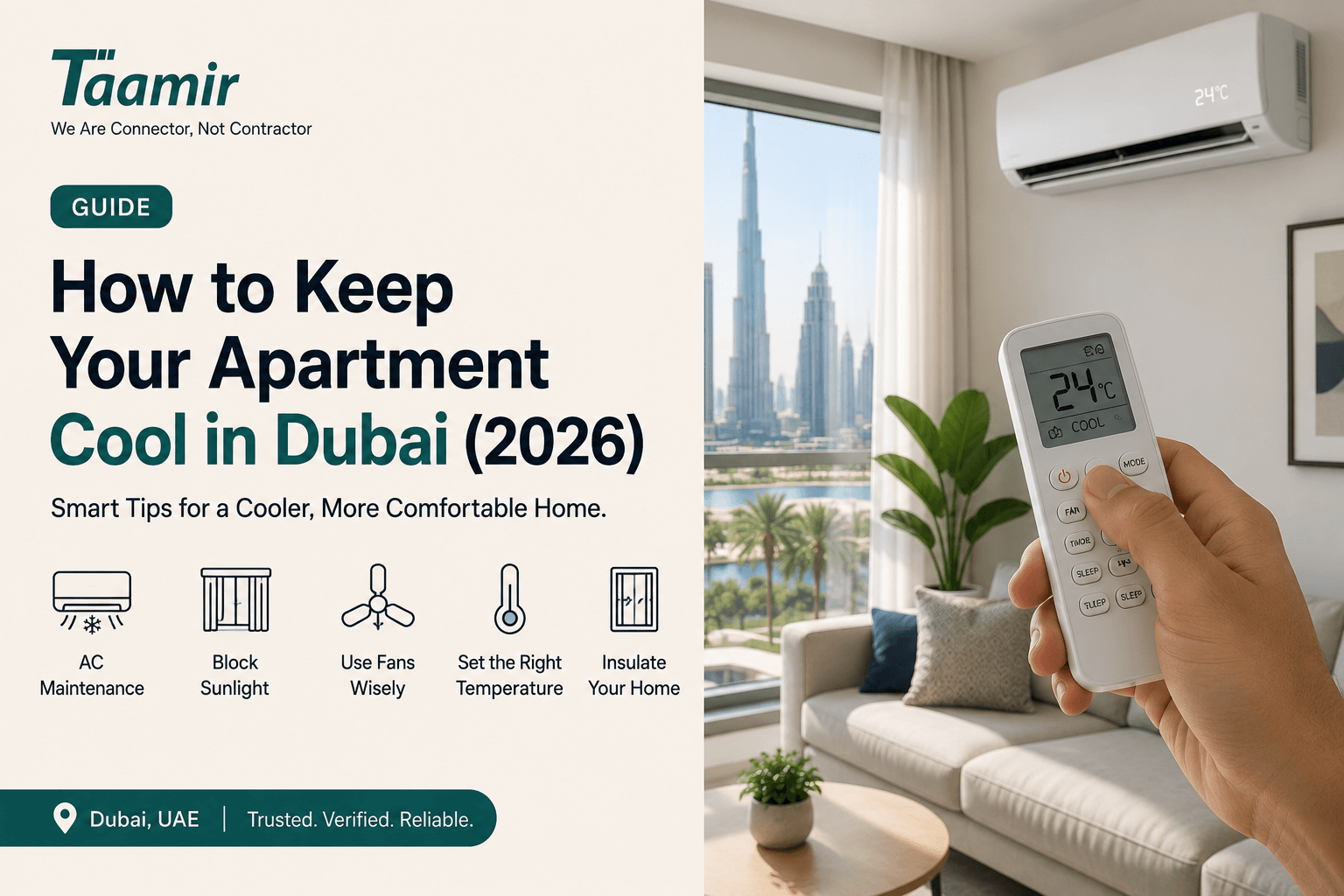
How to Keep Your Apartment Cool in Dubai (2026)
If your apartment stays hot even with the AC running, the problem is usually heat load, not cooling power — and the biggest culprit is the sun pouring through your glass. The fix works in order: block solar gain at the windows (daytime curtain discipline, thermal blackout curtains, solar film), seal the gaps leaking cooled air, stop generating heat indoors, and use fans so a higher AC setting feels cooler. Rule out the AC itself first — fifteen minutes tells you which fight you're in.
Dubai's towers are built for the view: floor-to-ceiling glass, often facing west into the full afternoon sun. Beautiful in January; a greenhouse in July. The instinct is to crank the AC lower and lower, but a machine that's fine can still lose to a wall of sun-heated glass — you're paying to remove heat you could have blocked for free. This guide works through the building-physics side of staying cool, and where a verified professional on Taamir fits when a fix needs proper hands.
First: rule out the AC in fifteen minutes
Before blaming the sun, clear the machine. Pull the filter and check you can see light through it — a clogged filter chokes cooling in exactly this "runs but rooms stay warm" way. Hold a hand to the vents: the air should be genuinely cold, not just moving. If it blows without cooling, that's a system problem with its own diagnostic — our guide to why an AC isn't cooling walks the causes in order. And if the annual service never happened this spring, book it; a struggling system plus a heat-loaded room is the worst version of August. If the AC checks out, everything below is where the battle actually is.
The glass is the battlefield
Windows are the single biggest heat entry point in most Dubai apartments — glass converts sunlight to indoor heat far faster than walls do, and even double glazing passes a substantial share of solar energy. Orientation decides how hard you're hit: west and south-west windows take the worst of it, from early afternoon until sunset, at low angles that reach deep into the room. Three layers of defence, cheapest first:
Daytime curtain discipline — free, and officially recommended. DEWA's own conservation guidance is to keep curtains and blinds closed during the day to cut solar heat gain. Close sun-facing windows from late morning; open up after sunset. (It's also on the pre-departure list — a sealed, curtains-open apartment cooks itself, which is why our summer-travel prep guide makes it step one.)
Upgrade the fabric. Thermal-lined or coated blackout curtains with a light-coloured backing intercept heat before it radiates into the room — and fit matters as much as fabric: curtains should overlap the window generously at the sides and bottom, because gaps leak exactly the heat you're paying to block.
Solar window film. Applied to the glass itself, ceramic or solar film rejects a meaningful share of heat before it enters while keeping the view — the reason it suits living rooms where permanent blackout isn't wanted. One Dubai-specific caveat: in apartments, check with building management first, since anything visible on the façade can need approval. Villas have free rein.
Villas: shade from outside beats everything inside
The physics favour stopping sun before it touches the glass at all. External shading — a pergola over the west terrace, shade sails, deep awnings, even strategic planting — outperforms any internal treatment, because blocked sun never becomes indoor heat. If you own your walls and garden, landscaping and shading professionals can change your cooling load permanently, not just manage it.
Seal the escape routes
Cooled air leaking out means hot air leaking in. The usual suspects: the gap under the front door (a draft excluder is a ten-dirham fix; a worn frame is a door professional's job), tired balcony-door seals that whistle in a shamal, and extractor fans left running long after they're needed, actively pumping your cold air out. Close doors to unused sun-facing rooms during the afternoon and let the AC fight for the rooms you're actually in.
Stop cooking your own apartment
Every appliance is a small heater. The oven at 2pm adds heat the AC then removes — twice paid. Shift heavy cooking to the evening, run the dryer at night, and switch off electronics that idle warm. Small individually; together, noticeable — especially in a studio or one-bed where one oven session changes the whole room.
Fans change the math
Moving air feels several degrees cooler on skin — which means a fan lets you raise the AC set point without losing comfort, and per DEWA's guidance, every degree higher saves up to 5% on cooling. A ceiling fan on its summer (downdraft) setting is the efficient version; installation and the wiring for it are quick work for an electrical professional. Even a well-placed portable fan pushing air across the seating area shifts what 25°C feels like.
The smart layer
Automation makes the discipline effortless: a smart thermostat runs the schedule you'd forget, and motorised smart curtains can close the west glass at 1pm every day whether you're home or not — the single most useful automation in a west-facing Dubai apartment.
Getting it done — and how Taamir fits in
Beating the heat properly is a multi-trade project: curtain and film installation (with the building-approval question handled), a fan circuit wired safely, seals renewed, the AC serviced so it only fights the heat that gets through. Taamir puts all of it in one place — compare verified professionals for each trade side by side, check their quality signals before committing, and connect directly. Every listed provider passes Taamir's verification first, and with no commission in the middle, the quotes reflect the work. One platform, every trade the summer needs.
Frequently Asked Questions
What temperature should the AC be set to in a Dubai summer?
Around 24°C is DEWA's recommended balance of comfort and cost — each degree lower adds up to 5% to cooling consumption. Pair it with a fan and 24°C feels like less.
Do blackout curtains really reduce heat, or just light?
Thermal-lined and coated blackout fabrics genuinely intercept solar heat before it radiates into the room — the effect is strongest on west-facing glass in the afternoon. Generous overlap at the edges matters as much as the fabric itself.
Solar film or curtains — which should I choose?
Film blocks heat at the glass while keeping the view, working all day with zero effort; curtains block more completely but only when closed. West-facing living rooms often use both: film for the view hours, curtains for the peak. In apartments, confirm film with building management first.
Why is my apartment hottest in the early evening?
West sun strikes hardest from mid-afternoon to sunset, and the heat it loads into glass, walls, and furniture keeps radiating after the sun drops. Closing west curtains from early afternoon prevents the load, which is easier than removing it.
Does closing doors to unused rooms actually help?
Yes — it shrinks the volume your AC fights for. Close sun-facing rooms you're not using through the afternoon, curtains drawn, and let the cooling win where you live.
How does Taamir help with keeping a home cool?
It's one place to compare verified professionals for every trade this involves — AC servicing, curtain and film installation, fan wiring, seals, and villa shading. You review quality signals, connect directly, and pay no commission on top of the work.
Win the fight before the glass
Block it, seal it, then cool it — in that order the AC finally gets an even fight. Find and compare verified professionals on Taamir for the fixes worth doing properly, and make this the last summer the sun sets your thermostat.