
Blackout vs Sheer Curtains
Which suits your Dubai home
Choose blackout curtains when you need darkness and privacy, and sheer curtains when you want softer daylight while keeping the room bright. If you want both at different times, use separate layers. The right choice depends on how you use the room, what faces the window and how the curtains fit.
Need a curtain provider?
Click Here
Your curtains might look perfect in daylight. But do they give you privacy when the lights come on? Before you compare verified curtain professionals on Taamir, decide what each window needs to do, rather than choosing by colour alone.
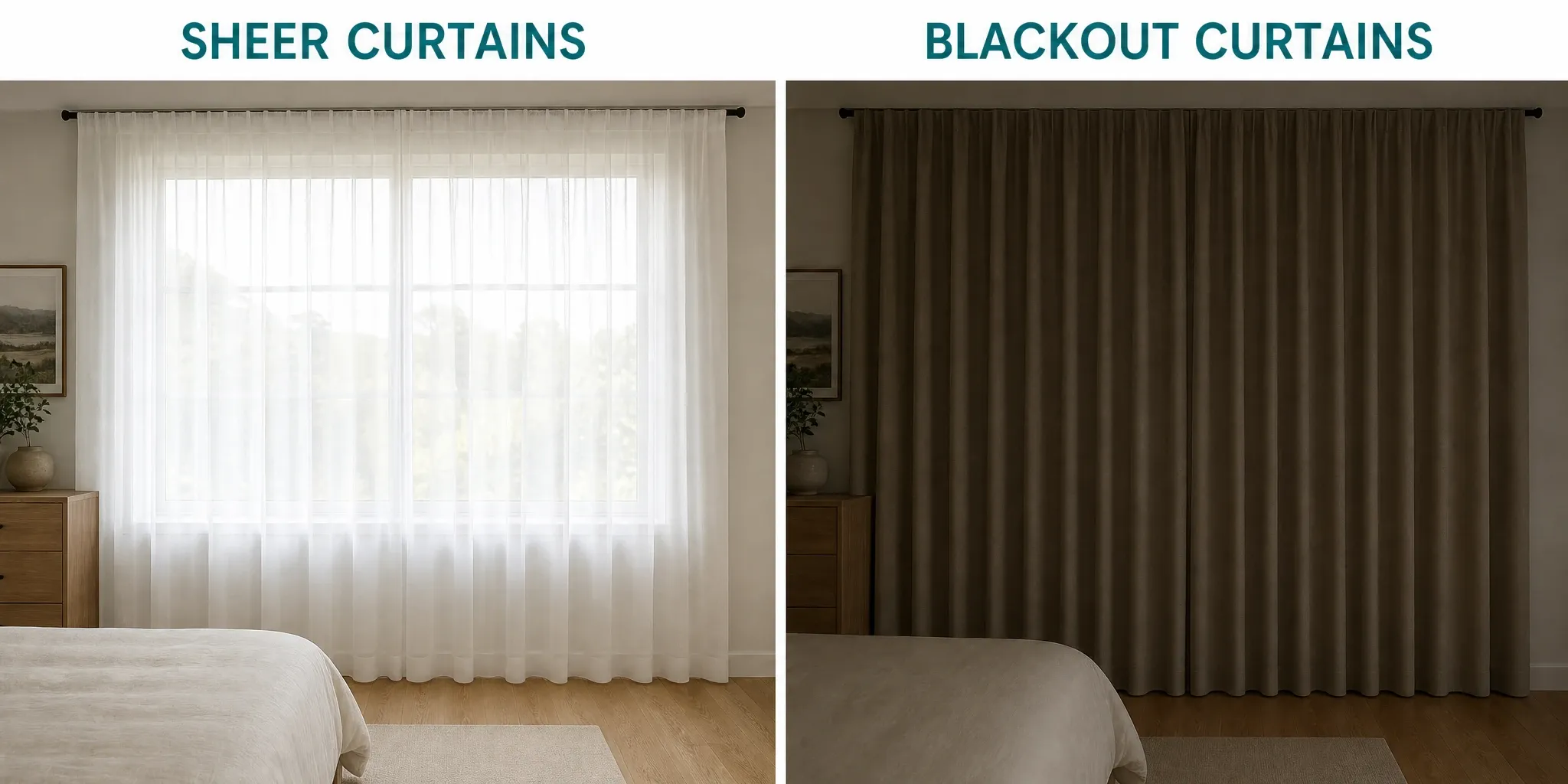
Figure 1. Sheers filter daylight; blackout fabric blocks it. Compare both with the curtains closed. Illustrative comparison; the result depends on fabric and fitting.
What is the difference between blackout and sheer curtains
The main difference is how much light passes through the fabric. Sheers filter it; blackout fabric is designed to block it. Neither term tells you the curtain's colour, heading style or quality of installation.
Sheer curtains soften daylight
Sheers use a lightweight, see-through fabric. They soften the view through a window and spread daylight through the room. They can help a living area feel less exposed while keeping an open, bright look.
However, privacy depends on the weave and the light on each side. When you compare sheer curtain options, hold samples against your actual window. Do not judge them only against a showroom wall.
Blackout curtains are designed for darkness
Blackout performance comes from the fabric's construction, coating or lining. It does not require a dark decorative colour: a pale curtain can have a blackout lining behind it.
Ask whether a sample is blackout, dim-out or simply lined. Dim-out fabric reduces light but is not the same as blackout. Then ask how the proposed installation will deal with gaps at the centre, sides and top.
The useful comparison between blackout curtain options is the complete result: fabric, lining, track and coverage.
Do sheer curtains provide privacy at night
Do not rely on sheers alone for night-time privacy. If your room is lit and the space outside is darker, people may be able to see through the fabric more easily.
This matters when your window faces another apartment, a walkway or a neighbouring villa. A fabric that seems private at noon may behave differently after sunset.
Check a sample in both conditions:
· During daylight: look at how clearly you can see shapes through it.
· After dark: turn on the lights you normally use and check the view from an accessible outside position.
· From different angles: consider balconies and facing windows, not only the view directly opposite.
Ask someone to help with the check where access is safe. If privacy is essential, specify a separate opaque layer rather than hoping a denser sheer will be enough.
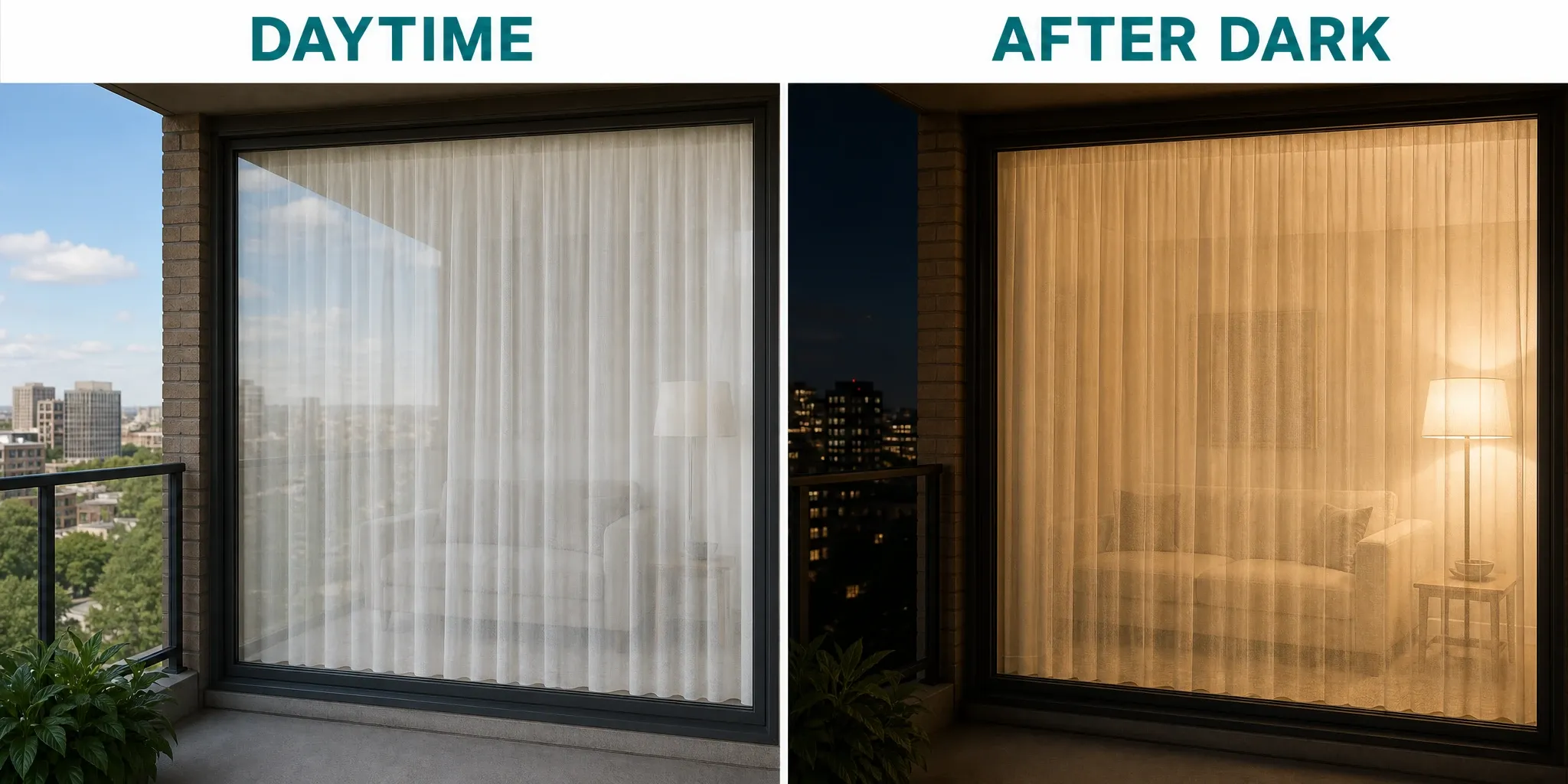
Figure 2. Judge privacy from outside as well as inside. A sheer that screens the room by day may reveal furniture and activity when the room is brighter than outdoors. Illustrative comparison.
Which curtains should you choose for each room
Choose by the room's job. A bedroom, living room and work area do not need the same balance of light and privacy.
For a bedroom start with darkness
If daylight or outside lighting interrupts your rest, make the blackout layer the first decision. Check whether the curtains will close fully, reach far enough past the frame and cover the top edge adequately.
Add a sheer if you want daylight without leaving the glass completely uncovered. For a child's room, also ask about suitable controls and accessible cords.
For a living room preserve useful daylight
If you enjoy a bright living area, start with a sheer sample and assess the glare at the times you actually use the room. Add an opaque layer where you need evening privacy or stronger light control.
Sit where you watch television before choosing. Look for reflections on the screen rather than judging the window only from the doorway.
For a home office check the screen position
Choose a covering that controls glare at your desk. A sheer may soften the light without cutting it enough for a screen, so test the sample during your working hours.
If you need to close the opaque layer, check whether the rest of the room will still have enough useful light. The aim is comfortable control, not making the whole room dark all day.
For a guest room plan for different routines
A guest may want darkness while someone else prefers daylight. Two independently operated layers make that choice easier.
Keep the controls straightforward. A window treatment is only useful if the person using the room can operate it easily.
Do blackout curtains keep a Dubai home cooler
Curtains can help limit heat from sunlight, but the word blackout describes light blocking. It does not, by itself, prove a particular level of thermal performance or electricity savings.
For energy use, the practical habit matters too. DEWA's conservation guidance recommends keeping blinds and curtains closed during the day to block heat.
When comparing fabrics for a sunny window, ask about the lining, backing and any documented thermal performance. Also consider when you will close the curtains. An opaque layer parked at the sides cannot shade the exposed centre of the glass.
For the wider picture, our guide to keeping a Dubai apartment cool covers shading alongside other ways to manage heat. Curtains are one part of that plan; avoid choosing them on an unsupported promise of a fixed temperature drop or bill saving.
Can you combine blackout and sheer curtains
Yes. A double-track arrangement lets you use each layer separately. One can filter daylight while the other provides privacy or darkness when needed.
The usual arrangement places the sheer closer to the glass and the heavier curtain on the room side. The exact layout should suit the recess, handles, doors and available space.
Before agreeing to it, check:
· Space for two layers: the fabrics should hang and move without catching each other.
· Room for open curtains: gathered fabric needs space beside the window. Ask how much glass it will cover when open.
· Access: curtains should not obstruct a balcony door or window handle.
· Coverage: discuss the centre overlap and side edges if darkness matters.
· Airflow: keep curtains clear of AC outlets and controls.
What should you check before ordering curtains
Confirm the finished size, fabric specification and installation details in writing. A fabric name and a window width are not enough to describe a made-to-measure curtain.
Check samples in your own light
View the fabric in the morning, afternoon and evening. Check its appearance from inside the room and its backing from the window side.
Ask for the exact fabric reference and care instructions. Do not assume every sheer is machine washable or every blackout lining can be cleaned in the same way.
Agree what the measurements mean
Ask the company to measure before making the curtains. Record the track width, finished drop and the amount of fabric gathered into the folds. That last detail is called fullness.
Also agree whether the hem will clear the floor, touch it or sit on it. There is no single finish that suits every home. Think about cleaning, balcony access and how often you move the curtains.
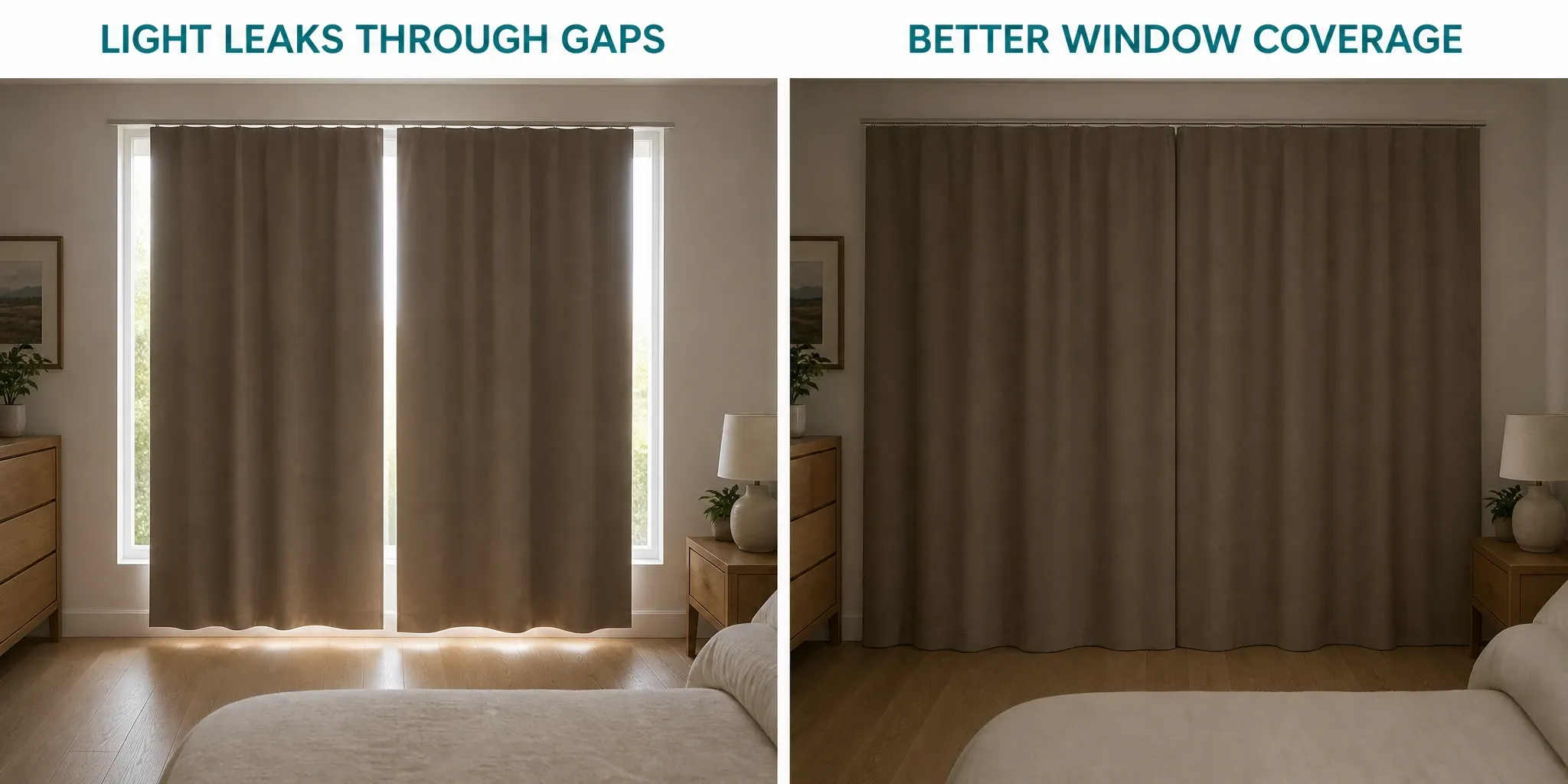
Figure 3. Light can enter around opaque fabric. Check side coverage, the centre overlap and the agreed finished drop. Illustrative fitting comparison, not a promise of complete darkness.
Compare the same specification
Check that each quotation includes the same items:
· Decorative fabric, lining and exact references.
· Number of layers and finished dimensions.
· Heading style and fullness.
· Tracks, brackets and fittings.
· Measurement, installation and any removal of old fittings.
· Adjustment arrangements if the finished curtains do not fit as agreed.
A lower total is difficult to assess if one company includes both layers and another includes only one. Ask each to explain the scope before comparing price.
Are motorised curtains worth considering?
Consider them when the curtains are heavy, hard to reach or used on a regular schedule. Motorisation changes how you operate the curtains; it does not improve the fabric's privacy or blackout performance.
When comparing motorised curtain professionals, ask about the power supply, supported curtain weight, controls and what happens during a power cut. Confirm whether two layers need separate motors and controls.
If you want app or voice control, check compatibility before ordering. Our guide to smart home options for a Dubai apartment helps put that decision in the wider home setup.
Frequently Asked Questions
Are sheer curtains enough for a living room?
They may be enough if you mainly want softer daylight and have no need for stronger privacy or light control. Check the view after dark before deciding to use them alone.
Does blackout fabric mean the room will be completely dark
Not automatically. Light can enter around the fabric, so track position, overlap and edge coverage need attention as well as the material itself.
Can blackout curtains be white or another light colour?
Yes. A pale decorative fabric can be combined with a blackout lining or construction. Check the actual sample rather than judging performance by its colour.
Can you put sheers and blackout curtains on one track?
Independent layers normally need separate tracks or a double-track system. Ask the installer to assess an existing track before assuming it can carry another layer.
Should sheers go closest to the window?
That is the usual arrangement, with the heavier curtain on the room side. Confirm the layout against handles, recess depth and how you want each layer to move.
Can you keep an existing curtain track?
Possibly, if its condition, fittings and load capacity suit the new curtains. Have the company check it before ordering heavier fabric or adding motorisation.
Choose what your window needs to do
Start with darkness, daylight and privacy, then choose the colour and finish.