Why Does Your Bathroom Smell Like Sewage in Dubai? (2026)
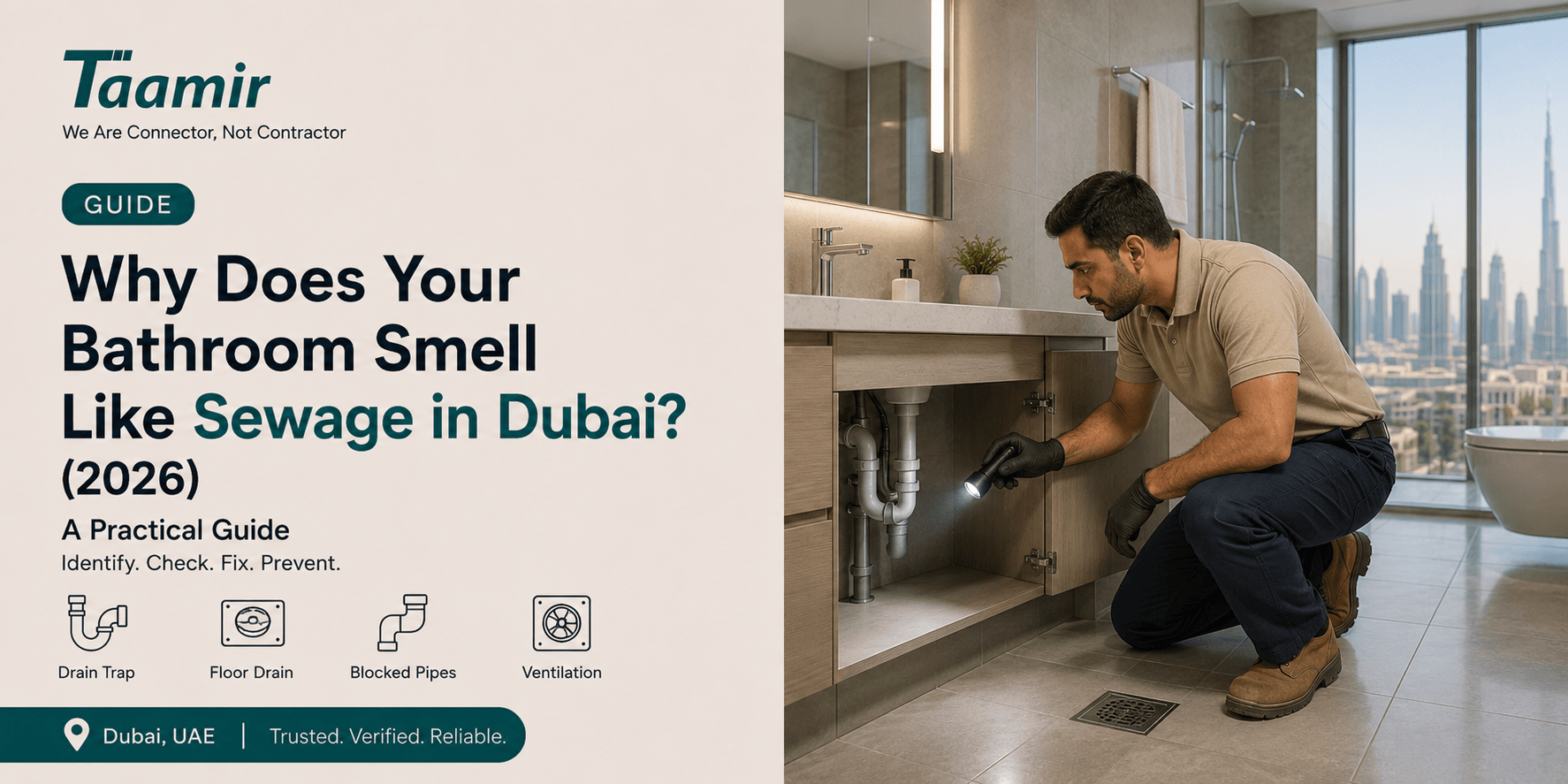
Why Does Your Bathroom Smell Like Sewage in Dubai? (2026)
Nine times out of ten, a sewage smell in a Dubai bathroom means a dried-out P-trap — the small water seal inside every drain that blocks sewer gas, and that Dubai's heat and non-stop air conditioning can evaporate in a few weeks. The fix takes ten minutes: pour a litre of water down every drain, including the floor drain, and the smell is usually gone within the hour. A smell that persists, gurgles, or spreads to other rooms points to a blockage, a worn toilet seal, or a venting problem — and that's professional territory.
It's a familiar Dubai moment: you open the guest bathroom for the first time in a month and get hit with a smell that suggests something has gone terribly wrong under the building. Almost always, nothing has — and it's certainly not your cleaning. The physics are simple, the first fix is free, and knowing the escalation order means you only bring in a verified plumbing professional on Taamir when the job genuinely needs one — and know exactly what to ask for when you do.
The water seal you didn't know your bathroom had
Under every sink, shower, bathtub, and floor drain sits a P-trap — a U-shaped bend in the pipe whose only job is to hold a cupful of water. That standing water is a physical barrier: sewer gases rise up the drainage stack, hit the water, and stop. As long as the trap is wet, your bathroom and the sewer network are sealed off from each other.
Dubai empties these traps faster than almost anywhere. Continuous air conditioning keeps indoor air bone-dry, summer heat accelerates evaporation, and in a sealed apartment a trap that nobody tops up can dry out within a few weeks — which is why the smell so often appears in guest bathrooms, unused showers, and floor drains, and why so many people fly home from a holiday straight into it. If you're about to travel, watering the drains is literally on the pre-departure list — our guide to preparing your home before summer travel covers it alongside the AC and water-valve steps.
The ten-minute fix — do this before anything else
Pour about a litre of water into every drain in the bathroom — sink, shower, bathtub, and especially the floor drain, which is the most-forgotten and driest trap in the home.
Run each tap for 30–60 seconds and flush any toilet that hasn't been used in a while.
Wait an hour with the door open and the extractor running. If the smell fades and stays gone, the mystery is solved: dry traps.
To stop it recurring, pour a cup or two of water into rarely-used drains monthly — and for drains that sit unused for months, a thin layer of mineral oil on top of the trap water dramatically slows evaporation. Use mineral oil specifically, not cooking oil, which turns rancid and creates the very smell you're preventing.
Still smells? Work the list in this order
A dirty or partly blocked drain. If one drain smells, runs slow, and gurgles, the odour is coming from the drain itself: hair, soap scum, and biofilm decaying inside the pipe. Clean the removable trap under a sink, use an enzyme drain cleaner for organic buildup — and skip two tempting shortcuts: never pour strong drain acid (it damages pipes and turns a small job into a big one) and never mix cleaning chemicals, which can release genuinely dangerous gases.
The toilet's hidden seal. If the smell is strongest right around the WC base and cleaning doesn't shift it, the connector seal between the toilet and the drain pipe has likely worn. The tells: darkening silicone at the base, a toilet that rocks slightly, persistent odour after everything else checks out. Fixing it means lifting and refitting the toilet — a quick job for a professional, not a DIY afternoon.
The floor trap itself. Dubai's floor drains need their covers seated properly to work, and in newer buildings, floor traps that were installed badly at handover are a well-known source of phantom sewage smells — one more thing a pre-handover inspection catches before it becomes your problem.
Venting problems. Drainage systems breathe through vent pipes; when venting is blocked or badly designed, draining water elsewhere in the building pushes and pulls air straight through your traps — you'll hear fixtures gurgle when other things drain, and the water seals keep failing no matter how often you refill them. A powerful extractor fan in a sealed bathroom can even pull gas past a weak seal. Venting sits on the building side of the system, which brings us to:
When it's the building, not your bathroom
If the smell shows up in more than one room, in the corridor, at certain hours, or your neighbours have it too, the source is the shared drainage or venting — not anything inside your unit. That's a building-management report, in writing, with the pattern you've observed; the same logic as any shared-system fault, and your documentation is what gets it prioritised.
Sometimes it isn't plumbing at all
A stuck extractor fan that never clears the air will let ordinary bathroom smells accumulate into something worse. And a musty smell is a different problem entirely — that's moisture and mould, not sewer gas, and it has its own causes and fixes. Sewage smell is unmistakably sulphurous; musty is damp and earthy. Diagnose by nose before you diagnose by pipe.
A short safety note
Sewer gas is mostly methane and hydrogen sulphide — unpleasant at low levels and genuinely unhealthy at sustained ones. If a strong smell comes with headaches, nausea, or dizziness, ventilate the room, stop using the affected fixture, and get the source resolved promptly rather than living with it.
Fixing it for good — and how Taamir fits in
A dry trap costs you a litre of water. A recurring smell means something structural — a failing seal, a chronic blockage, venting, or floor traps that were never right — and that's where choosing well matters more than choosing fast. On Taamir you can compare verified plumbing professionals side by side before committing — every listed provider goes through Taamir's verification first — and for this job specifically, three things worth asking any candidate: whether they offer a drain camera inspection to find the source instead of guessing, whether they can fit self-sealing trap inserts on chronic offenders like floor drains and guest bathrooms (the permanent answer to evaporation), and whether their methods avoid acid treatments. Because Taamir takes no commission, the quote reflects the work, not a middleman — and once you've found a plumber you trust through Taamir, rebooking them is minutes, not another gamble.
Frequently Asked Questions
Why does my bathroom smell like sewage after a holiday?
Because the water seals in your drains evaporated while you were away — Dubai's AC-dried air and heat can empty a P-trap in a few weeks. Pour water down every drain, flush the toilets, and the smell typically clears within the hour.
How often should I water unused drains in Dubai?
Pour a cup or two of water into rarely-used drains about once a month — floor drains and guest bathrooms especially. For drains unused for months, top the water with a little mineral oil to slow evaporation dramatically.
What oil goes in the drain trap — and why not cooking oil?
Mineral oil (or unscented baby oil). It floats on the trap water and slows evaporation without spoiling. Cooking oil goes rancid over weeks and produces its own foul smell — the opposite of the goal.
The smell is only around the toilet — what does that mean?
A worn connector seal between the toilet and the drain pipe, especially if the silicone at the base is darkening or the toilet rocks slightly. It's fixed by lifting and refitting the WC — a routine professional job.
Is sewer smell in the bathroom dangerous?
At a whiff, it's mostly unpleasant; sustained exposure to sewer gas (methane, hydrogen sulphide) can cause headaches and nausea. Ventilate, fix the source promptly, and never try to mask a persistent smell instead of resolving it.
How does Taamir help with a sewage smell problem?
When the smell keeps returning, Taamir lets you compare verified plumbing professionals in one place — check their quality signals, ask about camera inspections and self-sealing trap inserts, and connect directly. No commission is added to your quote, and rebooking a plumber you trust takes minutes.
Clear the air today
Water the traps first — it's free and it's usually the answer. If the smell comes back, find and compare verified plumbing professionals on Taamir, review their quality signals, and get the source fixed properly — no commission, no hidden charges.