Why Mould Grows in Dubai Homes — and How to Stop It (2026)
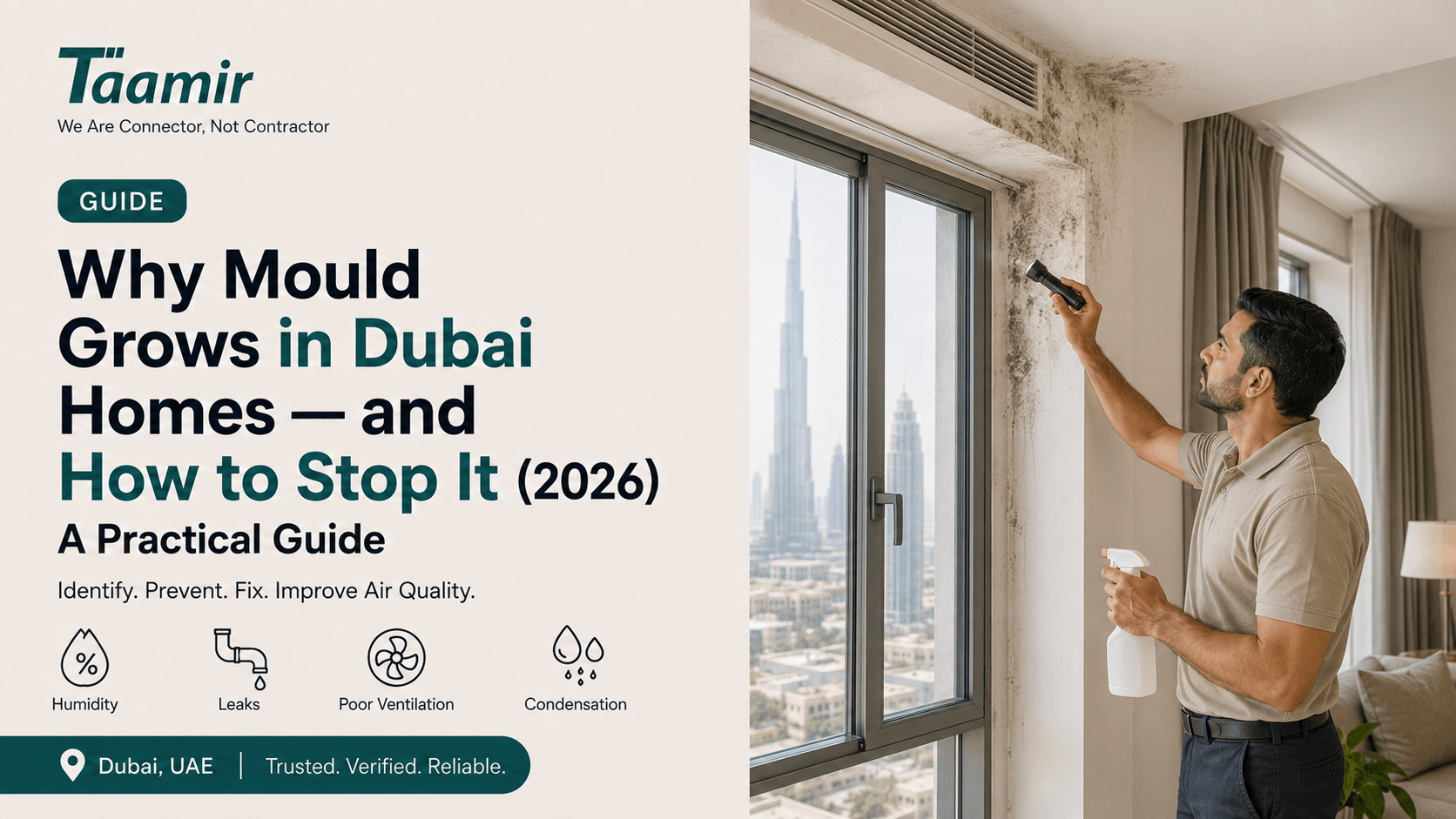
Why Mould Grows in Dubai Homes — and How to Stop It (2026)
Mould in a desert city sounds impossible, but Dubai homes grow it for three reasons: air conditioning creates condensation on cold surfaces, late-summer outdoor humidity soaks the air, and sealed, unventilated rooms trap the moisture. The fix is moisture control — keep indoor humidity below 60%, keep the AC clean and draining properly, ventilate daily habits like showers and laundry, and pull furniture off exterior walls.
If you've found black spots creeping up the back of a wardrobe, dots on the bathroom ceiling, or a musty smell behind the bed, you're in one of Dubai's most common late-summer club memberships. It peaks in August and September, when humidity spikes just as homes are sealed tightest, and it does real damage to clothes, furniture, paint, and air quality. Here's why it happens, the exact spots it starts, how to clean it safely — and how to tell when the mould is a symptom of something your AC or plumbing is doing behind the scenes.
Why does mould grow in a desert city?
Because indoors isn't a desert. Between July and October, outdoor humidity in Dubai regularly climbs to tropical levels, and every time that moist air meets a surface your AC has chilled — a wall, a window pane, the inside of an external wall behind a wardrobe — the moisture condenses out of the air, exactly like the film on a cold glass. Add everyday moisture from showers, cooking, and drying laundry into rooms that stay sealed against the heat, and the air can hold more water than people expect. The threshold that matters is 60% relative humidity: above it, mould will grow on furniture and walls regardless of how clean the home is — the healthy target band is 40–60%. A simple humidity monitor costs little and tells you instantly which side of that line each room sits on.
Your AC is both the cause and the cure
A well-running AC is Dubai's best dehumidifier; a neglected one is a mould factory. When systems sit dirty or dormant, specialists warn, moisture lingers in the ducts, coils, and drain pans — a low-grade incubator for mould and bacteria — and switching back on can blast that buildup straight into the home. A blocked condensate drain does visible damage too, weeping water down walls beside the indoor unit. Three habits keep the machine on the right side of the equation: keep filters clean, get the coils and drain lines professionally serviced so moisture actually leaves the system, and learn your dry mode — it runs the compressor specifically to pull humidity out of the air without over-cooling the room, ideal for muggy September days when the room is cool but the air feels thick. If the unit already smells musty when it starts up, that's coil mould announcing itself — service it rather than perfuming over it.
The hotspot map — and the fix for each
Mould in Dubai homes is predictable. It picks the same spots in every apartment, and each has a specific fix:
Wardrobe backs on exterior walls. The classic. The wall stays warm, the AC keeps the room cold, and the sealed, airless gap behind the wardrobe condenses moisture nightly. Pull wardrobes and large furniture 5–10cm off exterior walls, don't pack them airtight, drop a moisture-absorber tub inside, and never store clothes that aren't fully dry.
Bathroom ceilings and grout. Run the extractor fan during the shower and for fifteen minutes after, squeegee the glass, leave the door open afterwards, and wash bathmats regularly. If there's no extractor, the door-open habit matters double.
Behind headboards and curtains on exterior walls. Same physics as the wardrobe — leave an air gap, and open curtains during the day so the wall surface warms and dries.
Window frames and sills. Condensation pools where cold glass meets humid air; wipe frames when you see fogging, and keep blinds from pressing against the glass.
Laundry dried indoors. A rack of wet washing releases litres of water into a sealed room. Dry on the balcony, or in one room with the door shut and dry mode running.
Cleaning small patches safely
For a patch smaller than about a square metre on a hard surface, this is a DIY job: gloves on, room ventilated, and a single suitable mould cleaner — never mix cleaning products, as some combinations release genuinely dangerous gases. Wipe rather than dry-brush, because brushing dry mould flicks spores into the air, and bin the cloths afterwards. Porous materials play by different rules: fabric, mattresses, and stained gypsum that keeps re-spotting usually need replacing rather than cleaning, because the growth is inside the material, not on it. Then — and this is the step everyone skips — dry the room properly and fix whatever made it damp, or you've booked a rematch.
Painting over mould doesn't work
Paint is not a treatment. Mould under a fresh coat eats through it within months, and you've spent money to hide the warning light. The correct order: kill and remove the growth, find and fix the moisture source, let the wall dry fully, and then repaint — ideally with an anti-mould paint in bathrooms and on exterior-facing walls, which is exactly the kind of prep-plus-finish job a professional painter does properly in a day.
When it keeps coming back, it's not a cleaning problem
Mould that returns to the same spot after cleaning is a messenger. Recurring growth means a persistent moisture source: a leaking AC condensate line inside the wall, a weeping pipe joint, failed silicone around a shower, or — for ceiling patches below a bathroom — a waterproofing failure in the wet area above. At that point, cleaning harder is the wrong tool: the leak needs tracing and fixing first, and for large affected areas (beyond that square metre) or households with young children or anyone with respiratory sensitivities, professional remediation is the sensible route — find and compare verified professionals who handle exactly this, from leak detection to treatment.
Leaving for the summer? Your empty flat is the perfect incubator
A sealed apartment with the AC off in August is the textbook mould scenario — residents have come home from a single week away to spotted walls and ceilings. If you're travelling, the AC setting and pre-departure routine make all the difference; our companion guide to preparing your Dubai home before summer travel covers the exact settings and the 48-hour checklist.
A short note on health
Mould isn't just cosmetic — it degrades indoor air quality, and people with allergies or asthma often feel it first as congestion, irritation, or worsened symptoms in specific rooms. This isn't medical advice, but the practical rule is simple: treat visible mould promptly, ventilate while cleaning, and don't sleep long-term in a room with an active patch while you get it sorted.
Frequently Asked Questions
Why is there mould in my Dubai apartment when the climate is so dry?
Outdoors is dry most of the year, but late summer brings heavy humidity — and indoors, AC-chilled surfaces condense that moisture out of the air, especially in sealed rooms with showers, cooking, and laundry adding more. Above 60% indoor humidity, mould grows regardless of cleanliness.
What's the difference between dry mode and cool mode on my AC?
Cool mode targets a temperature; dry mode targets humidity, running the compressor specifically to pull moisture from the air without over-chilling the room. On muggy days when the room is cool but the air feels heavy, dry mode is the right tool.
Should I use vinegar or bleach on mould?
Use one suitable mould cleaner for the surface you're treating and never mix products — certain combinations release hazardous gases. Wipe rather than dry-brush, ventilate while you work, and remember porous materials like fabric usually need replacing, not cleaning.
How do I stop mould growing in my wardrobe?
Pull the wardrobe 5–10cm off the exterior wall, avoid packing it airtight, add a moisture-absorber tub, and only store fully dry clothes. Wardrobe backs on exterior walls are Dubai's number-one mould spot because of trapped, condensing air.
Can I just paint over mould?
No — it grows back through fresh paint within months. Remove the growth, fix the moisture source, dry the wall completely, and then repaint, ideally with anti-mould paint in bathrooms and on exterior-facing walls.
When should I call a professional about mould?
When it keeps returning to the same spot after cleaning (that's a hidden leak or waterproofing failure talking), when the affected area is larger than about a square metre, or when someone in the home has respiratory sensitivities. Tracing the moisture source is the job; the mould is just the symptom.
Get ahead of it before the humid months
August and September are coming, and mould is far cheaper to prevent than to chase. Whether it's an AC service, a leak trace, waterproofing, or repainting, find and compare verified professionals on Taamir — review their quality signals and connect directly, with no commission and no hidden charges.