Why Does Your Toilet Keep Blocking in Dubai? (2026)
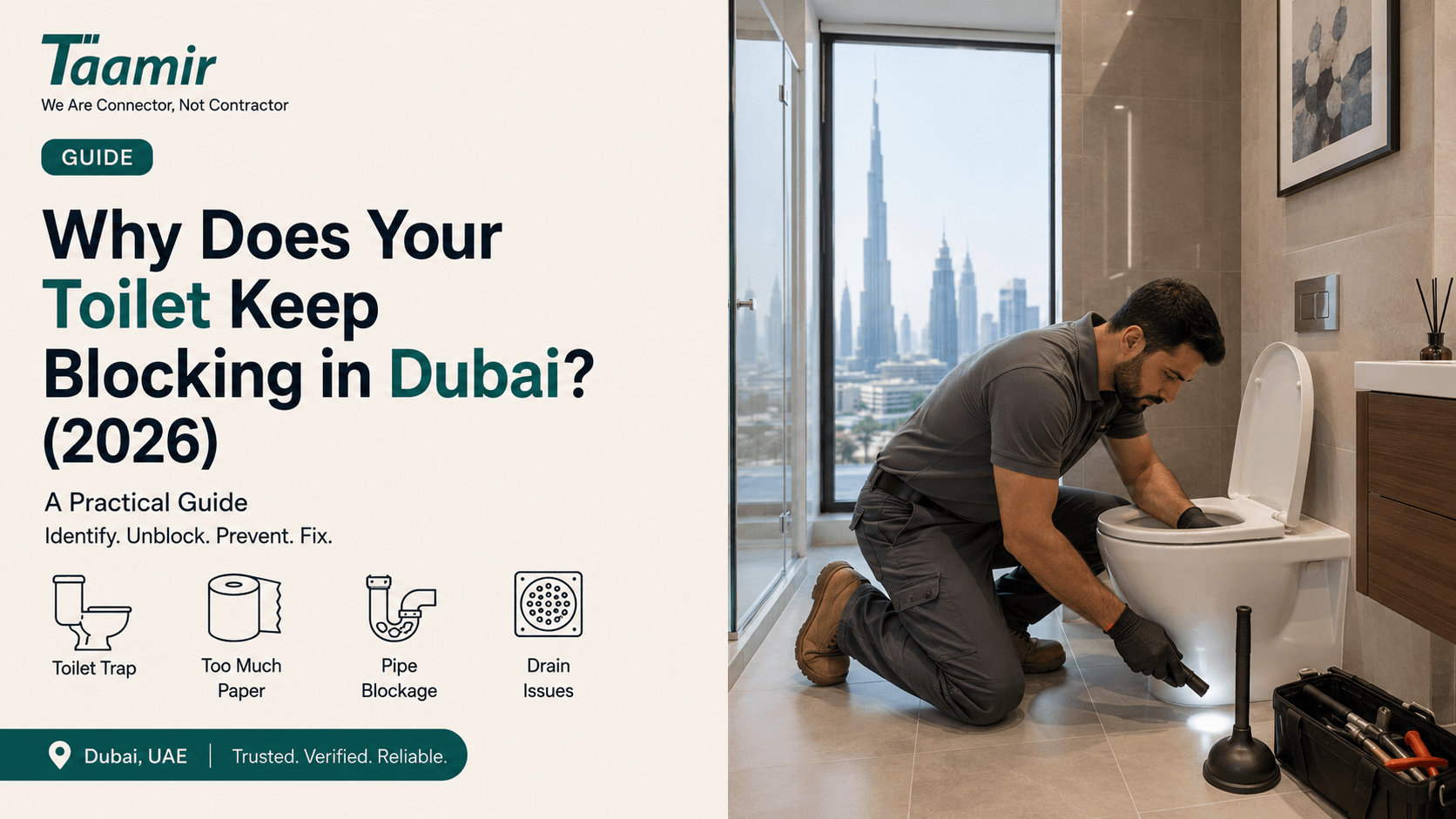
Why Does Your Toilet Keep Blocking in Dubai? (2026)
A toilet that blocks once is bad luck; one that blocks repeatedly has a cause. The usual suspects, in order of likelihood: something non-flushable went down (wipes, cotton pads, hygiene products), the trap built into the toilet itself is partly obstructed, a blocked vent pipe is robbing the flush of pressure, or — if more than one fixture is affected — the shared building drain. A plunger clears most first-time blockages in under a minute; a toilet that keeps returning to the same problem needs the cause found, not just cleared again.
It's one of the more stressful small emergencies a home can throw at you, and in a Dubai apartment — sharing drainage with dozens of other units — it's worth knowing early on whether you're dealing with a five-minute fix or a building-wide issue. This guide works through the real causes, the right way to clear a blockage without making it worse, and exactly when the smart move is a verified plumbing professional on Taamir rather than another round with the plunger.
The real causes of a toilet that keeps blocking
Something that shouldn't have been flushed. This is, by far, the most common cause everywhere, Dubai included. Toilets are engineered to move waste and toilet paper — nothing else. Wipes (yes, even ones labelled "flushable"), cotton pads, sanitary products, and paper towels don't break down the way toilet paper does, and they snag in the trap or further down the line. One local pattern worth knowing: many Dubai bathrooms have a handheld bidet spray, which means households often use comparatively little paper — so when a stubborn blockage does happen, a non-paper item is disproportionately often the culprit. A bin in every bathroom for anything that isn't waste or toilet paper solves this at the source.
A partial blockage in the toilet's own trap. Every toilet has a curved trap built into its base — the same principle as the P-trap under a sink, just integral to the bowl — and it's designed to catch things. A wad of paper, a small dropped object, or a slow buildup can sit there and narrow the passage without stopping it completely, which is exactly the pattern behind a toilet that clogs "for no reason" every few weeks.
A blocked or restricted vent pipe. Every bathroom's drainage connects to a vent that lets air in, which is what gives a flush its power — without it, the system tries to pull a vacuum instead of draining cleanly. If your toilet blocks easily and gurgles when you flush, or gurgles when a nearby sink drains, an airflow problem is a likely contributor, not just weak flushing.
Modern low-flow toilets and technique. Water-efficient toilets are standard in newer Dubai fittings, and they do the job well — but with less water per flush than older designs, technique matters more: a single determined flush clears better than two rushed ones, and anything beyond a modest amount of paper is worth a courtesy second flush rather than pushing it through in one go.
The shared building drain. In towers, several units feed into the same stack, and a partial blockage lower down the line can show up first as your toilet struggling, even though the fault isn't in your bathroom at all. The tell is whether it's isolated to one fixture or shows up elsewhere too — covered below.
Clearing it properly, in order
1. Stop flushing. Repeated flushing on a blockage risks an overflow; if the bowl is already full, let it sit.
2. Use a proper flange plunger, the type with an extended rubber flange for toilets rather than the flat cup style made for sinks — it seals against the bowl's curve far better. Submerge it fully before you start so the first push moves water, not air, and plunge with firm, steady strokes for 15–20 seconds before checking.
3. If that doesn't clear it, try hot water and dish soap. A generous squirt of dish soap followed by a few litres of hot (not boiling) water, left to sit for 10–15 minutes, can lubricate and loosen a stubborn clog before you flush again.
4. A toilet auger is the next step up — designed specifically to reach past the bowl's trap without scratching the porcelain the way a wire coat hanger would. Feed it in gently until you meet resistance, then turn the handle to break through or hook the obstruction.
5. Skip the harsh chemical drain cleaners. They're formulated for pipes, not porcelain fixtures, they rarely shift the kind of physical blockage a toilet gets, and they can damage seals — a wasted step that sometimes makes the eventual professional visit harder, not easier.
If none of that clears it, or the same toilet is back to blocking again within days, that's the line between "it happens" and "something's actually wrong" — time to bring in a professional rather than repeating the cycle.
When it's not just your toilet
Pay attention to the pattern, because it tells you where the fault sits. Isolated to one toilet, clears with a plunger, doesn't return — a one-off, nothing more to do. The same toilet, again and again — a partial trap obstruction or a technique issue worth addressing directly. Gurgling when you flush, or when a sink drains nearby — points at the vent. Water backs up into the shower or floor drain when the toilet flushes, or more than one bathroom is affected at once — that's the shared building drain, and it's a building-management report, not a DIY job; trying to force it from your side risks pushing the problem to a neighbour instead of solving it. (If what you're getting is a bad smell rather than an actual blockage, that's usually a different issue — a dried-out water seal rather than an obstruction — worth diagnosing separately before you assume the two are connected.)
Just moved in or recently renovated?
If a toilet in a newly renovated bathroom, or a newly handed-over home, blocks repeatedly from day one, suspect the installation rather than usage. A trap fitted with too shallow a slope, or a waste pipe misaligned during the renovation, will clog on ordinary use no matter how careful the household is — and it's a defect the contractor should correct, not something you should be living around. For a newly handed-over property, this is exactly the kind of fault a proper pre-handover inspection catches before you've moved a single box in — our guide to what snagging covers walks through testing every fixture, plumbing included, while the developer is still on the hook to fix it.
Getting it fixed properly — and how Taamir fits in
A blockage that keeps returning is worth diagnosing once, properly, rather than clearing repeatedly forever. On Taamir you can compare verified plumbing professionals side by side — every listed provider passes Taamir's verification before you ever see them — and for a recurring toilet blockage specifically, three things worth asking a candidate: whether they'll run a drain camera inspection to actually see the obstruction rather than guessing at it, whether they use proper drain-clearing equipment rather than reaching straight for chemicals, and — if the blockages started right after a renovation or move-in — whether they'll check the installation itself for a slope or alignment fault. Because Taamir takes no commission, the quote reflects the diagnosis and the work, not a padded call-out fee for round after round of the same visit.
Frequently Asked Questions
Why does my toilet keep clogging even though I'm careful what I flush?
If usage genuinely isn't the cause, suspect a partial obstruction sitting in the toilet's own trap, a restricted vent pipe robbing the flush of pressure, or — for a newly renovated bathroom — a slope or alignment fault from the installation itself. A recurring pattern with careful usage points at the system, not the household.
Is it safe to use chemical drain cleaners in a blocked toilet?
Better avoided. They're designed for pipes rather than porcelain fixtures, they rarely clear the kind of solid blockage toilets typically get, and they can damage seals — often complicating the professional visit that follows rather than preventing it.
My toilet gurgles when I flush — what does that mean?
Usually a sign the vent pipe isn't supplying enough air to the drainage system, which robs the flush of pressure and can make ordinary use feel like it's on the edge of blocking. It's worth a professional look rather than something to plunge through.
Water rises in my shower when I flush the toilet — is that serious?
Yes — treat it as urgent. That's a strong sign of a blockage in the shared drain line rather than anything isolated to your toilet, and it needs a professional (and often a report to building management) rather than a plunger.
How do I stop a low-flow toilet from clogging?
A single firm, complete flush clears better than several rushed ones, and it's worth a courtesy second flush for anything beyond a modest amount of paper. Keep a bin in the bathroom for wipes, cotton pads, and hygiene products — none of which belong in the bowl regardless of the toilet's flush power.
How does Taamir help with a toilet that keeps blocking?
Taamir lets you compare verified plumbing professionals in one place, checking their quality signals before you commit, and connect directly. For a recurring blockage, that means asking about camera inspections and proper equipment upfront — getting it diagnosed once, properly, instead of paying for the same visit repeatedly, with no commission added to the quote.
Stop clearing it and start fixing it
One blockage is bad luck; three in a month is a cause waiting to be found. Find and compare verified plumbing professionals on Taamir, review their quality signals, and get it diagnosed properly — no commission, no hidden charges.