Water Heater Not Working? What to Check Before You Call
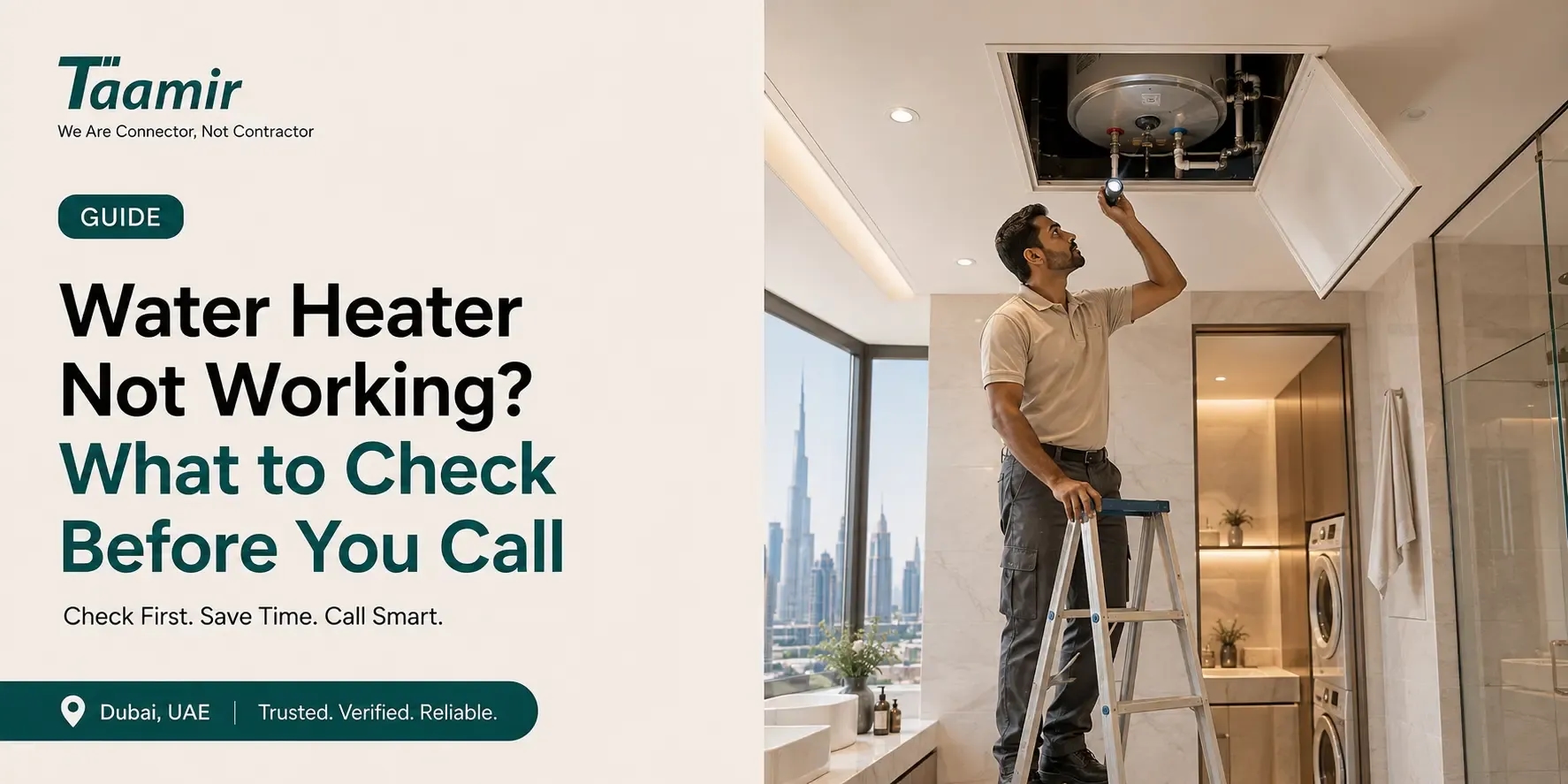
Water Heater Not Working? What to Check Before You Call
Before booking anyone, check four things: is the heater switched on, has its breaker tripped, is the thermostat set high enough, and have you given it enough time to heat. Those four explain a large share of "no hot water" calls, and all of them are free to check. If hot water still does not arrive after that, the fault is inside the unit — and that is a job for a licensed professional, because a water heater combines electricity and water.
The first cold shower of the season is a memorable way to discover something is wrong. The good news is that "no hot water" is rarely the disaster it feels like, and the checks below take about five minutes. Work through them first — you may fix it yourself, and if you do not, you will be able to describe the problem accurately when you compare verified plumbing professionals on Taamir.
Start with the switch
If you switched your water heater off over the summer to save energy, this is the first thing to check — and it catches more people than any other cause. The heater switch is usually on the wall outside the bathroom, sometimes inside a cupboard, and it is easy to forget it was ever turned off.
Switch it on and wait. A storage water heater does not heat instantly. Depending on the tank size, it can take from twenty minutes to well over an hour to reach temperature from cold. Many people switch it on, test the tap after five minutes, and conclude it is broken.
Then check the breaker
If the switch is on and nothing is happening, look at your distribution board. A tripped breaker sits in a middle position rather than fully off. Reset it once and see whether the heater comes to life.
If it trips again, stop. A breaker that keeps tripping on a water heater circuit is telling you there is an electrical fault, and repeatedly resetting it is not safe. That needs an electrical professional or a plumber qualified for the electrical side.
Check the thermostat setting
Most heaters have a temperature dial, often behind a small cover on the unit. It can be knocked to a low setting during cleaning or maintenance. If the water is warm but never hot, an incorrect thermostat setting is a likely explanation — and a very easy fix.
What the symptom is telling you
Once the basics are ruled out, the pattern points to the cause:
No hot water at all. With power confirmed, this usually means a failed heating element or a failed thermostat. Both are common repairs and both are professional jobs.
Water is warm but never hot. Often the thermostat setting, a partly failed element, or a build-up of sediment in the tank insulating the element from the water.
Hot water runs out very quickly. Usually sediment. Minerals settle at the bottom of the tank over the years and take up space that should hold hot water, so the tank effectively gets smaller. It can also mean a failed lower element, or simply a heater too small for the household's demand.
Discoloured or rusty water. This points to corrosion inside the tank, and it is worth acting on rather than ignoring. It often means the tank is nearing the end of its life.
Banging, popping or rumbling noises. Sediment again. Water trapped under the sediment layer boils and forces its way through, which makes the noise. It also means the heater is working harder than it should.
Water leaking from or around the unit. Treat this as urgent. Switch the heater off, turn off the water supply to it, and get it looked at. A small leak from a fitting can be repaired; a leaking tank cannot, and a full tank of water above a ceiling is a problem you do not want to leave.
If you live in an apartment
Check whether you have your own heater at all. Some buildings supply hot water centrally, which means there is no individual unit in your home. If your neighbours also have no hot water, that points to the building rather than your apartment, and the right first call is building management rather than a plumber.
If you do have your own heater, it is usually in a ceiling space, a service cupboard or above the bathroom, and it is yours to maintain.
Why heaters lose performance over time
Almost every problem above traces back to the same thing: sediment. Minerals in the water settle at the bottom of the tank, form a layer over the heating element, and force the heater to work harder to warm the water above it. That means slower heating, less hot water, more noise and more electricity used.
Periodic flushing removes that layer, and it is straightforward maintenance rather than a repair. Most people never do it, which is why heaters often underperform for years before anyone looks at them. It is worth asking a plumber to include a flush the next time they are in the property for something else.
Repair or replace?
A repair usually makes sense for a failed element, a failed thermostat, or a leaking fitting on an otherwise sound unit.
Replacement is usually the better answer when the tank itself is leaking, when the water is rusty, or when an old unit needs repeated repairs. If you are replacing, it is worth checking the efficiency rating: electric storage water heaters are a regulated product category in the UAE, covered by the country's technical regulations and energy efficiency labelling, which uses a five-star scale where more stars means lower running costs. Also get the size right for your household — an undersized tank will always run out, no matter how new it is.
Why this is not a DIY repair
A water heater brings electricity and water together in one appliance, usually installed in an awkward space above head height. Opening it up involves live components and a tank that may be full and hot. Element and thermostat replacement, tank flushing and any electrical fault all need someone qualified. The checks earlier in this guide are the safe ones — beyond those, it is a professional job.
What to ask when you book
1. Will you diagnose the cause before quoting for parts?
2. Is it the element, the thermostat, or the tank? Those are very different repairs.
3. Can you flush the tank while you are here if sediment is the issue?
4. Is the unit worth repairing, or is it near the end of its life?
5. If it needs replacing, what size do you recommend for this household?
6. Is the electrical side covered by whoever attends, or do I need a second trade?
7. Is there a warranty on the repair or the new unit?
How Taamir fits in
Hot water problems have a habit of arriving at the worst moment, and the difference between a quick fix and a repeat visit is usually whether someone diagnosed the real cause or just replaced the obvious part. On Taamir you can compare verified plumbing professionals side by side, check their quality signals and past work, and contact them directly. Every listed provider passes Taamir's checks before you see them. Use the questions above when you compare — particularly whether they will diagnose before quoting, and whether the electrical side is covered by the same person. Taamir takes no commission, so the quote reflects the work rather than a platform's cut. And because this is the kind of problem people want solved today, enquiries through Taamir get a response quickly — while the AI Cost Estimator can give you a scope of work and a price range in a few minutes so you know what you are dealing with beforehand.
Frequently Asked Questions
Why is there no hot water even though the heater is on?
With power confirmed and enough time allowed for heating, the usual causes are a failed heating element or a failed thermostat. Both are standard repairs, and both require a qualified professional because the unit combines electricity and water.
How long does a water heater take to heat up?
From completely cold, anywhere from around twenty minutes to over an hour, depending on the tank size. If you have just switched the heater back on after a period off, give it proper time before deciding something is wrong.
Why does my hot water run out so quickly?
Most often sediment. Minerals settle in the bottom of the tank over the years and take up space that should hold hot water, so the usable capacity shrinks. A failed lower heating element, or a tank too small for the household, can also be the reason.
My water heater is making banging noises — is that dangerous?
It is usually sediment rather than an emergency: water trapped beneath the sediment layer boils and forces its way through. It does mean the heater is working harder than it should, so it is worth having the tank flushed and checked.
Should I repair or replace my water heater?
Repair usually makes sense for a failed element, thermostat or fitting. Replace when the tank itself is leaking, when the water is discoloured, or when an older unit keeps needing repairs. If replacing, check the efficiency star rating and get the size right for your household.
How does Taamir help with a water heater problem?
Taamir lets you compare verified plumbing professionals in one place, check their quality signals, and contact them directly with no commission on your quote. You can confirm upfront that they will diagnose the cause before quoting for parts, whether they can flush the tank, and whether the electrical side is covered by the same person.
Check the simple things, then get it fixed properly
Four free checks solve a surprising number of hot water problems. When they do not, you will know exactly what to tell a professional. Find and compare verified plumbing professionals on Taamir, check their quality signals, and contact them directly — no commission, no hidden charges.