Wallpaper or Paint? How to Choose for Each Room
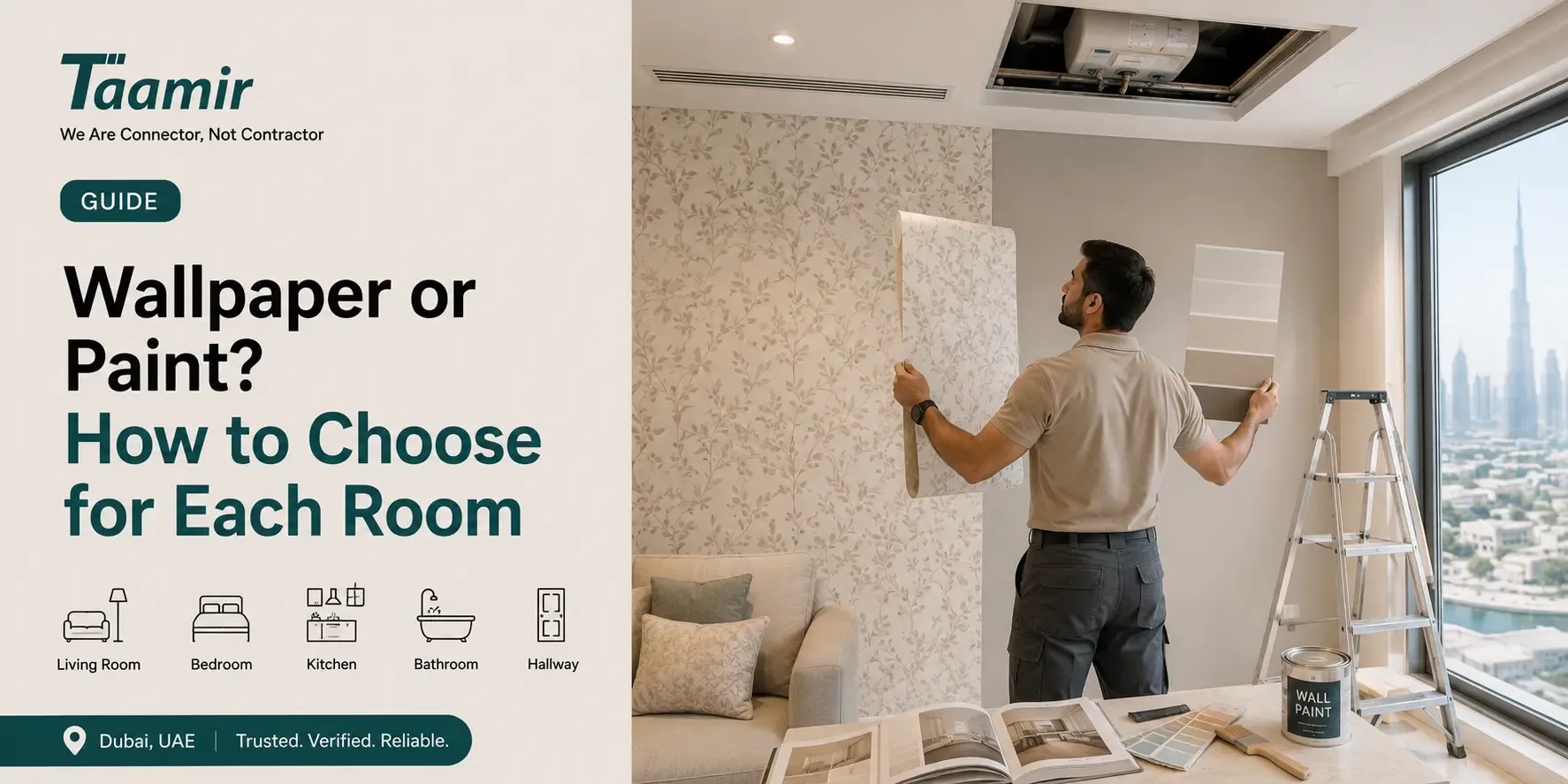
Wallpaper or Paint? How to Choose for Each Room
There is no single winner — they are good at different things. Paint wins for large areas, wet rooms, quick colour changes and easy touch-ups. Wallpaper wins for texture, pattern, depth, and hiding minor imperfections in a wall. The practical answer for most homes is both: paint through the majority of the space, and wallpaper where you want a wall to do something more than sit in the background.
It is one of the first decisions in any room refresh, and it is usually made on look alone. That is worth slowing down on, because the two behave very differently once they are up — how they age, how you clean them, what happens when something gets damaged, and how easy they are to change your mind about. Here is an honest comparison, room by room, so you can decide before you compare verified professionals on Taamir for either job.
The honest comparison
Look and effect. Paint gives you flat, even colour, and any colour you like. Wallpaper gives you pattern, texture and depth that paint cannot reproduce — woven grasscloth, plaster effects, murals, embossed designs. If you want a wall to have a physical quality rather than just a colour, wallpaper is the tool.
Wall condition. This one surprises people. Paint highlights every bump, filled hole and uneven patch, especially in shinier finishes. Wallpaper — particularly textured or patterned — disguises minor imperfections. On a wall that is not perfectly flat, wallpaper can be the more forgiving choice.
Wet rooms. Paint made for kitchens and bathrooms handles steam and splashes well. Wallpaper can work in these rooms too, but only vinyl types and only away from the immediate splash zone. Around a shower, tile is the right material regardless.
Durability. Good wallpaper on a well-prepared wall lasts a long time — often longer than paint before it needs attention. Paint scuffs and marks more readily in busy areas, though a durable finish narrows the gap.
Changing your mind. Paint is far easier and quicker to change. Wallpaper is a bigger commitment: removing it properly means stripping the paper and its old adhesive and making the wall good again before anything else goes on.
Repairs. This is the practical difference people forget. A scuff on a painted wall is touched up in minutes if you kept the leftover tin. Damaged wallpaper needs a patch cut from a leftover roll of the same batch, matched to the pattern — invisible if you kept one, obvious if you did not.
Upfront outlay. Paint is generally the lower initial spend for the same wall, because material and labour are both simpler. Wallpaper costs more to buy and to hang, and murals and delicate papers need a skilled installer. Whether that is worth it depends on what you want the wall to do.
Where paint is the better answer
Large areas and whole rooms, where wallpapering everything would be expensive and visually heavy.
Ceilings, in almost every case.
Bathrooms and kitchens, especially near water and heat.
Rooms you expect to change, including children's rooms as they grow.
Rented homes, where a repaint is simpler at the end of a tenancy.
Walls that will take knocks — hallways, stairs, utility areas — where quick touch-ups matter.
Where wallpaper is the better answer
Feature walls — behind a bed, a sofa, or a dining table.
Small statement rooms like a powder room, where being bold costs little.
Rooms that feel flat and need texture rather than another colour.
Walls with minor imperfections that paint would only highlight.
Ceilings you want to be interesting, which is a strong current look.
Spaces where you want an image, not just a shade — murals do something paint cannot.
Room by room
Living room — paint the main walls, wallpaper one wall if you want a focal point. Texture works particularly well here.
Bedroom — the classic case for wallpaper behind the bed, with the remaining walls painted in a coordinated tone.
Kitchen — paint, in a wipeable finish. Wallpaper only in the dining or seating end, well away from the hob and sink.
Bathroom — paint, or vinyl wallpaper in a powder room without a shower. Working extraction matters either way.
Hallway and entrance — either works. Paint if it takes daily knocks; wallpaper if you want an entrance that makes an impression.
Home office — texture behind you looks noticeably better on video calls than a flat wall.
Children's room — paint, or peel-and-stick wallpaper so it can change as they do.
Ceilings — paint, unless you are deliberately going for a papered ceiling as a feature.
The approach most homes end up with
Using both is not a compromise, it is the current standard: one papered wall, with the remaining walls and the trim painted in a tone chosen to sit with it. You get the texture and interest of wallpaper where it counts, and the practicality of paint everywhere else — including the parts that get touched, cleaned and knocked.
If you take that route, coordinate the two rather than choosing them separately. Pick the wallpaper first and match the paint to it, not the other way round. Wallpaper comes in fixed colourways and paint can be mixed to anything, so it is the flexible half of the pair. If you would rather have the whole scheme settled before anyone quotes, an interior designer is the right first call.
Three questions that usually decide it
1. How long do you want it to stay? If the answer is "until I get bored", lean paint. If it is "this is the room, done properly", wallpaper earns its place.
2. What condition is the wall in? A wall with visible unevenness is friendlier to textured wallpaper than to a satin paint finish.
3. How much traffic does it get? Walls people brush past want a durable painted finish or a wipeable vinyl paper — not a delicate natural fibre.
What goes into the room
One thing worth knowing about paint specifically. As paint dries it releases compounds — the smell of a freshly painted room — and lower-emission products mean less odour and a room usable sooner. In the UAE this is regulated rather than left to chance: paints and varnishes cannot enter the market unless they carry a data sheet on the packaging showing the product's environmental performance, whether imported or made locally, and there is a green label and star rating covering volatile organic compounds and heavy metals in building paints.
So if you choose paint, you can check the packaging and ask for a low-emission product — worth doing in bedrooms and children's rooms. If you choose wallpaper, the equivalent question is about the adhesive, so ask your installer what they use.
Preparation matters either way
Whichever you pick, the wall underneath decides the result. Both need a clean, sound, dry surface, both need holes filled and cracks made good, and both need the right primer. And both have the same rule about moisture: if there is any sign of damp, find and fix the cause first. Covering it — with paint or paper — hides it briefly and it comes back through.
That is also why a quote that looks cheap is often a quote with the preparation left out. Ask what is included before comparing numbers.
How Taamir fits in
Whichever way you go, the finish depends on who does it — preparation, seams, cutting in and edges are all skill, and all invisible once the room is done. On Taamir you can compare verified wallpaper professionals and verified painting professionals side by side, and contact them directly. Three things worth confirming with either trade: whether preparation and priming are included in the quote or charged separately; how they will handle the wall's current condition; and, if you are doing both in one room, whether they can coordinate the wallpaper and paint colours rather than matching by eye afterwards. Taamir takes no commission, so the quote reflects the work — and the AI Cost Estimator will give you a scope of work and a price range for either option in a few minutes, which is a practical way to compare the two before committing.
Frequently Asked Questions
Is wallpaper better than paint?
Neither is better overall — they are good at different things. Paint suits large areas, wet rooms, quick changes and easy touch-ups. Wallpaper suits texture, pattern, depth and disguising minor wall imperfections. Most homes get the best result using both.
Does wallpaper last longer than paint?
Good wallpaper on a well-prepared wall often lasts longer before it needs attention, since paint scuffs and marks more readily in busy areas. The trade-off is that paint is far easier to touch up or change when you want something different.
Is wallpaper suitable for bathrooms and kitchens?
Only vinyl types, and only away from the immediate splash zones — around a shower or behind a hob, tile or a wipeable paint finish is the right choice. Working extraction matters just as much as the material you choose.
Can wallpaper hide bad walls?
It helps. Textured and patterned wallpaper disguises minor imperfections that paint — especially a shinier finish — would highlight. It is not a substitute for repairs, though: significant damage still needs filling and making good first.
Should I use wallpaper and paint in the same room?
Very often, yes, and it is the most popular approach now. One papered feature wall with the remaining walls and trim painted to coordinate gives you texture where it counts and practicality everywhere else. Choose the wallpaper first, then match the paint to it.
How does Taamir help me choose between them?
Taamir lets you compare verified wallpaper and painting professionals in one place, check their quality signals, and contact them directly with no commission on your quote. The AI Cost Estimator can also give you a scope of work and a price range for either option, which is a practical way to compare the two before you decide.
Choose by the room, not by the trend
The right answer changes wall by wall — and using both is usually the best result rather than a compromise. Find and compare verified professionals on Taamir for whichever you choose, check their quality signals, and contact them directly — no commission, no hidden charges.