Before You Install Wallpaper: What to Check, and What to Ask Your Contractor
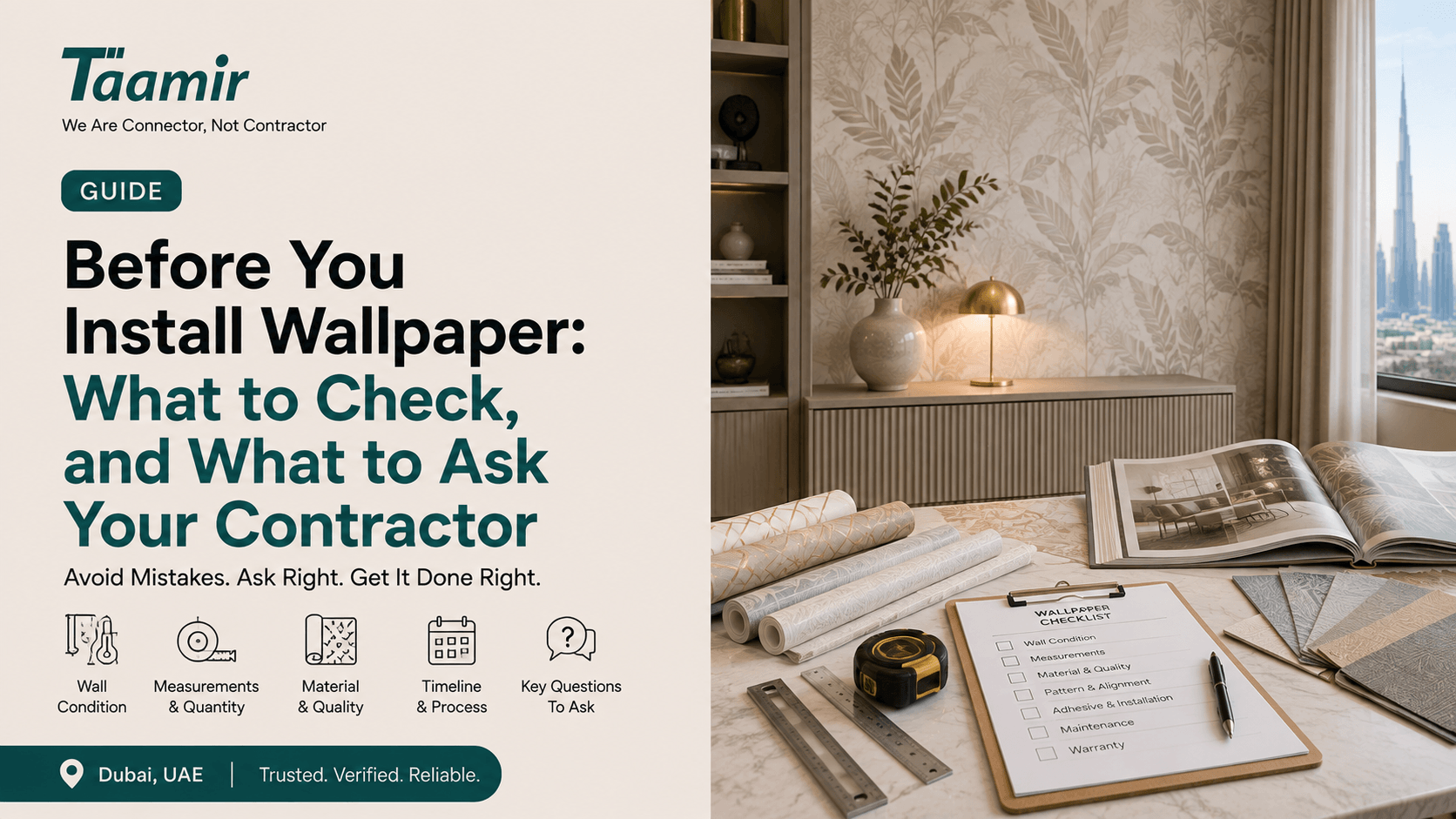
Before You Install Wallpaper: What to Check, and What to Ask Your Contractor
Whether wallpaper looks flawless in three years or starts lifting at the seams in three months is decided before a single drop goes up. Three things matter most: the wall is clean, sound, repaired and properly primed; the material suits the room it's going in; and you have enough paper from a single batch to finish the job. Everything else — pattern matching, seams, corners — is craft, and the questions further down let you check your contractor has it covered.
Wallpaper is one of the few finishes where the preparation is genuinely more important than the product. A beautiful paper hung on an unprepared wall will disappoint you; a modest paper hung properly will look expensive. That's worth knowing before you book anyone, because it tells you what a complete quote should include and what to ask about — and it's the difference between comparing verified wallpaper professionals on Taamir on the things that matter, rather than on the number at the bottom.
Why preparation decides the result
There's a mechanical reason the wall matters so much. Wallpaper is hung with a water-based adhesive, and as that adhesive cures the paper contracts slightly — which puts a steady pull on whatever it's stuck to. The Wallcoverings Association, the industry's trade body, is blunt about the consequence: if the wall surface isn't sound, adhesion failure will occur, and getting the surface properly prepared is the most important part of the whole job.
In other words, lifting seams and bubbles usually aren't a paper problem or even a hanging problem. They're a preparation problem that only shows up weeks later.
Before you order: material, quantity, batch
Choose the material for the room, not just the look. Non-woven papers are the stable, straightforward default for bedrooms, living rooms and hallways. Vinyl and vinyl-coated papers are wipeable and moisture-tolerant, which makes them the sensible pick for kitchens, powder rooms and busy hallways. Natural fibres like grasscloth and silk give the most beautiful texture but mark easily and don't like moisture, so keep them to dry, air-conditioned rooms. If you're still choosing, our guide to interior designers covers getting the pattern and palette decided before anyone quotes.
Order it all at once, and check the batch numbers. This is the single most avoidable mistake in wallpapering. Rolls are produced in batches — also called run or lot numbers — and colour can shift subtly between them. Two rolls from different batches hung side by side can show a visible difference in the wrong light. Order everything for the job in one go, from one batch, and have every roll checked before work starts.
Order more than you think you need. Pattern repeats create waste, because each drop has to be cut to align with the last, and a large repeat wastes more than a small one. Order a sensible surplus so you don't run short mid-wall — and keep what's left over, which brings us to the point most people miss: if a section is ever damaged, a leftover roll from the original batch is the only way to repair it invisibly.
The wall: what has to be true before anything goes up
Run through this list, or better, ask your contractor to confirm it:
Clean, dry and structurally sound, free of grease and dust. Adhesive won't bond to a chalky, dusty or crumbling surface.
Stains dealt with properly. Ink, grease and marks need sealing with a stain-blocking primer, or they can bleed through the new paper over time. Painting over them isn't enough.
Any moisture source fixed first. If there's any sign of damp or mildew on the wall, the cause has to be resolved before anything is sealed or covered — papering over it simply hides it while it continues.
Glossy paint sanded back. Gloss and semi-gloss surfaces need to be sanded dull and given an adhesion-promoting primer, or the paper has nothing to grip.
Holes, cracks and irregularities filled and sanded smooth. Wallpaper telegraphs whatever is underneath it, especially in raking light. A good installer's trick: run your hand across the finished wall with your eyes closed — your palm finds flaws your eye skims past.
Old wallpaper and old adhesive fully removed. Removing the paper isn't the end of the job; leftover adhesive leaves an uneven surface that's hard to bond to. Our guide to removing wallpaper covers the process if you're clearing the wall yourself.
New paint or plaster fully cured. Fresh surfaces still releasing moisture are a common cause of seams opening later. Give them time before papering.
Primed. Not optional. A wallpaper primer gives the adhesive a consistent surface to bond to, stops a porous wall drinking the paste, and makes the paper far easier to remove cleanly when you eventually change it.
The questions to ask your contractor
Ask these before you accept a quote. Good installers answer them easily — and the answers tell you whether you're comparing like with like:
Is wall preparation and priming included in the quote, or charged separately? This is the biggest source of surprises. Get it in writing either way.
Will you remove the existing wallpaper and the old adhesive, and make good? Removal, adhesive stripping, filling and sanding are four different tasks. Confirm which are included.
What primer will you use on my walls? The right primer depends on the surface — bare plaster, painted, previously papered and glossy surfaces all need different treatment. A professional will have a specific answer.
Will you test the existing paint before hanging? Painted walls can be tested for soundness — a quick tape test reveals whether the existing paint is well bonded, and if it isn't, hanging paper over it means both layers eventually come away together. Asking this question tells you a lot about how thorough someone is.
Will you check all the rolls are from the same batch before starting? Ideally before the first drop is cut, not halfway through the wall.
How will you handle pattern matching and seam placement? For a large repeat or a mural, ask where the first drop lands and where the pattern break falls — you want the awkward join in the least visible corner, not beside the sofa.
How will you deal with switches, sockets and corners? Plates should be removed and refitted rather than cut around, with the power isolated first. Anything that needs disconnecting is work for an electrical professional, not a shortcut.
Who supplies the paper, and what happens if we run short? If you're supplying it, the risk of a shortfall is yours — which is another reason to over-order.
How long does it need to dry, and under what conditions? A clear answer here is a good sign.
Will you leave the offcuts and the batch details? Your future self will want them.
Conditions during and after hanging
A few site conditions genuinely affect the outcome, and they're easy to get right once you know:
Let the material settle. Wallcoverings are usually best left in the room for a few days before installation so they adjust to the conditions they'll live in.
Keep conditions steady while it dries. Adhesive needs to dry evenly. Blasting cold air directly at a freshly papered wall, or leaving a strong draught running across it, can dry the surface faster than the seams — which is exactly how edges lift. Comfortable, stable, and no air blowing straight at the wall is the goal.
Give it time undisturbed. Wallpaper typically needs a day or two to dry fully. Resist hanging things, pushing furniture back against it, or scrubbing at any residue during that window.
Then check it in daylight. Walk the wall in natural light and look along the seams from an angle. If anything needs attention, raise it while the installer is still on the job.
After it's up
Keep the leftover roll and note the batch number somewhere you'll find it — that's your repair kit. Clean according to the material: vinyl and coated papers wipe down easily, while textured and natural-fibre papers should only be dusted or gently vacuumed, never scrubbed. And if you're coordinating the papered wall with painted trim or adjacent walls — a strong look this year — it's worth having your painting professional work to the same palette rather than matching by eye afterwards.
How Taamir fits in
Wallpaper is a finish where the installer matters as much as the paper, because everything that goes wrong later traces back to preparation you can't see once the job's done. On Taamir you can compare verified wallpaper professionals side by side, review their quality signals and past work, and connect with them directly — every listed provider passes Taamir's verification before you ever see them. Use the ten questions above when you compare: whether preparation and priming are in the quote, how they'll handle removal and adhesive stripping, what primer they'll use, how they'll manage pattern matching and seams, and whether they'll check batch numbers before starting. Because Taamir adds no commission, the quote reflects the work rather than a platform's cut — and you'll be comparing quotes that actually describe the same job.
Frequently Asked Questions
Do walls need to be primed before wallpaper?
Yes, in almost all cases. Primer gives the adhesive a consistent surface to bond to, stops porous walls absorbing the paste, seals stains so they can't bleed through, and makes future removal much cleaner. Skipping it is one of the most common causes of lifting seams.
What happens if the wall isn't prepared properly?
As the adhesive cures, the paper contracts and pulls on the wall surface. If that surface isn't sound — dusty, chalky, glossy, or still holding old adhesive — the bond fails, which shows up as lifting seams, bubbles or peeling weeks or months after installation.
Why do wallpaper batch numbers matter?
Colour can vary subtly between production batches, so rolls from different batches hung side by side may not match. Order everything for the job at once from a single batch, and have all rolls checked before the first drop is cut.
Can wallpaper be hung over existing wallpaper?
It's generally best not to. The existing paper must be perfectly bonded with no lifting seams, and any texture underneath will show through. Removing the old paper and its adhesive, then repairing and priming the wall, gives a far better and longer-lasting result.
How much extra wallpaper should I order?
More than the bare measurement, because pattern repeats create waste — each drop is cut to align with the last, and larger repeats waste more. A surplus also leaves you a piece from the original batch for invisible repairs later, which is worth having.
How does Taamir help with a wallpaper installation?
Taamir lets you compare verified wallpaper professionals in one place, review their quality signals and past work, and connect directly with no commission on your quote. You can confirm upfront whether preparation and priming are included, how they'll handle removal, pattern matching and seams, and whether batch numbers are checked before work begins.
Get the wall right, and the paper takes care of itself
Almost everything that goes wrong with wallpaper is decided before the first drop goes up — which makes the questions you ask beforehand the most valuable part of the project. Find and compare verified wallpaper professionals on Taamir, review their quality signals, and connect directly — no commission, no hidden charges.