How to Clean and Care for Wallpaper in Dubai
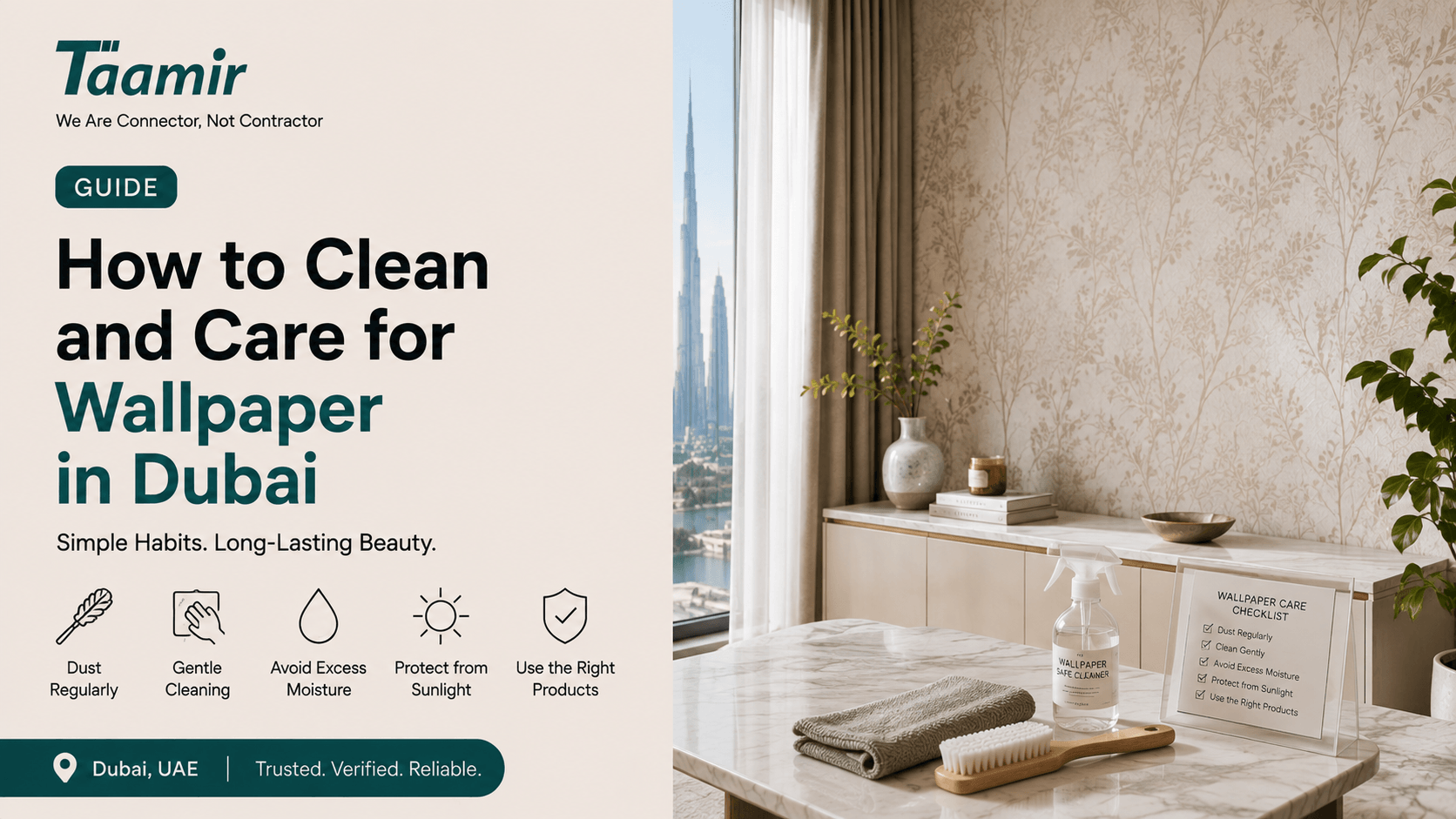
How to Clean and Care for Wallpaper in Dubai
Looking after wallpaper comes down to four habits: dust it regularly, clean it the right way for its material (some types wipe, some must only be dusted), fix lifting seams early before they spread, and keep indoor conditions steady so the adhesive stays happy. Do those and good wallpaper stays looking new for years. Ignore them and small problems turn into a wall that needs redoing.
Wallpaper is one of the few finishes people are nervous about cleaning, so most of the time they leave it alone completely. That is a shame, because a light routine takes minutes and makes a real difference — and because the one thing that does cause lasting damage is using the wrong method on the wrong material. This guide explains how to look after every common type, how to fix small problems yourself, and when it is worth calling a verified wallpaper professional on Taamir.
First, know what your wallpaper is made of
Everything else depends on this. Cleaning a delicate paper the way you would clean a vinyl one will ruin it, and the difference is not always obvious by looking.
Vinyl and vinyl-coated — the toughest and easiest to clean. It has a plastic-based surface, so it handles a damp cloth and mild soap. This is what most kitchens, bathrooms and hallways use.
Non-woven — the common choice for bedrooms and living rooms. It takes light, careful wiping, but it is not built for scrubbing or heavy water.
Natural fibres — grasscloth, silk, jute — beautiful and delicate. Dry cleaning methods only. Water marks these permanently, so a damp cloth is not an option.
Textile and fabric-backed — treat like natural fibre: dusting and gentle vacuuming, nothing wet.
Peel-and-stick — usually wipes clean gently, but avoid soaking the edges, which is where it starts to lift.
If you are not sure which you have, look for the leftover roll or the order details. Failing that, test any cleaning method on a hidden patch first — behind a door, or low down behind furniture.
The everyday routine
Most wallpaper care is simply dust control:
Dust every few weeks, working from the top down so anything you loosen falls onto areas you have not done yet.
Use a soft brush or a vacuum brush attachment on low suction. This is the safe method for every type, including delicate ones.
Pay attention to textured paper. Grasscloth, embossed and woven designs hold more dust in their surface, so they need dusting more often than a smooth print.
Do not let dust build up. Dust is slightly abrasive, and over time it dulls the surface — so regular light dusting actually protects the finish.
Cleaning marks the right way
For washable types (vinyl and vinyl-coated), and carefully for non-woven:
Test a hidden spot first. Always. It takes a minute and saves a wall.
Use a barely damp cloth with plain water, or a very mild soap solution if water alone is not enough. Wring the cloth out well — it should be damp, never wet.
Blot and wipe gently. Do not scrub. Rubbing hard can polish the surface, lift the pattern or damage the seams.
Work in small sections and dry as you go with a clean cloth.
Never let water sit on a seam. Seams are the weak point, and water sitting there loosens the adhesive underneath.
What to avoid on all types: abrasive pads and scouring cream, strong or solvent-based cleaners, bleach, and soaking the paper. And never mix cleaning products — some combinations release genuinely dangerous fumes.
For natural fibre and textile papers, that whole list is off the table. Dust them, vacuum them gently, and for a mark, try a soft dry sponge. Anything more is a job for someone who has handled these papers before.
The marks you are most likely to get
Fingerprints and scuffs appear around light switches, door frames and hallway corners. On washable paper, a barely damp cloth handles them. On delicate paper, a dry sponge is safer.
Kitchen grease builds up gradually near the hob. Deal with it early on vinyl paper with a mild soap solution — old, hardened grease is much harder to shift. If the whole kitchen needs resetting rather than just the wall, that is a job for a cleaning professional.
Dust in textured paper needs the brush attachment rather than a cloth, which just pushes dust further into the texture.
Sticky marks should be softened with a barely damp cloth and lifted gently, never scraped.
Humidity, seams and the AC
Wallpaper is held on with adhesive, and adhesive responds to the conditions around it. The National Center of Meteorology's climate reporting notes that maximum humidity in the UAE through August generally runs between 63 and 80 per cent, while an air-conditioned room indoors sits much lower. That difference is not a problem in itself — a normally cooled home is a good, stable environment for wallpaper. What is worth avoiding is big swings.
In practice:
Keep conditions reasonably steady, rather than letting a room sit closed up and unconditioned for long stretches and then cooling it hard.
Do not aim cold air directly at a papered wall. A vent blowing straight onto one spot dries that area differently to the rest, and edges can lift over time.
Ventilate bathrooms and kitchens properly. Steam that has nowhere to go ends up in the paper and in the adhesive behind it.
Deal with any damp quickly. If paper is lifting in one specific area and the wall behind feels cool or damp, the wallpaper is the symptom rather than the problem — find the moisture source first.
Fixing small problems early
These are quick jobs when you catch them, and much bigger ones if you do not:
A lifting seam. The most common issue, and the easiest to stop early. A small amount of seam adhesive applied under the edge, pressed down with a seam roller and wiped clean, usually solves it. Left alone, the open edge collects dust and dirt, which then stops it ever bonding properly again.
A small bubble. Usually a pocket of air or adhesive. A tiny slit with a sharp blade, or a fine needle, lets the air out — then smooth it flat from the centre outwards. Do not press hard enough to crease the paper.
A tear or scuff. This is where your leftover roll earns its keep. A patch cut from the same batch, matched to the pattern and applied over the damaged area, is close to invisible. Without a leftover piece, the colour will not match exactly — which is why keeping a spare roll matters so much.
A peeling corner. Re-glue it early with a small amount of adhesive and press it back. Corners take the most knocks, so check them now and then.
When it is a bigger job
Call a professional when:
Several seams are lifting across a wall, rather than just one edge.
The paper is bubbling in large areas, which often means the wall was not properly prepared or primed underneath.
There is any sign of moisture behind the paper. The cause needs fixing first — sometimes that is a plumbing issue, sometimes it is waterproofing — and only then does the wall covering get dealt with.
A large section is damaged and needs patching or a wall needs re-papering, especially with a pattern that has to line up.
You have delicate paper — grasscloth, silk or textile — with a mark you cannot lift by dusting.
How long should wallpaper last?
Good quality wallpaper, hung properly on a well-prepared wall, lasts many years — often far longer than paint would. What usually decides its life is not wear, but taste: people change it because they want something different. That said, it is worth replacing when seams are lifting in several places at once, when the surface is stained or faded beyond cleaning, or when it was hung over an unprepared wall and is now failing across the whole surface.
If you are thinking of changing it rather than repairing it, removing the old paper properly — including the old adhesive underneath — is what makes the next installation look good, so it is worth having that done properly too. The same applies if you are switching to paint instead: the wall still needs stripping back and preparing first, or the finish will show it.
How Taamir fits in
Wallpaper repairs are detailed work. Matching a pattern, re-gluing a seam invisibly and patching without leaving an obvious rectangle are all skills, which is why the same repair can look perfect or look worse than the damage. On Taamir you can compare verified wallpaper professionals side by side, look at their quality signals and past work, and contact them directly — every listed provider passes Taamir's checks before you see them. For a repair or a re-paper, it is worth asking three things upfront: whether they will match the pattern and batch on a patch repair; whether they can advise on your specific material rather than treating all wallpaper the same; and whether removing old paper and preparing the wall is included if you are starting again. Taamir takes no commission, so the quote reflects the work — and if you want an idea of the job first, the AI Cost Estimator gives you a scope of work and a price range in a few minutes.
Frequently Asked Questions
Can you clean wallpaper with water?
It depends on the type. Vinyl and vinyl-coated wallpaper handles a barely damp cloth and mild soap. Non-woven takes light, careful wiping. Natural fibre papers such as grasscloth and silk should never get wet — water marks them permanently, so dust and gentle vacuuming only.
How do I get marks off wallpaper?
Test a hidden area first, then use a barely damp cloth with plain water or very mild soap on washable types. Blot and wipe gently instead of scrubbing, work in small sections, and dry as you go. Avoid abrasives, bleach and strong cleaners on every type of wallpaper.
Why are my wallpaper seams lifting?
Usually water or moisture reaching the seam, air blowing directly onto that part of the wall, or a wall that was not properly prepared and primed before hanging. Fix a single lifting seam early with seam adhesive and a roller — several lifting seams at once points to a bigger issue underneath.
How do I fix a bubble in wallpaper?
Make a tiny slit with a sharp blade or use a fine needle to release the trapped air, then smooth the area flat from the middle outwards. Press gently — hard pressure creases the paper. Large or multiple bubbles usually mean a preparation problem and are worth a professional look.
Should I keep leftover wallpaper?
Yes, and note the batch number with it. Colour varies slightly between production batches, so a patch cut from your original roll is the only way to repair damage invisibly. It is the single most useful thing you can keep after an installation.
How does Taamir help with wallpaper repairs?
Taamir lets you compare verified wallpaper professionals in one place, check their quality signals and past work, and contact them directly with no commission added to your quote. You can ask upfront about pattern and batch matching for patch repairs, advice for your specific material, and whether wall preparation is included if you are re-papering.
Keep it looking new
A soft brush, the right cloth and a quick fix at the first sign of a lifting seam will keep wallpaper looking new for years. Find and compare verified wallpaper professionals on Taamir for the repairs worth doing properly — check their quality signals and contact them directly, with no commission and no hidden charges.