7 Smart Gadgets To Lower Your DEWA Bill For Dubai Summers, 2026
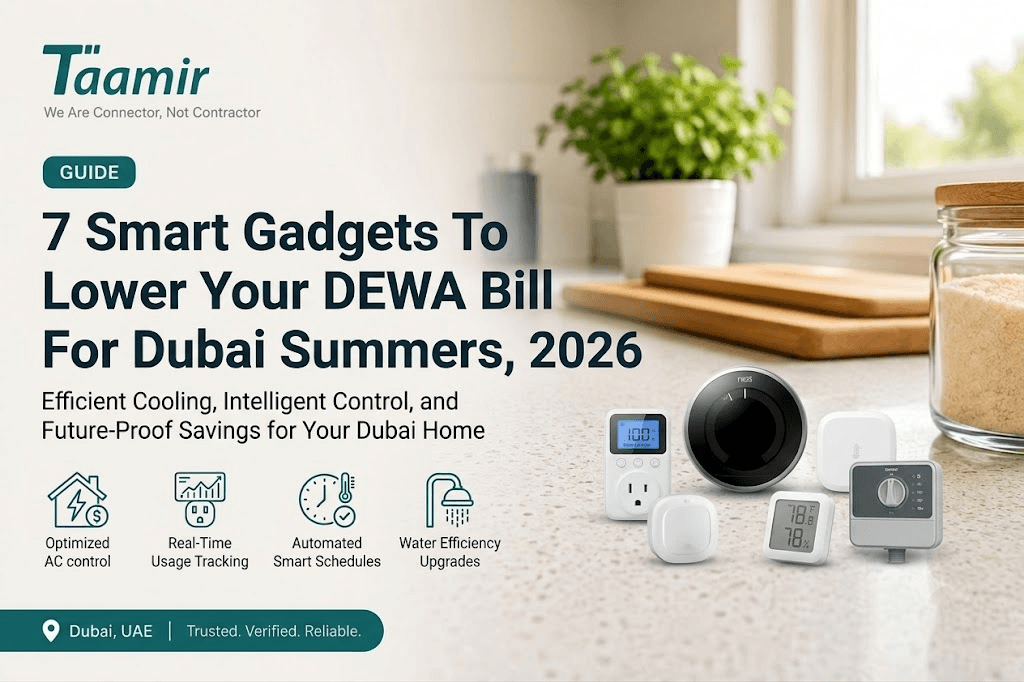
As utility costs continue to rise and sustainability becomes a growing priority, more homeowners and residents in Dubai are looking for practical ways to reduce their monthly energy expenses. With air conditioning, lighting, water heating, and household appliances accounting for a significant portion of electricity consumption, adopting Smart Gadgets To Lower Your DEWA Bill has become one of the most effective strategies for improving energy efficiency.
Today's smart homes are no longer just about convenience and luxury. Many modern devices are specifically designed to optimize energy usage, reduce waste, and help homeowners lower their DEWA bills without compromising comfort. As a result, energy-efficient smart home solutions are becoming increasingly popular across Dubai's residential market.
In this guide, we'll explore some of the best smart home devices that can help reduce energy consumption, improve efficiency, and lower monthly utility costs.
Why Energy Management Matters in Dubai
Dubai's climate creates unique energy challenges. Air conditioning systems often run for most of the year, making cooling one of the largest contributors to household electricity consumption. In addition, lighting, water heaters, kitchen appliances, and electronic devices can significantly impact monthly utility bills.
Effective energy management offers several important benefits:
• Lower monthly electricity and water costs
• Improved energy efficiency
• Reduced resource waste
• Longer equipment lifespan
• Lower environmental impact
By investing in smart technology, homeowners can gain greater control over their energy usage while improving the overall performance of their homes.
1. Smart Thermostats for Intelligent Climate Control
In Dubai, cooling systems typically account for the largest share of residential energy consumption. For this reason, a smart thermostat is often one of the most effective investments for reducing electricity costs.
Smart thermostats automatically adjust indoor temperatures based on occupancy, daily schedules, and user preferences. Many systems can also be controlled remotely through smartphone apps.
Benefits of Smart Thermostats
• Reduced air conditioning usage
• Automated temperature adjustments
• Remote access and control
• Lower electricity consumption
• Improved HVAC system efficiency
For example, homeowners can schedule their cooling systems to operate at higher temperatures when the house is empty and automatically cool the property before residents return home.
2. Smart Lighting Systems
Lighting may not consume as much energy as air conditioning, but inefficient usage can still contribute significantly to electricity costs over time.
Smart lighting systems allow homeowners to manage their lights through mobile devices, automation schedules, or voice assistants.
Key Features
• Automatic on/off scheduling
• Remote lighting control
• Adjustable brightness levels
• Motion sensor integration
• Customized lighting scenes
These features help eliminate unnecessary energy usage while enhancing convenience and comfort.
3. Smart Plugs and Smart Power Strips
Many electronic devices continue drawing electricity even when they're turned off. This "phantom load" or standby power consumption can quietly increase energy bills throughout the year.
Smart plugs provide a simple solution by allowing homeowners to control power usage more effectively.
Advantages of Smart Plugs
• Eliminate standby power consumption
• Schedule device operation
• Monitor energy usage
• Control appliances remotely
• Improve household safety
By automatically cutting power to unused devices, smart plugs can generate meaningful long-term savings with minimal investment.
4. Automated Smart Blinds and Curtains
Dubai's intense sunlight can significantly increase indoor temperatures, forcing air conditioning systems to work harder throughout the day.
Smart blinds and motorized curtains help regulate solar heat gain by automatically adjusting based on sunlight intensity, temperature, or time of day.
Benefits of Smart Window Treatments
• Reduced indoor heat buildup
• Lower cooling costs
• Improved comfort levels
• Protection for furniture and flooring
• Better overall energy efficiency
Managing natural sunlight effectively can have a noticeable impact on both energy consumption and indoor comfort.
5. Smart Water Heaters
Water heating is another major source of household energy consumption. Traditional water heaters often operate continuously, wasting energy when hot water is not needed.
Smart water heaters allow users to schedule operation times and control heating remotely.
Benefits of Smart Water Heaters
• Heat water only when needed
• Reduce energy waste
• Monitor usage patterns
• Remote management through mobile apps
• Lower electricity costs
These systems are particularly useful for families with predictable daily routines.
6. Smart Occupancy and Motion Sensors
Occupancy sensors are among the most cost-effective smart home devices available for improving energy efficiency.
These sensors detect whether a room is occupied and automatically control connected systems accordingly.
Common Applications
• Turning lights off in empty rooms
• Adjusting air conditioning settings
• Managing ventilation systems
• Controlling connected devices
By ensuring that energy is only used when necessary, occupancy sensors help eliminate waste throughout the home.
7. Home Energy Management Systems
For homeowners seeking maximum efficiency, a dedicated home energy management system offers the most comprehensive solution.
These systems provide real-time insights into electricity and water consumption, helping residents identify inefficiencies and optimize usage patterns. Learn more about smart home dubai solutions that integrate energy monitoring with automation features.
Key Features
• Live energy monitoring
• Consumption analytics
• Identification of high-energy devices
• Automated efficiency recommendations
• Integration with smart home devices
The ability to track and analyze energy usage allows homeowners to make more informed decisions that result in long-term savings.
How Smart Devices Help Reduce DEWA Bills
A significant portion of household energy costs comes from inefficient usage rather than actual necessity. Lights left on unnecessarily, excessive air conditioning, standby power consumption, and inefficient water heating all contribute to higher utility bills.
Smart home devices help reduce these costs by:
• Automating energy-saving actions
• Minimizing wasted electricity
• Optimizing appliance performance
• Providing detailed consumption insights
• Giving homeowners greater control over energy use
Over time, these improvements can translate into substantial savings on monthly DEWA bills.
What to Consider When Choosing Smart Home Devices
Not all smart devices deliver the same level of performance or efficiency. Before investing, homeowners should evaluate several important factors.
Compatibility: Choose products that integrate easily with existing smart home systems and platforms.
Brand Reputation: Established manufacturers typically offer better reliability, support, and product longevity.
Cybersecurity: Since smart devices connect to the internet, robust security features are essential for protecting personal data and home networks.
Software Updates: Regular updates help maintain performance, improve security, and ensure long-term compatibility.
Are Smart Home Devices Worth the Investment?
In most cases, yes.
While smart technology requires an initial investment, the long-term savings often outweigh the upfront costs. Beyond reducing DEWA bills, smart home devices offer additional benefits such as greater convenience, enhanced comfort, improved security, and increased property value.
As energy prices continue to rise and sustainability becomes increasingly important, smart home technology represents a practical and future-focused investment for Dubai homeowners. Many residents are now exploring smart home dubai upgrades as part of their long-term energy-saving strategy.
Reducing energy consumption doesn't have to mean sacrificing comfort. With the right smart home devices, homeowners in Dubai can significantly improve efficiency while lowering monthly DEWA expenses.