Post-Renovation Cleaning in Dubai: What It Involves and Why It's a Separate Job
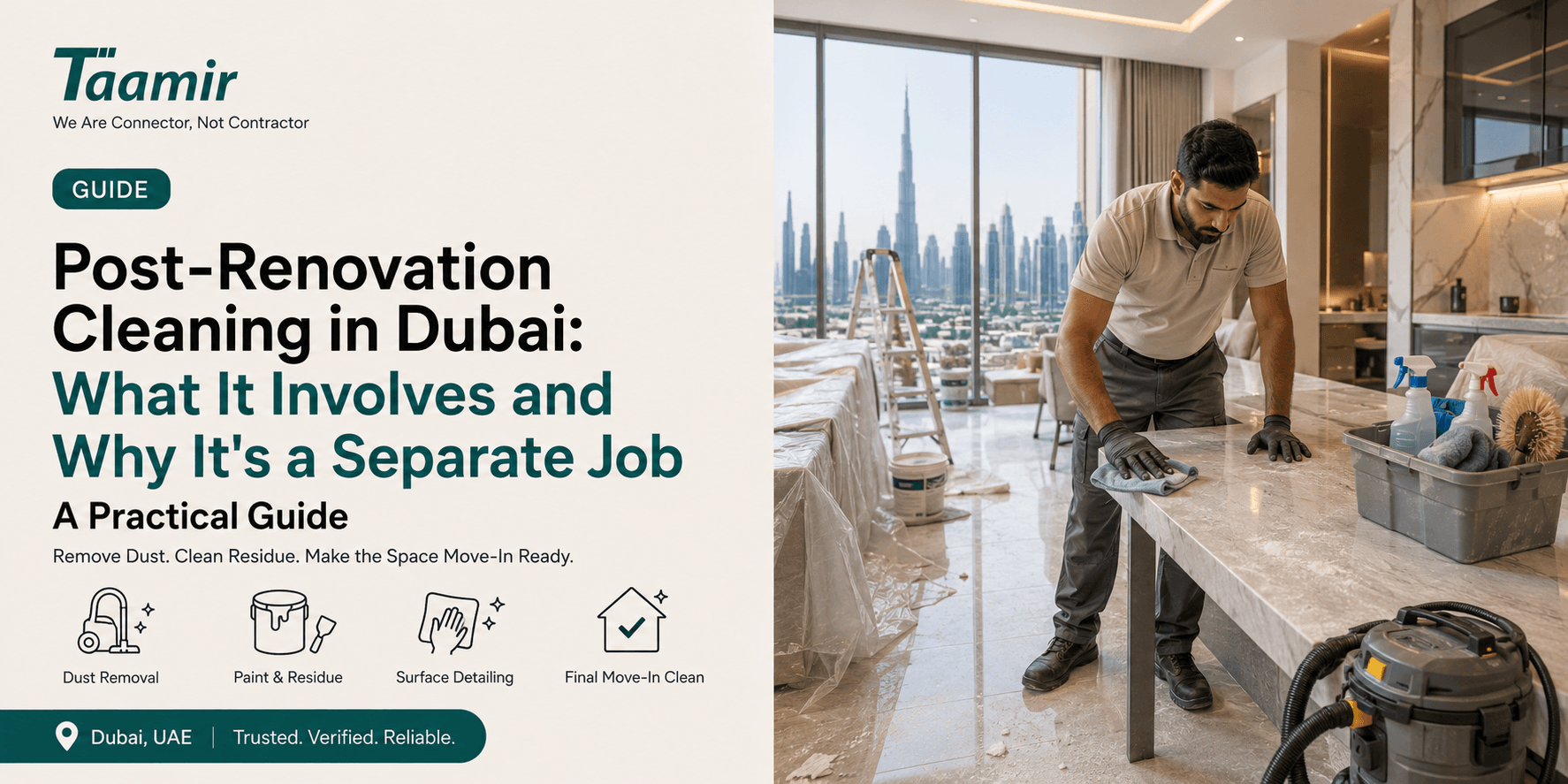
Post-Renovation Cleaning in Dubai: What It Involves and Why It's a Separate Job
Cleaning after a renovation is not just a bigger version of a normal clean. It is a different job that needs a different method. Building dust is very fine, it floats in the air long after the work stops, and it settles in places normal cleaning never reaches: inside cupboards, along window tracks, on top of doors, around sockets and inside your AC. A proper post-renovation clean is done in stages, from top to bottom, with the right equipment — and it should happen after every worker has finished, but before your furniture arrives.
You have just spent weeks, maybe months, getting a space right. The last thing in your way is a grey film of dust over everything. Most people treat this as one afternoon with a vacuum and a spray bottle. That is where it goes wrong, because building dust does not behave like normal house dust — clean it the usual way and you mostly move it from one surface to another. This guide explains what a proper clean involves, the order that works, and what to check before you contact a verified cleaning professional on Taamir.
Why building dust is different
House dust is mostly fabric fibres and skin. Building dust is crushed plaster, cement, sawdust, grout and paint — much finer, much lighter, and there is a lot more of it. Three things follow from that:
It stays in the air for a long time. Fine dust is still floating and still landing hours after the last worker leaves. Clean too early, or clean only once, and you will find a fresh layer the next morning.
It gets everywhere. Inside kitchen cupboards and wardrobes, on top of door frames and skirting, in window and sliding-door tracks, behind and under appliances, in light fittings, around switches and sockets, and into AC vents and filters.
The wrong method makes it worse. Sweeping and dry dusting lift the fine dust back into the air, so it lands again. Dry brushing a gritty surface can scratch new finishes. And a normal home vacuum without a good filter can blow the finest dust straight back out.
This is why professionals use vacuums with strong filters and always work from the top down, instead of just working harder with the same tools.
When to book it
Timing matters more than anything else here:
After every worker has finished — including anyone coming back for touch-ups. If a painter is returning for one wall, or a carpenter is coming back to adjust a door, book the clean after them, not before.
Before the furniture goes in. An empty room can be cleaned properly. A full one cannot. This is the easiest win available, and it costs you nothing.
Expect more than one visit. Because fine dust keeps landing, the best results come from a full clean followed by a lighter second visit a few days later. Ask if that is included or booked separately.
If you are moving in as well as renovating, the best order is: workers finish → post-renovation clean → final check → furniture and belongings.
What a proper clean covers
A good job is done in stages, and each stage sets up the next:
Stage 1 — Clear the rubbish. Offcuts, packaging, plastic sheeting, masking tape and leftover materials all go first. Nothing else can be done properly until the space is empty.
Stage 2 — Rough dust, top to bottom. Ceilings, lights and fans, high shelves, walls, then downwards. Working from the top means anything knocked loose lands on surfaces that have not been cleaned yet. Doing it the other way round means cleaning twice.
Stage 3 — The detailed work. This is what makes it different from a deep clean: inside every cupboard, drawer and wardrobe; the tops of doors and frames; skirting boards; window and sliding-door tracks; around switches and sockets; AC vents; and behind and under appliances.
Stage 4 — Removing marks. Paint splashes, glue and sticker marks, silicone smears, cloudy film on new tiles, and plaster specks on glass. Each one needs the right method for the surface underneath. This is where a lack of experience shows up as scratches.
Stage 5 — The final finish. Glass and mirrors polished, floors cleaned the right way for the material, taps and sanitaryware finished, and a last check in daylight.
Don't forget the AC
This is the step most people skip, and later regret. While the work is going on, fine dust gets pulled into the AC. It builds up on filters, in vents and in the ducts — and then blows back around your clean rooms every time the system runs. Two things are worth doing: keep the AC off or covered during dusty work where you can, and get the filters checked or changed and the vents cleaned once the work is done. After a big renovation, it is also worth asking an AC professional whether the ducts need cleaning. Otherwise you can clean the same room twice and still wonder where the dust keeps coming from.
Surfaces that need extra care
New finishes are easiest to damage in the first few weeks, so the method matters:
New paint needs time to harden before it is washed. Until then, gentle dry dusting only — no scrubbing, no rough pads, no strong cleaners. Damage here means calling the painter back for something you could have avoided.
Natural stone such as marble, travertine and limestone needs pH-neutral products. Acidic cleaners, including many normal household ones, leave permanent marks.
New cupboards and joinery should be wiped with a soft cloth, only slightly damp. Skip polish and wax on modern finishes — they do not need it, and some products make later repair work by a carpentry professional harder.
New flooring is most at risk from grit. Trapped underfoot, it scratches. Vacuum properly before any mopping, and use products made for your type of flooring rather than an all-purpose cleaner.
Cloudy film on new tiles (left behind by grout) is much easier to remove soon after the tiling is done. Point it out early rather than finding it months later.
Glass and mirrors often have paint flecks and glue marks that need careful removal, not scraping.
Rubbish removal: agree who does it
Renovation waste is not normal household rubbish, and it does not belong in the building's usual bins. Dubai Municipality publishes a full set of waste technical guidelines covering how construction and demolition waste is collected, moved and recycled, and this kind of material is meant to go through the proper channels rather than general rubbish.
What this means for you is simple: agree in advance who is taking the waste away — your contractor, a licensed waste company, or the cleaning company — and put it in writing. It is one of the most common gaps between a renovation contract and a cleaning quote, and the day the work finishes is not the moment to find out.
A builder's clean is not the same as a full clean
This is worth knowing, because it is where expectations usually go wrong. Many contractors include a builder's clean at the end of the work: rubbish cleared, surfaces swept, the space made tidy. That is not the same as a detailed clean that gets inside cupboards, into tracks and behind appliances.
So ask two questions: what cleaning is included in your renovation contract, and where it stops. Then you know exactly what you are hiring a cleaning company for — instead of paying twice for the same stage, or expecting something that was never included.
What to ask before you book
Is clearing rubbish and packaging included, or does the space need to be empty first?
What equipment do they use? Strong filters matter more here than in any other kind of clean.
Do they clean inside cupboards, wardrobes and drawers, and window and door tracks — the detailed work?
Is mark removal included — paint splashes, glue, cloudy film on tiles — and are they comfortable with your surfaces?
Do they clean AC vents and filters, or is that booked separately?
Is a second visit included after the remaining dust settles?
How will they protect new finishes, especially fresh paint and natural stone?
Frequently Asked Questions
What is the difference between post-renovation cleaning and a deep clean?
A deep clean refreshes a home you already live in — grease, limescale, grout, and the hidden dirt normal cleaning misses. A post-renovation clean removes fine building dust and leftover marks from a space that has just been worked on. It is done in stages, with strong-filter equipment, reaching inside cupboards, tracks, sockets and AC vents.
When should cleaning after a renovation be done?
After every worker has finished, including anyone returning for touch-ups, and before your furniture arrives. An empty room can be cleaned properly. Because fine dust keeps settling, a lighter second visit a few days later gives the best final result.
Why does dust keep coming back after my renovation?
Because building dust is much finer than house dust and stays floating in the air long after the work stops, so it lands again after the first clean. It also collects in the AC and blows back out every time the system runs, which is why filters and vents should be part of the job.
Can I clean after a renovation myself?
You can, but it is harder than it looks. It takes several rounds, equipment with strong filters, and knowing which products are safe on new paint, natural stone and new joinery. The risk of damaging a finish you just paid for is why most people hand this one over.
How does Taamir help with post-renovation cleaning?
Taamir lets you compare verified cleaning professionals in one place, check their quality signals, and contact them directly with no commission added to your quote.
Finish the job properly
The last stage of a renovation deserves as much care as the first. Find and compare verified cleaning professionals on Taamir, check their quality signals, and contact them directly — no commission, no hidden charges.