Paint Finishes Explained: Which One for Which Room?
Paint Finishes Explained: Which One for Which Room?
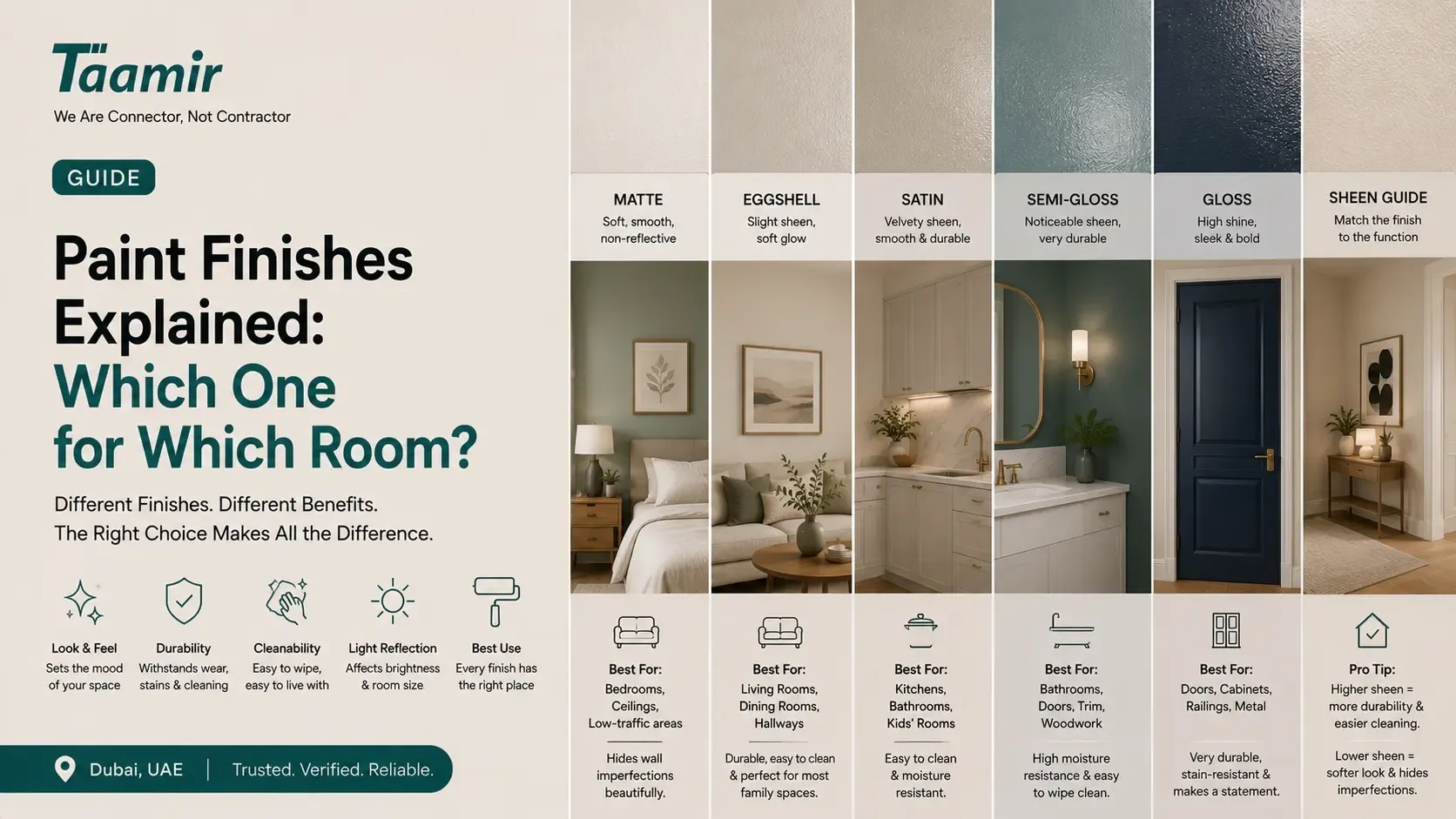
Paint comes in different finishes — matt, eggshell, satin, semi-gloss and gloss — and choosing the wrong one is the most common painting mistake. There is one rule behind all of it: the shinier the finish, the tougher and easier to wipe, but the more it shows every bump in the wall. So matt suits ceilings and quiet rooms, eggshell and satin suit living areas, satin and semi-gloss suit kitchens and bathrooms, and semi-gloss or gloss goes on doors and trim.
Most people spend weeks choosing a colour and about ten seconds choosing the finish. That is the wrong way round, because the finish decides whether you can wipe a fingerprint off the hallway wall, whether the ceiling looks smooth or patchy, and whether the bathroom paint survives the steam. The colour is a matter of taste. The finish is a matter of getting it right. Here is what each one does, in plain terms, so you can brief a verified painting professional on Taamir properly.
The one rule that explains everything
Paint finish is really about sheen — how much light the dry surface reflects. Sheen is not just a look. It changes how the paint behaves:
More sheen = a harder, tighter surface. It resists moisture, wipes clean, and stands up to being touched. It also reflects light, which makes every dent, filled hole and uneven patch more visible.
Less sheen = a softer, more absorbent surface. It hides imperfections beautifully and gives a rich, flat colour. It also marks more easily and does not enjoy scrubbing.
Every choice below is a trade between those two things: how tough do I need this wall to be, and how good is the surface underneath?
The finishes, one by one
Matt (flat)
No shine at all. It gives the deepest, softest colour and hides more wall imperfections than anything else — which is why it is the standard choice for ceilings.
Best for: ceilings, bedrooms, formal living rooms, and any wall that is not in great condition.
Watch for: it marks easily and does not like scrubbing. Touching up a small area is usually easier than trying to clean it.
Eggshell
A very low sheen — a slight softness rather than a shine. It is the popular middle ground for living spaces, and it takes light cleaning without looking shiny.
Best for: living rooms, dining rooms, bedrooms, home offices.
Watch for: it starts to show wall imperfections a little more than matt, so the preparation matters.
Satin
A soft, low sheen with noticeably better durability. This is the workhorse for busy areas, and it wipes down properly.
Best for: hallways, kids' rooms, family rooms, kitchens, bathrooms.
Watch for: it reflects enough light to show a poorly prepared wall. On a smooth wall, it looks excellent.
Semi-gloss
Clearly shiny, hard-wearing and very washable. It handles moisture and repeated cleaning better than the finishes above.
Best for: doors, skirting, door frames, window frames, kitchen and bathroom walls that get splashed.
Watch for: it highlights every flaw underneath, so surfaces need to be properly filled and sanded first.
Gloss
The shiniest and toughest, with a hard, reflective surface that cleans easily.
Best for: doors, trim, joinery, and anywhere you want a crisp, hard-wearing finish.
Watch for: it is the least forgiving of all. Any dent, brush mark or uneven patch will show. Rarely used on large wall areas.
Which finish for which room
Ceilings — matt, almost always. It hides unevenness and stops light bouncing awkwardly.
Bedrooms — matt or eggshell for a soft, calm finish.
Living and dining rooms — eggshell, or satin if there are children and pets.
Hallways and stairs — satin. This is where walls get brushed past, touched and scuffed daily.
Kitchens — satin or semi-gloss, so grease and splashes wipe off rather than soak in.
Bathrooms — satin or semi-gloss, which handle steam far better than matt. Make sure the extractor works too.
Kids' rooms — satin, for the same reason as hallways.
Doors, skirting and frames — semi-gloss or gloss. These take the most physical contact in the house.
Outside walls and gates — an exterior-grade product designed for strong sunlight, not an interior paint used outdoors.
A useful habit: use the same colour in two finishes. Walls in eggshell and the trim in semi-gloss, in the same shade, gives a quietly expensive look without introducing a second colour.
Water-based or oil-based?
Almost all interior painting now uses water-based paint, and for good reason: it dries faster, smells far less, does not yellow over time, and brushes wash out with water. Modern water-based products are also much tougher than they used to be, including on doors and trim.
Oil-based paint still has its place on some metal and exterior work, where a particularly hard surface is needed. It takes longer to dry, has a much stronger smell, and yellows over the years — which is why white oil-based doors slowly turn cream.
If you are repainting over old oil-based work, tell your painter. The surface needs sanding and the right primer before water-based paint will grip properly, and skipping that step is a common cause of peeling later.
Check the label before you buy
Here is something worth knowing that most people never look at. Paint releases fumes as it dries — these are called VOCs, and they are what you smell in a freshly painted room. Lower-VOC paint means less smell, and a room you can use sooner.
In the UAE this is regulated rather than left to chance. Paints and varnishes cannot enter the UAE market unless they carry a data sheet on the packaging showing the product's environmental performance, whether they are imported or made locally — and the Emirates Authority for Standardisation and Metrology developed a green label and star rating for paints and varnishes, covering the control of volatile organic compounds and heavy metals in building paints. Higher-star products contain lower levels of volatile materials.
So the practical advice is simple: look at the packaging, and ask your painter for a low-VOC product — especially in bedrooms, children's rooms and any room that will be used soon after painting.
Colour behaves differently in different light
Strong daylight changes how a colour reads, so a shade that looks soft on a small card can look much brighter across a whole wall. Two habits save a lot of regret:
Test big, not small. Paint a large patch — at least an A3 area — rather than judging from a card.
Look at it three times a day. Morning, midday and evening under your own lights. Colour shifts noticeably between them.
Also remember that sheen affects colour. The same shade looks deeper in matt and lighter in satin, because of the way each surface handles light. If you want the colour and scheme planned properly before anyone starts, an interior designer is the right first call.
Preparation decides the result
This is worth saying plainly: paint does not hide problems, it highlights them — and the shinier the finish, the more it highlights. A proper job includes filling holes and cracks, sanding smooth, cleaning off dust and grease, and priming where needed.
Two things to deal with before painting rather than after:
Any damp or staining. Find the cause first. Painting over a damp patch hides it briefly and then it comes back through. If the cause looks like a leak or a failed seal, that is a waterproofing or plumbing job first.
Old wallpaper. Paint over wallpaper and the seams and texture show through. If a wall is being converted from paper to paint, the paper and its old adhesive need removing and the wall making good — the same preparation you would give any wallpaper job in reverse.
What to ask your painting contractor
What preparation is included? Filling, sanding, cleaning and priming — and is it in the quote or extra?
How many coats? Two is standard over an existing similar colour. Big colour changes, or bare surfaces, usually need more.
Which finish are you using in each room, and why?
Is it a low-VOC product? Ask to see the packaging.
How will you protect floors, furniture and fittings?
How long between coats, and when can the room be used?
What happens with touch-ups if a mark appears in the first weeks — and will you leave some paint behind?
That last one matters more than it sounds. Leftover paint from the same batch is the only way to touch up invisibly later.
How Taamir fits in
Painting looks like the simplest trade and is one of the easiest to get wrong, because most of the quality is in preparation you never see once the room is finished. On Taamir you can compare verified painting professionals side by side, check their quality signals and past work, and contact them directly — every listed provider passes Taamir's checks before you see them. Use the questions above when you compare: what preparation is included, how many coats, which finish for each room, and whether they use low-VOC products. Those four answers tell you whether two quotes are really for the same job. Taamir takes no commission, so the quote reflects the work — and the AI Cost Estimator gives you a scope of work and a price range in a few minutes if you want an idea before speaking to anyone.
Frequently Asked Questions
What is the difference between matt, eggshell, satin and gloss?
They differ in sheen — how much light the dry paint reflects. Matt has none and hides wall imperfections but marks easily. Eggshell has a slight softness. Satin is more durable and wipes clean. Semi-gloss and gloss are shiny, very washable and hard-wearing, but they show every flaw underneath.
Which paint finish is best for a bathroom?
Satin or semi-gloss. Both handle steam and moisture far better than matt, and both wipe clean. Matt in a bathroom marks quickly and is hard to clean without damaging it. Working extraction matters just as much as the paint you choose.
What finish should I use on ceilings?
Matt, in almost every case. It hides unevenness in the ceiling surface, stops light reflecting awkwardly, and gives a clean, flat look. Shinier finishes on a ceiling highlight every ripple and joint.
Why does my paint colour look different on the wall than on the card?
Because scale and light both change it. A colour spread across a whole wall reads brighter and stronger than a small card, and daylight shifts it through the day. Paint a large test patch and look at it in the morning, at midday and in the evening before committing.
What does low-VOC paint mean?
VOCs are the compounds released as paint dries — the smell of a freshly painted room. Lower-VOC products mean less odour and a room that is usable sooner. In the UAE, paints and varnishes must carry a data sheet on the packaging showing environmental performance, so you can check before you buy.
How does Taamir help with painting?
Taamir lets you compare verified painting professionals in one place, check their quality signals and past work, and contact them directly with no commission on your quote. You can confirm upfront what preparation is included, how many coats, which finish they recommend for each room, and whether they use low-VOC products.
Get the finish right, not just the colour
Colour is the part you enjoy choosing. Finish is the part that decides how the room looks in a year and how easily you can clean it. Find and compare verified painting professionals on Taamir, check their quality signals, and contact them directly — no commission, no hidden charges.