How to Get Rid of Tiny Ants in Dubai Homes: Causes, Remedies & Pest Control Tips
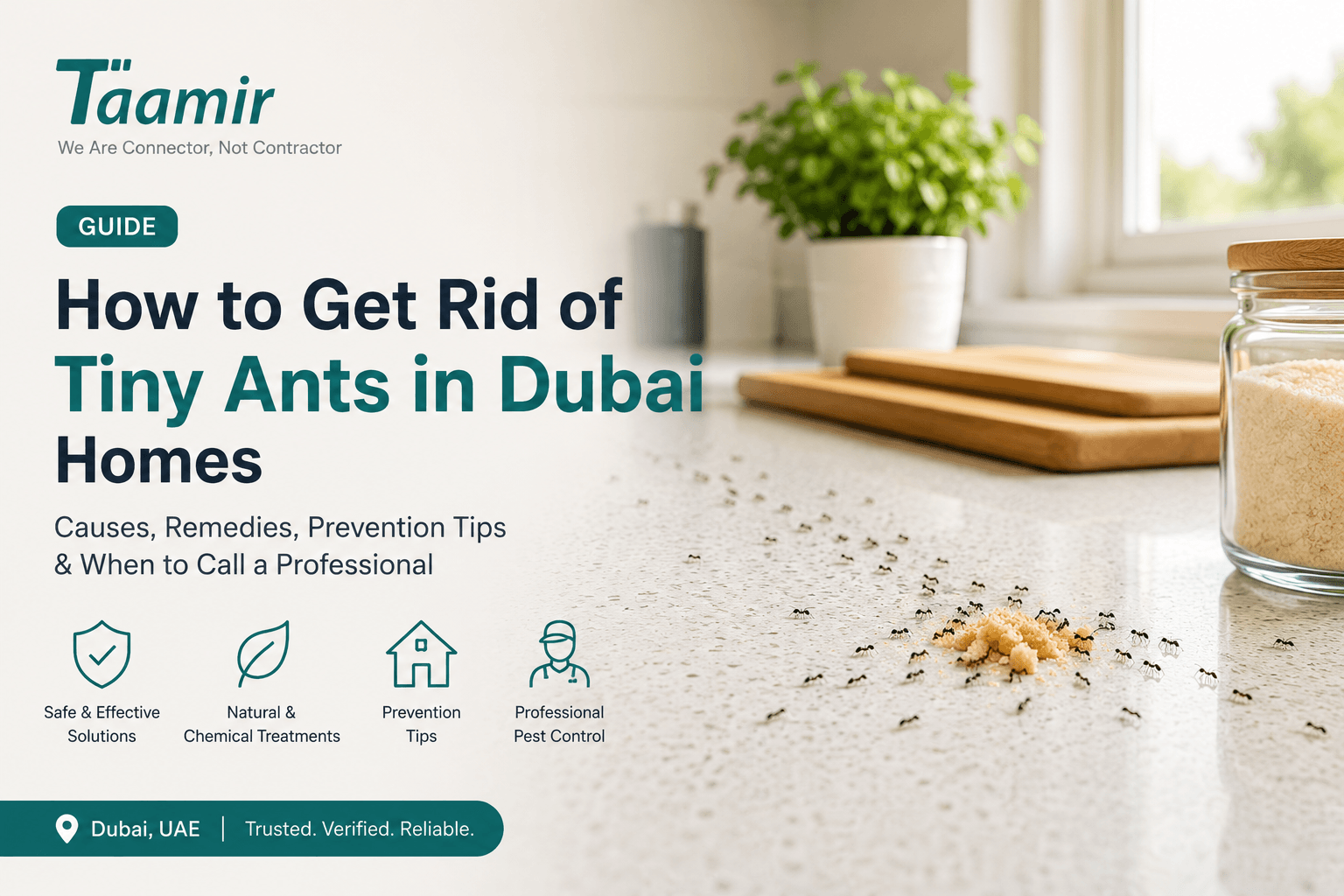
Tiny ants may look harmless at first, but once they start appearing on kitchen counters, around sinks, near food cabinets, or along balcony doors, they can quickly become one of the most frustrating pest problems inside a home.
In Dubai, ants are especially common because the warm climate, indoor moisture, food crumbs, leaking pipes, and small building gaps can create the perfect conditions for them to enter apartments, villas, townhouses, and rental properties. A few ants today can turn into a visible trail within days if the source is not handled properly.
The good news is that most tiny ant problems can be controlled with the right cleaning routine, safe home remedies, bait treatments, and prevention steps. In this guide, we explain how to get rid of tiny ants, why they keep coming back, and when it is better to book professional pest control in Dubai.
Why Tiny Ants Invade Homes in Dubai
Tiny ants usually enter homes because they are searching for three things: food, water, and shelter. In Dubai homes, this often happens when outdoor heat, humidity, landscaping, balcony plants, drainage areas, or building cracks make indoor spaces more attractive to ants.
Common reasons ants enter homes include:
· Food crumbs left on counters, floors, sofas, or dining areas
· Open sugar, cereal, snacks, dates, honey, or sweets
· Dirty dishes left in the sink overnight
· Leaking taps, damp cabinets, or water under the sink
· Pet food left out for long periods
· Unsealed garbage bins or food packaging
· Small cracks around windows, doors, tiles, pipes, or balcony areas
· Plants, branches, or outdoor vegetation touching the property
Understanding what attracts ants is the first step. If the food or moisture source remains, killing the visible ants will not solve the real problem because the colony may continue sending more workers into your home.
Common Types of Tiny Ants Found Indoors
Different ants may require different treatment methods. Some are mostly attracted to sweet foods, while others may nest in hidden indoor spaces or enter through pavement cracks and wall gaps.
Sugar Ants
Sugar ants are strongly attracted to sweet foods and drinks. They are often seen in kitchens, pantries, dining areas, and around sticky spills.
Pharaoh Ants
Pharaoh ants are very small and can create large indoor colonies. They can be harder to control because the colony may split if disturbed incorrectly.
Odorous House Ants
Odorous house ants are often attracted to sugary foods and can release a noticeable smell when crushed. They may appear around kitchen cabinets, sinks, or food storage areas.
Pavement Ants
Pavement ants often live near cracks in pavements, building edges, or foundations. From there, they may enter homes through small gaps while searching for food.
Signs You Have a Tiny Ant Infestation
A few ants do not always mean you have a serious infestation, but repeated activity is a warning sign. Look for patterns rather than one isolated ant.
· Long trails of ants moving toward food or water
· Ants gathering around sinks, drains, dishwashers, or wet cabinets
· Ants appearing at the same time of day
· Small piles of dirt or debris near walls, tiles, or corners
· Ants coming from electrical outlets, gaps, or behind appliances
· Activity returning shortly after cleaning or spraying
If ants return every day, the colony is likely still active nearby. At this stage, you need to remove attractants, break scent trails, and target the source instead of only killing the ants you can see.
How to Get Rid of Tiny Ants in the Kitchen
The kitchen is the most common place for ants because it provides both food and water. To get rid of tiny ants in the kitchen, start with a full reset of the area.
1. Clean All Surfaces Thoroughly
Wipe countertops, dining tables, cabinet edges, appliance corners, and floors with a safe cleaning solution. A mixture of white vinegar and water can help remove ant scent trails, which are the invisible paths ants use to guide others to food.
2. Store Food in Sealed Containers
Keep sugar, flour, cereal, rice, snacks, dates, biscuits, and pet food in sealed containers. Even a small open packet inside a cabinet can attract ants.
3. Remove Water Sources
Dry the sink area before bedtime, check under-sink cabinets, and repair any leaking taps or pipes. Moisture is one of the biggest reasons ants keep coming back.
4. Do Not Leave Dirty Dishes Overnight
Food residue on plates, cups, cutlery, and pans can attract ants quickly. Wash dishes or place them inside the dishwasher before going to sleep.
5. Follow the Trail
Watch where ants are coming from and where they are going. This can help you identify entry points around windows, balcony doors, wall cracks, pipe openings, or cabinets.
Natural Remedies for Tiny Ants
Natural methods can help with light ant activity and prevention. They are useful when the problem is small, but they may not be enough for a large colony hidden inside walls, cabinets, or outdoor areas.
· Vinegar solution: Mix equal parts white vinegar and water, then spray or wipe areas where ants travel.
· Lemon juice: Use around entry points and surfaces to help disrupt scent trails.
· Peppermint oil: Mix a few drops with water and spray near windows, doors, and corners.
· Cinnamon: Place small amounts near entry points as a short-term repellent.
· Diatomaceous earth: Food-grade diatomaceous earth can be used carefully in dry areas where ants travel. Avoid breathing in dust and keep it away from children and pets.
· Baking soda and sugar: Some homeowners use this mixture as a DIY method, but it should be placed carefully and kept away from pets and children.
Important note: Natural remedies are best for prevention and minor issues. If ants continue returning, you may need bait or a professional treatment plan.
Best Chemical Treatments for Tiny Ants
For larger or recurring infestations, targeted treatments are usually more effective than surface sprays alone.
Ant Bait Stations
Ant baits are often more effective than sprays because worker ants carry the bait back to the colony. This can help control the source of the infestation over time. Place baits near trails, but avoid spraying directly on or near the bait because it may stop ants from taking it.
Ant Sprays
Sprays can kill ants on contact, but they usually do not eliminate the colony. They are useful for quick control, but relying only on sprays may cause the problem to return.
Outdoor Barrier Treatments
For villas, townhouses, and ground-floor units, outdoor treatment around entry points, garden edges, balconies, and exterior walls may help reduce ant movement into the property.
Professional Pest Control
If you are dealing with repeated ant activity, hidden nests, multiple trails, or ants entering from walls or electrical points, professional pest control is usually the safest and most reliable option.
How to Prevent Tiny Ants from Coming Back
Once you get rid of tiny ants, prevention becomes the most important step. Ants can return quickly if food, water, and access points remain available.
1. Wipe kitchen surfaces daily, especially after preparing food.
2. Sweep or vacuum crumbs from dining areas, sofas, and children’s play areas.
3. Keep dry food, sugar, snacks, and pet food in airtight containers.
4. Take out garbage regularly and keep bins sealed.
5. Clean pet food bowls and avoid leaving food out overnight.
6. Fix leaking taps, pipes, AC drainage issues, or damp under-sink cabinets.
7. Seal cracks around windows, balcony doors, walls, pipes, and floor edges.
8. Trim plants or branches that touch balconies, windows, or exterior walls.
9. Check grocery bags, cardboard boxes, and delivery packaging before storing them indoors.
Are Tiny Ants Dangerous?
Most tiny ants are more annoying than dangerous, but they should not be ignored. Ants can crawl over food surfaces, contaminate food, and move through unhygienic areas before entering kitchens or pantries.
Some ant species may bite, cause irritation, or trigger allergic reactions in sensitive people. Large infestations can also become harder to remove if they spread behind appliances, inside cabinets, near electrical areas, or into wall spaces.
When to Book Pest Control in Dubai
DIY steps are useful for small problems, but professional pest control may be necessary when the infestation is active, recurring, or spreading.
You should consider booking pest control if:
· Ants return after cleaning and using home remedies
· You see several trails in different rooms
· The infestation spreads quickly
· Ants are entering through walls, outlets, cabinets, or hidden gaps
· You have children, pets, or food-sensitive areas and need safer guidance
· You live in a villa, townhouse, or ground-floor unit with outdoor entry points
· DIY methods have not worked after one to two weeks
A pest control professional can identify the ant species, locate possible entry points, apply targeted treatment, and recommend prevention steps that fit your property type.
Final Thoughts
Learning how to get rid of tiny ants requires more than spraying the visible ants. The most effective approach is to remove food sources, eliminate moisture, clean scent trails, seal entry points, and use the right treatment method for the size of the problem.
For Dubai homes, where heat, humidity, balconies, gardens, and high-rise building gaps can all contribute to pest activity, prevention is just as important as treatment.
If tiny ants keep coming back, Taamir can help you connect with trusted pest control providers in Dubai, compare suitable options, and book the right service for your home.
FAQ
Why do tiny ants keep coming back in my Dubai home?
Tiny ants usually return because food, water, scent trails, or entry points are still available. Even if you kill the visible ants, the colony may continue sending more workers unless the source is treated.
What is the fastest way to get rid of tiny ants in the kitchen?
Start by cleaning all surfaces, removing food crumbs, sealing food containers, drying the sink area, and placing ant bait near the trail. Avoid spraying directly on bait because ants need to carry it back to the colony.
Are natural remedies enough to remove tiny ants?
Natural remedies can help with small ant problems and prevention, but they may not eliminate a hidden colony. If ants keep returning, bait or professional pest control may be required.
Can leaking pipes attract ants?
Yes. Ants are attracted to moisture, so leaking taps, damp cabinets, AC drainage issues, and standing water can make your home more attractive to them.
When should I call pest control for ants?
Call pest control if ants return repeatedly, appear in multiple rooms, come from walls or electrical points, or if DIY methods fail after one to two weeks.