How to Set Up a Home Office in a Dubai Apartment (2026)
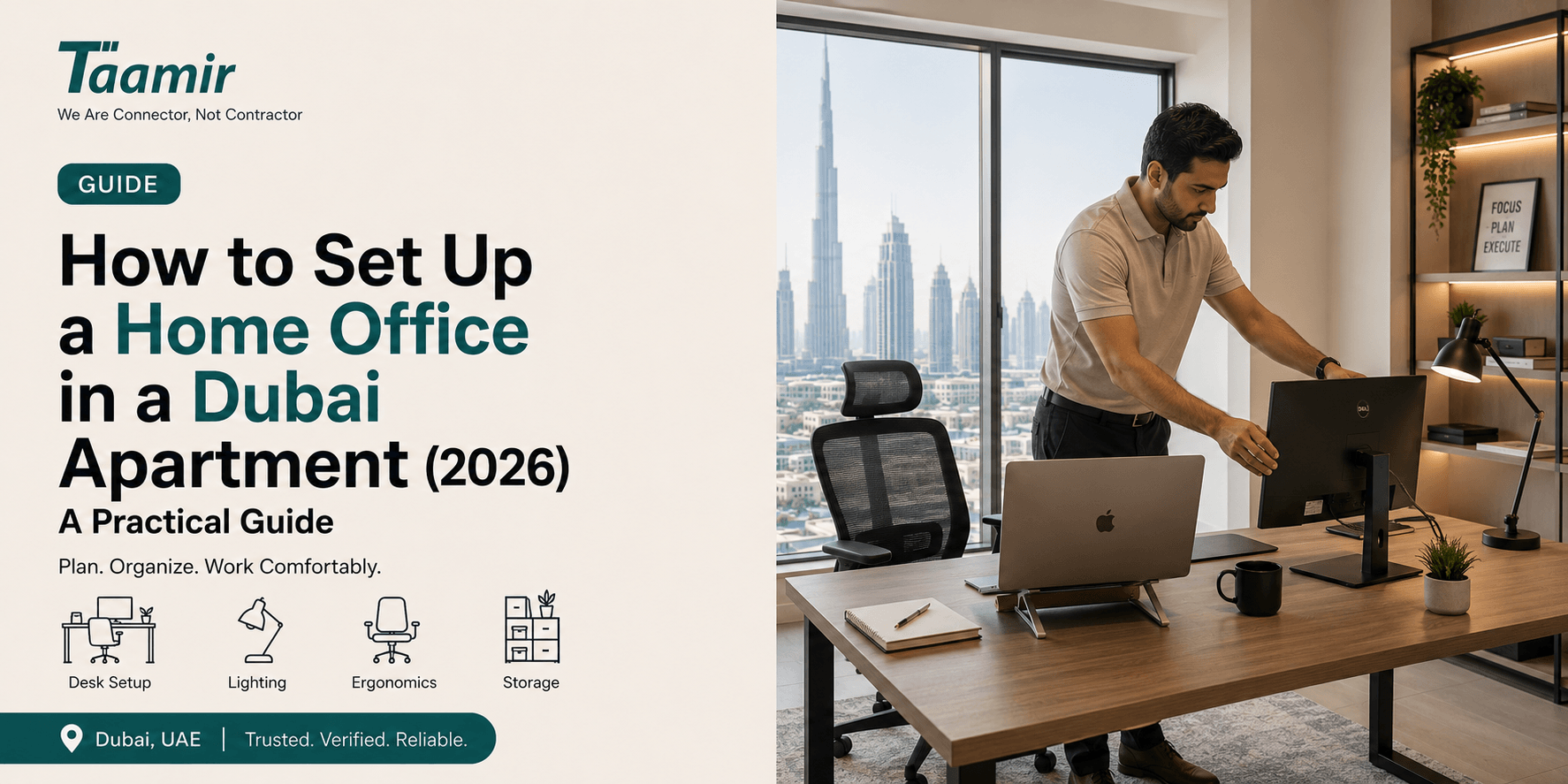
How to Set Up a Home Office in a Dubai Apartment (2026)
A home office that actually works in a Dubai apartment comes down to four decisions: choose the right spot (a quiet corner with side-on natural light beats a spare room with a glare-filled window), build storage upward with fitted joinery so a small footprint feels generous, get the power and lighting right so you're not living off extension leads, and finish it in a colour that keeps the space calm and bright. Done well, even a two-metre stretch of wall becomes a proper workspace — and the parts worth getting a professional for pay for themselves in how the room looks and works every single day.
Remote and hybrid work is now a permanent feature of life in Dubai, and the city's apartments — often open-plan, frequently with a spare corner rather than a spare room — reward a bit of planning. The good news is that a genuinely great home office is less about square metres and more about smart choices: where the desk sits, how the wall is used, how it's lit and powered, and how it's finished. This guide walks through all of it, and where a verified professional on Taamir turns a good idea into a built-in that looks like it came with the apartment.
Start with the spot, not the desk
The most common mistake is buying furniture before choosing the location. Map the room first. The best home-office corner in a Dubai apartment usually has three things: a degree of separation from the busiest part of the home so you can focus (and close a video call off), natural light coming from the side rather than behind or directly in front of you, and enough depth for a desk that sits a comfortable arm's length from your screen. A slightly deeper desk beats a longer one in a tight space — depth gives you room for a monitor at the right distance plus a working area in front, while length just eats wall.
On the light: position the desk so daylight arrives from the side. Light behind you throws glare across the screen; light directly in front makes your eyes fight a bright background all day. Side-on is the sweet spot — and in a bright Dubai apartment, pairing that with an adjustable blind lets you tune the afternoon sun rather than battle it.
Build upward: fitted storage is the small-space secret
This is where a small workspace is won. Floor space is precious, so the trick is to use the wall: floor-to-ceiling shelving or a fitted cabinet draws the eye upward, making the ceiling feel higher, while giving you storage that a freestanding unit's footprint never could. Taking storage off the floor — wall-mounted shelves, an overhead cabinet, a floating desk — is the single most effective way to make a compact office feel open rather than crammed.
Ready-made furniture rarely fits an awkward alcove or the exact run of a Dubai apartment wall, which is why custom joinery is the upgrade that changes everything: a desk and shelving built to your precise dimensions turns dead space into a workspace that looks architectural rather than assembled. A skilled carpentry and joinery professional can build a floating desk with integrated storage, a full wall of shelving around a doorway, or a cabinet that hides the office behind closed doors at the end of the day — and the difference between flat-pack and fitted is the difference between a corner with a desk in it and a room that feels designed. If your plans are bigger than one wall, a full interior designer can plan the whole space around how you actually work.
Power and lighting: the part people underestimate
A workspace runs on electricity, and this is where doing it properly pays off daily. Most corners weren't wired to be an office, so before you settle on a layout, think about where the power needs to be — a laptop, monitor, lamp, charger, and router add up fast, and a nest of extension leads across the floor is neither safe nor calm. Having an electrical professional add well-placed sockets — ideally at desk height, with USB points built in — means everything is powered cleanly from where it's actually used.
Lighting is the most neglected element of a home office and the fastest cause of afternoon eye strain, so layer it:
Ambient light for the room overall, bright enough that your screen isn't the brightest thing in the space.
Task light — an adjustable desk lamp for reading, notes, and detail work, positioned to light the surface without reflecting off the screen.
A dedicated fixture if the corner is dim: a wall-mounted light or a proper ceiling fixture wired in beats a floor lamp eating your limited space, and it's quick work for an electrician while the sockets are being done. It's also the moment to add a smart-home touch — dimmable, scheduled lighting that shifts from bright focus in the morning to something softer by evening.
Comfort: heat and air matter here
A Dubai home office is used through the summer, so comfort isn't an afterthought. Make sure your chosen corner is genuinely served by the air conditioning — a spot that's fine in January but stuffy in July won't get used. If the corner sits in the sun, the glare-control and cooling steps matter double, and it's worth making sure the AC is serviced and up to the extra daytime load of a room that's now occupied nine-to-five. Position the desk out of the direct downdraught of a vent, too — comfortable airflow, not a cold blast on the back of your neck.
Finish it: colour makes a small room feel bigger
The final layer is paint, and it does more work than people expect. Light, cool tones reflect daylight and make a compact space feel larger and brighter — soft whites, pale greys, gentle greens — while a single restrained accent wall behind the desk adds character without closing the room in. A professional painting job on the office wall is a fast, high-impact finish, and getting a clean, even backdrop also does quiet favours for how you look on video calls. Coordinate the paint with the joinery finish and the whole corner reads as one intentional space rather than a desk that wandered in.
Putting it together — and how Taamir fits in
A great home office is a small multi-trade project: joinery for the built-in desk and shelving, an electrician for power and lighting, a painter for the finish, and an AC check so it's comfortable year-round. Coordinating those trades is exactly what Taamir is built for — rather than hunting for each one separately, you can compare verified professionals across every trade in one place, review their quality signals, see real examples of their work where available, and connect directly. Every listed provider passes Taamir's verification first, and with no commission added, the quotes reflect the work. For a home office specifically, three things worth lining up: a joinery professional who'll build to your exact wall dimensions, an electrician to place sockets and lighting before the furniture goes in (far easier than after), and a painter to finish the backdrop — sequenced in that order for the smoothest result.
Frequently Asked Questions
Where's the best place for a home office in a small apartment?
A quieter corner with natural light arriving from the side, and enough depth for a desk that sits an arm's length from your screen. Separation from the busiest part of the home helps focus and keeps video calls clean; a spare corner planned well often beats a spare room with a poorly lit window.
How do I make a small home office feel bigger?
Build storage upward. Floor-to-ceiling shelving and wall-mounted or floating pieces draw the eye up and keep the floor clear, which reads as more space. Custom joinery fitted to your exact wall turns awkward corners into usable storage that freestanding furniture can't match, and light, cool paint tones amplify the effect.
Do I need an electrician to set up a home office?
If you want it done cleanly, yes. A workspace needs several well-placed sockets — ideally at desk height — plus proper task and ambient lighting. An electrician adding outlets and fixtures where you actually use them removes the trip-hazard tangle of extension leads and makes the whole setup safer and calmer.
What's the best desk for a small Dubai apartment?
For tight spaces, choose depth over length — a deeper desk gives you correct screen distance plus working room, while a long desk just consumes wall. Better still, a fitted floating desk built to your dimensions maximises the space and can integrate storage above and below.
What colour should I paint a home office?
Light, cool tones — soft whites, pale greys, gentle greens — reflect daylight and make a compact room feel larger and brighter. A single restrained accent wall behind the desk adds personality without shrinking the space, and a clean backdrop looks good on video calls too.
How does Taamir help me set up a home office?
A home office touches several trades — carpentry for the built-in desk and shelving, electrical for power and lighting, painting for the finish. Taamir lets you compare verified professionals across all of them in one place, check their quality signals and past work, and connect directly, with no commission on your quote — so you can line up the whole project without chasing each trade separately.
Build the workspace your apartment's been hiding
The perfect home office is usually already there in your layout — it just needs the right desk, the right light, and a proper finish. Find and compare verified professionals on Taamir for the joinery, electrical, and painting that turn a corner into a workspace — review their quality signals and connect directly, with no commission and no hidden charges.