
SPC Flooring in Dubai: What It Is and Where It Works Best
SPC flooring is a rigid type of vinyl with a core made from limestone powder, PVC and stabilisers. In Dubai homes, it can suit living rooms, bedrooms, hallways and some kitchens. It needs a firm, dry, flat base, and the exact product must suit the room’s heat and moisture conditions.
If you want a wood-look floor without changing to real timber, SPC is worth considering. Before choosing a colour, compare verified flooring professionals on Taamir who can inspect the existing floor and explain which products suit your rooms.
What is SPC flooring?
SPC stands for stone plastic composite, also called stone polymer composite. It belongs to the rigid-core vinyl family. The stone content forms part of a manufactured core; it does not make SPC a natural stone floor.
A typical plank has several layers:
A protective surface and wear layer: help protect the printed design from everyday use.
A decorative layer: gives the plank its wood, stone or other appearance.
A rigid core: provides the plank’s body and stiffness.
An attached backing on some products: provides a specified layer beneath the plank. Other products use a separately approved underlay.
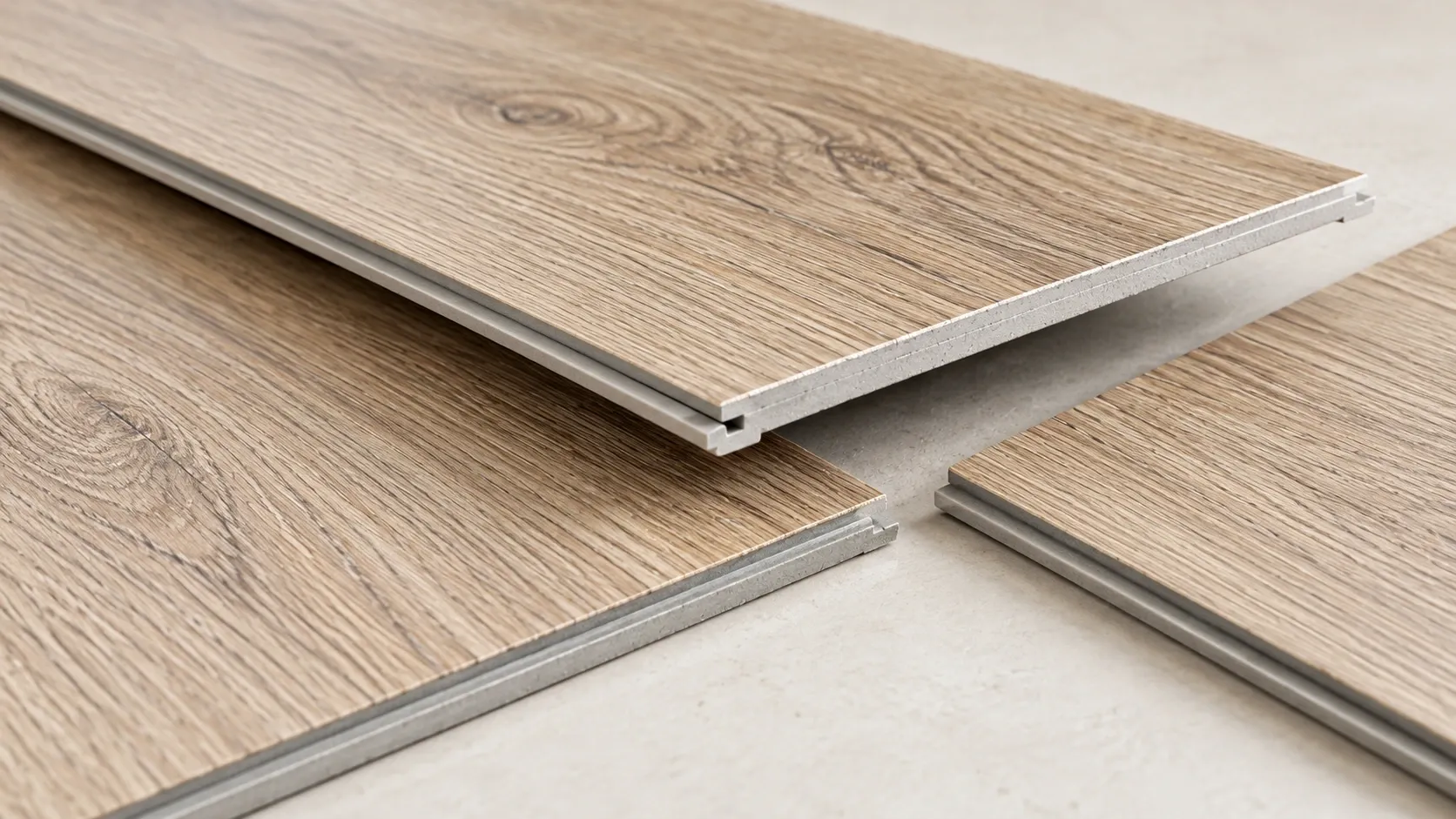
The wood appearance comes from a printed layer above a rigid composite core.
Most click-fit SPC planks join together as a floating floor, meaning they are not fixed directly to the base beneath.
The wood appearance is a printed finish. You cannot sand and refinish SPC like a suitable real-wood floor. For a wider look at the alternatives, read Taamir’s complete guide to flooring in Dubai.
Where does SPC flooring work best in a Dubai home?
SPC is worth considering for indoor rooms where you want a practical surface with a wood or stone appearance. Choose the product for the room’s use, rather than assuming every SPC plank performs the same way.
Living rooms and bedrooms
These are straightforward places to consider SPC. Bring home several full-size samples and view them in daylight and under your evening lighting. Check whether the printed grain repeats too obviously when the planks sit together.
In an apartment, ask about footstep noise and any building requirements for floor coverings. An attached pad alone does not tell you how the complete floor will perform acoustically.
If the layout matters as much as the colour, explore plank, herringbone and chevron laying patterns. Check that your chosen SPC range is actually made for the pattern you want.
Hallways and home offices
SPC can suit these spaces when its stated use rating matches the traffic. At an entrance, use a compatible mat to reduce the grit brought indoors.
For a home office, check the manufacturer’s guidance for chair castors and chair mats. A wear-resistant surface still needs protection from dragging furniture and repeated movement in one spot.
Kitchens and dining areas
A product approved for kitchen use can be useful where food spills and routine cleaning are part of daily life.
However, a water-resistant plank does not prevent water from reaching beneath the floor through edges, joints or openings. Clear spills promptly and investigate appliance leaks.
Ask how the installer will finish around fitted units, allow the floating floor to move, and preserve access to appliances.
Bathrooms and utility rooms
Use SPC here only when the manufacturer explicitly approves the exact product and installation method.
A bathroom outside an enclosed shower is a different setting from a wet room where water runs across the floor towards a drain. Standard floating click-fit SPC should not be assumed suitable for shower floors, standing water or frequent hose-down cleaning.
Ask about wet slip resistance, edge details and warranty cover. SPC is a floor finish; it does not replace the waterproofing beneath a wet area.
Can SPC flooring handle Dubai’s heat and sunlight?
SPC can work in suitable indoor conditions, but it is not immune to heat. Check the product’s permitted temperatures and restrictions on direct sunlight.
A sunlit patch beside a large window can experience different conditions from the shaded part of the same room. Show the installer which windows receive strong afternoon sun and ask whether shading or a different product is needed.
If the property stays empty for long periods, check the manufacturer’s requirements for temperature control.
Do not use ordinary indoor SPC on an open balcony, outdoor terrace or around a pool. Choose a product specifically approved for the intended outdoor setting.
Can SPC flooring be installed over existing tiles?
Often, yes, provided the tiles form a suitable base and the SPC manufacturer permits it. Keeping sound tiles can reduce removal work, but the installer still needs to assess what is underneath.
Before agreeing to an overlay, ask for four checks:
Tile condition: loose, moving or damaged areas need assessment and repair.
Flatness: high edges, dips and grout joints must meet the chosen product’s limits. Rigid planks do not remove the need for preparation.
Moisture: the installer should check for damp and follow the manufacturer’s testing and moisture-control requirements.
Finished height: adding flooring can affect doors, thresholds, balcony access and the space needed to remove appliances.
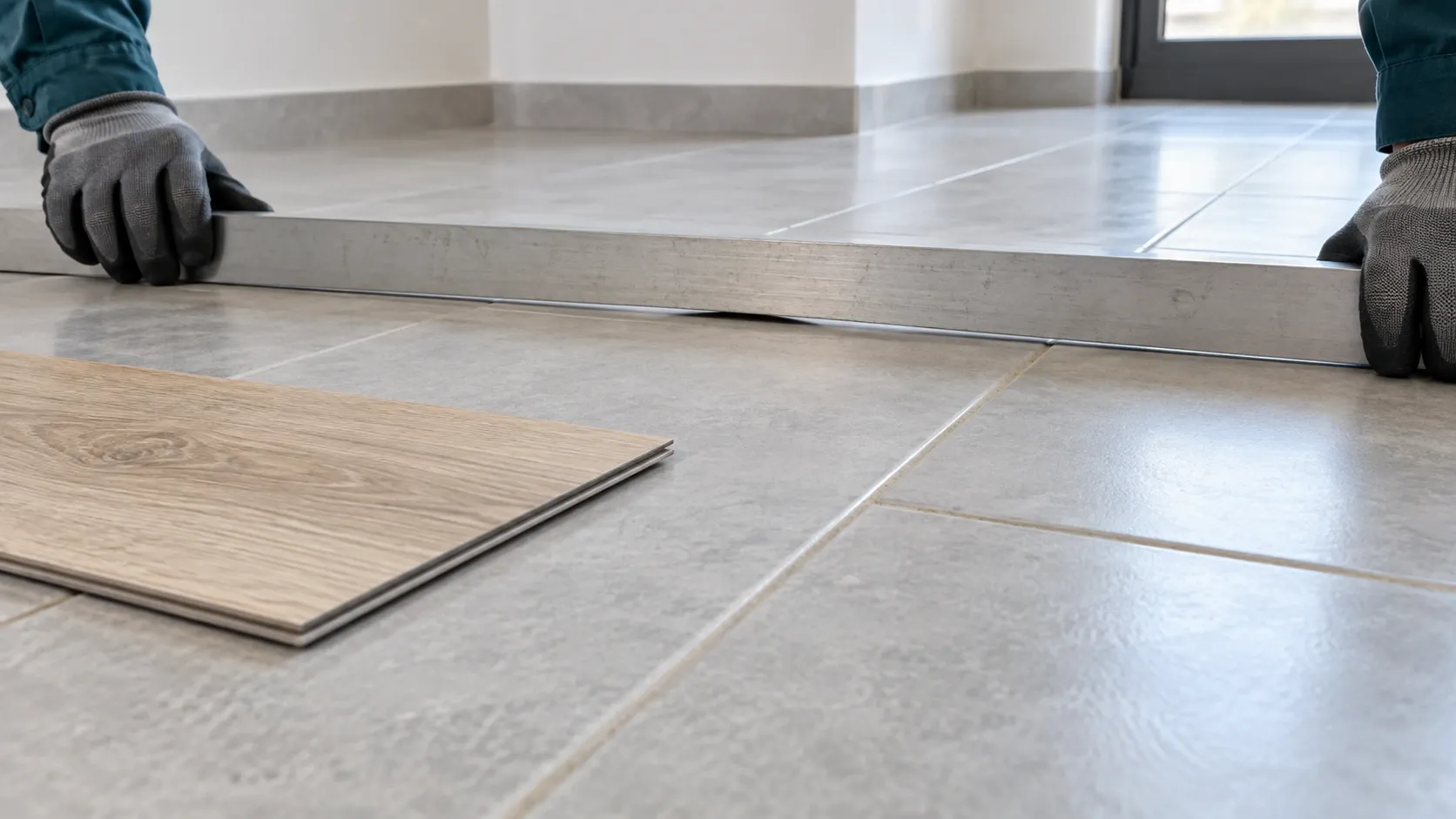
Existing tiles must provide a stable base and meet the chosen SPC product’s flatness requirements.
The installer must also allow the movement gaps required around walls and fixed objects. These are covered with suitable skirting or trims.
For more on what to discuss before installation, see the floor preparation guide. Ask for preparation work to appear in the quote.
If you rent, get your landlord’s agreement and check building rules first. A floating floor should not be promised as a completely damage-free or reversible change.
What should you check before buying SPC flooring?
Compare the written specifications alongside the sample. Ask for:
The exact brand, range and product code: keep these on the quotation and invoice.
Total thickness and wear-layer thickness: these describe different parts of the plank. Overall thickness alone does not prove surface durability.
Approved uses: confirm the room type, expected traffic and any restrictions on sunlight or moisture.
Underlay instructions: check whether a pad is attached and whether an additional layer is allowed.
Warranty terms: separate product cover from installation cover and read the exclusions.
For indoor air quality, request relevant emissions test documents for the flooring and installation products. Dubai Municipality’s green building certification scheme includes low-emission adhesives and sealants. A general “eco-friendly” claim does not identify what has been tested. www.dm.gov.ae
How do you clean and care for SPC flooring?
Use the care instructions supplied for your exact floor. A simple routine usually means removing loose grit, wiping spills and cleaning with a well-wrung mop and an approved cleaner.
Use protective pads beneath furniture and lift heavy items instead of dragging them. Check that entrance mats and their backing are compatible with the floor.
Avoid steam cleaners, abrasive pads and strong chemicals unless the manufacturer explicitly permits them. Extra shine is not a reason to apply wax or polish to a floor that does not require it.
Keep spare matching planks for future repairs.
What should an SPC flooring quotation include?
A useful quote explains the whole installation, rather than giving only a price per square metre.
Ask it to show the measured area, material allowance, exact product, preparation, approved underlay, trims, door adjustments, furniture moving, waste removal and any applicable VAT. Confirm which items are fixed prices and which depend on the site inspection.
Frequently Asked Questions
Is SPC flooring waterproof?
Many SPC products have waterproof cores, but that does not make the completed floor a waterproofing system. Water can still reach beneath it, and bathroom suitability depends on the product and installation details.
Is SPC the same as laminate flooring?
No. SPC is a type of rigid-core vinyl, while conventional laminate has a wood-fibre core. Compare the individual products’ specifications and water-exposure limits; the separate guide to SPC versus laminate flooring introduces the two options.
Does SPC flooring need underlay?
It depends on the product. Some planks have an attached pad; others require a specified separate underlay. Adding an unapproved soft layer can allow too much movement and affect the joints.
Is SPC flooring suitable for pets?
It can be a practical option, but no floor should be assumed scratch-proof. Compare surface performance, clean accidents promptly and keep grit from being dragged across the finish.
Can a damaged SPC plank be replaced?
Sometimes, but the method depends on the locking system and the plank’s position. Ask the installer how a repair would be handled, and keep spare material from the original order.