
Floor Laying Patterns: Herringbone, Chevron, Plank and More
The same wood floor looks completely different depending on how the boards are laid. A straight plank floor is quiet and modern. Herringbone is the zigzag everyone recognizes. Chevron is the sharper cousin most people mistake for herringbone. Basketweave and Versailles panels are the decorative end.
The pattern also changes two practical things: how much material you need, and how long the fitting takes. A herringbone floor uses more boards than a straight one for the same room, because every angled cut leaves an offcut. That is worth knowing before you choose.
Here is each pattern, what it suits, and what it asks for. When you are ready, you can compare verified flooring professionals on Taamir.
Find a flooring professional
Click Here
Herringbone
The pattern people call the fishbone. Rectangular blocks with square-cut ends, laid at right angles to each other so each one steps off the last. The result is a broken zigzag where the blocks clearly overlap at the corners.
It adds texture and a sense of craft to a room, and it works especially well in entrance halls, dining rooms and formal living rooms. Because the pattern draws the eye outward, it can make a narrow room feel wider.
It takes longer to fit than straight plank, needs a very accurate starting line, and produces more offcuts.
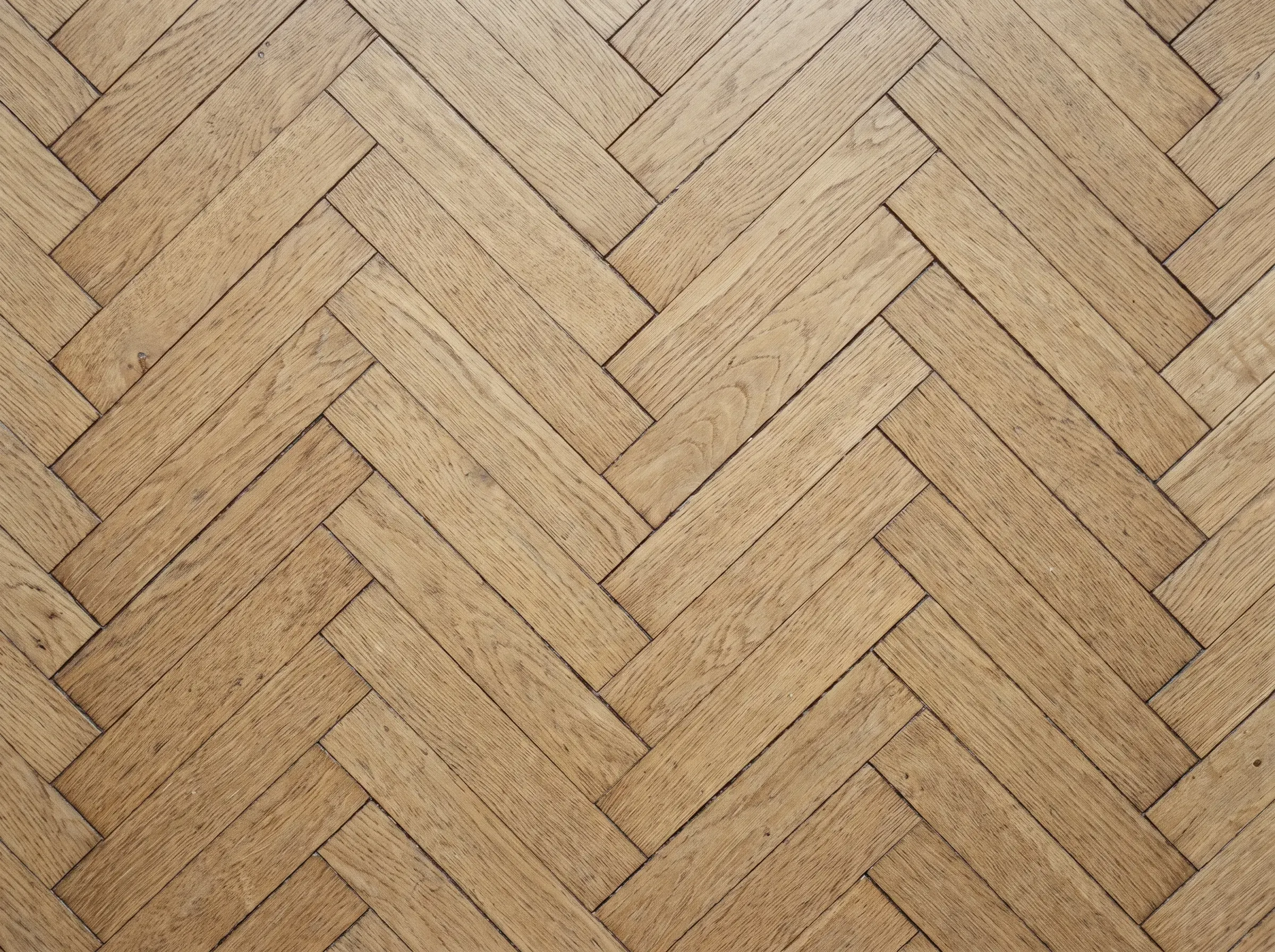
Herringbone. Square-cut ends, blocks meeting at right angles, a stepped zigzag.
Chevron
This is the one people mean when they say herringbone and point at something sharper. The planks are cut at an angle at each end, so they meet point to point and form continuous, unbroken V shapes running in perfectly straight rows.
The effect is more formal and more directional than herringbone. It makes a strong line down a room, which is either exactly what you want in a hallway or too much in a small space.
It is the most demanding pattern in this list to fit well, because every angle has to be identical and the rows have to stay perfectly straight. It also uses the most material of the common patterns.
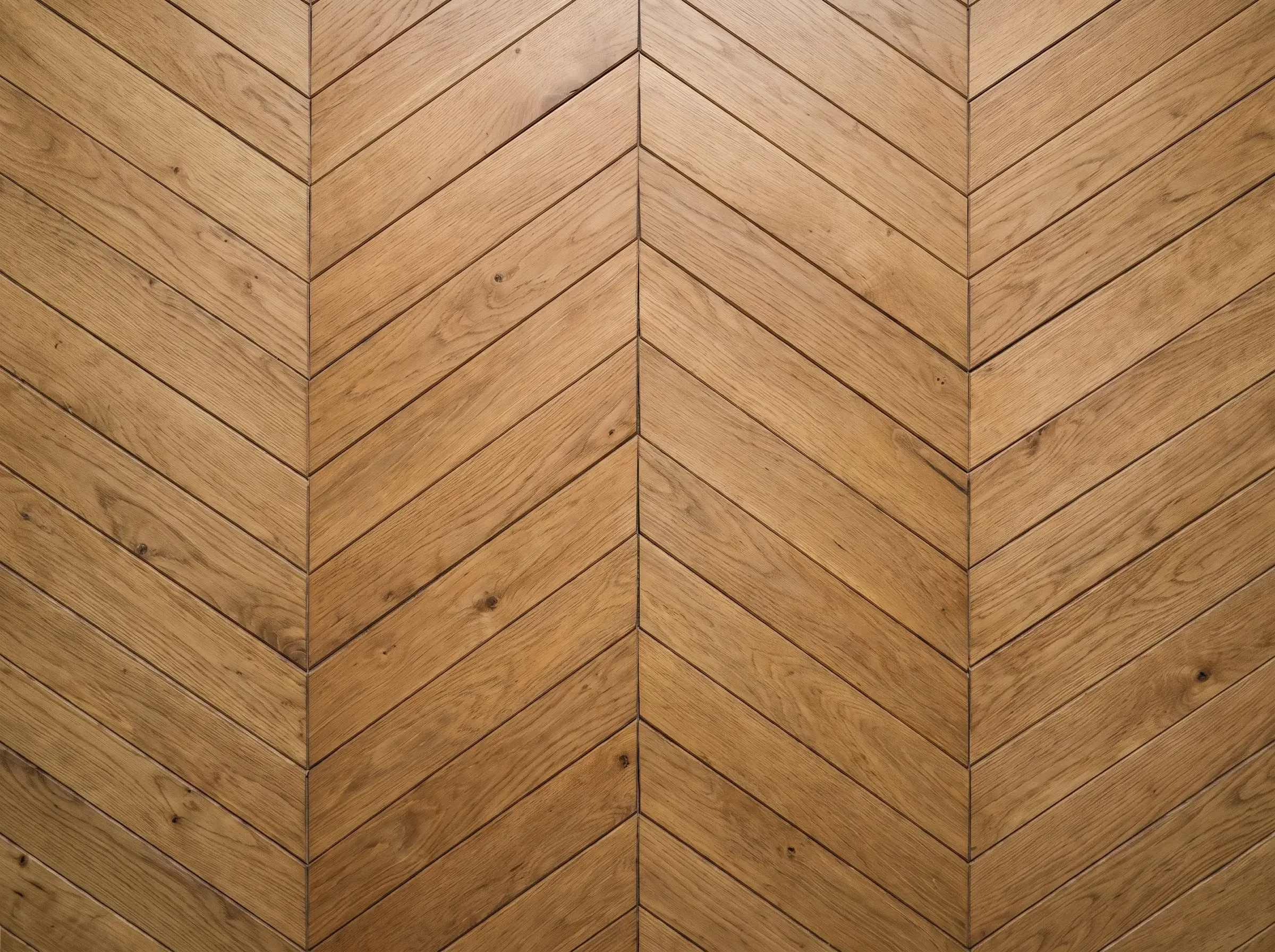
Chevron. Angled ends meeting point to point, giving unbroken V rows.
Herringbone or chevron: the difference in one line
Herringbone blocks have square ends and overlap at right angles, so the zigzag is stepped. Chevron planks have angled ends that meet in a point, so the zigzag is a clean continuous V.
Look at where two pieces meet. If one runs past the other, it is herringbone. If they meet nose to nose in a straight line, it is chevron. That is the whole difference, and it is the thing worth getting right before you order, because the two are cut differently and priced differently.
Basketweave
Pairs of short blocks alternating horizontal and vertical, so the floor reads like a woven mat. It is decorative without being grand, and it suits smaller spaces where a pattern can be appreciated up close — an entrance, a study, a powder room.
It needs precision and a floor that is genuinely square, because any drift shows immediately in a repeating grid.
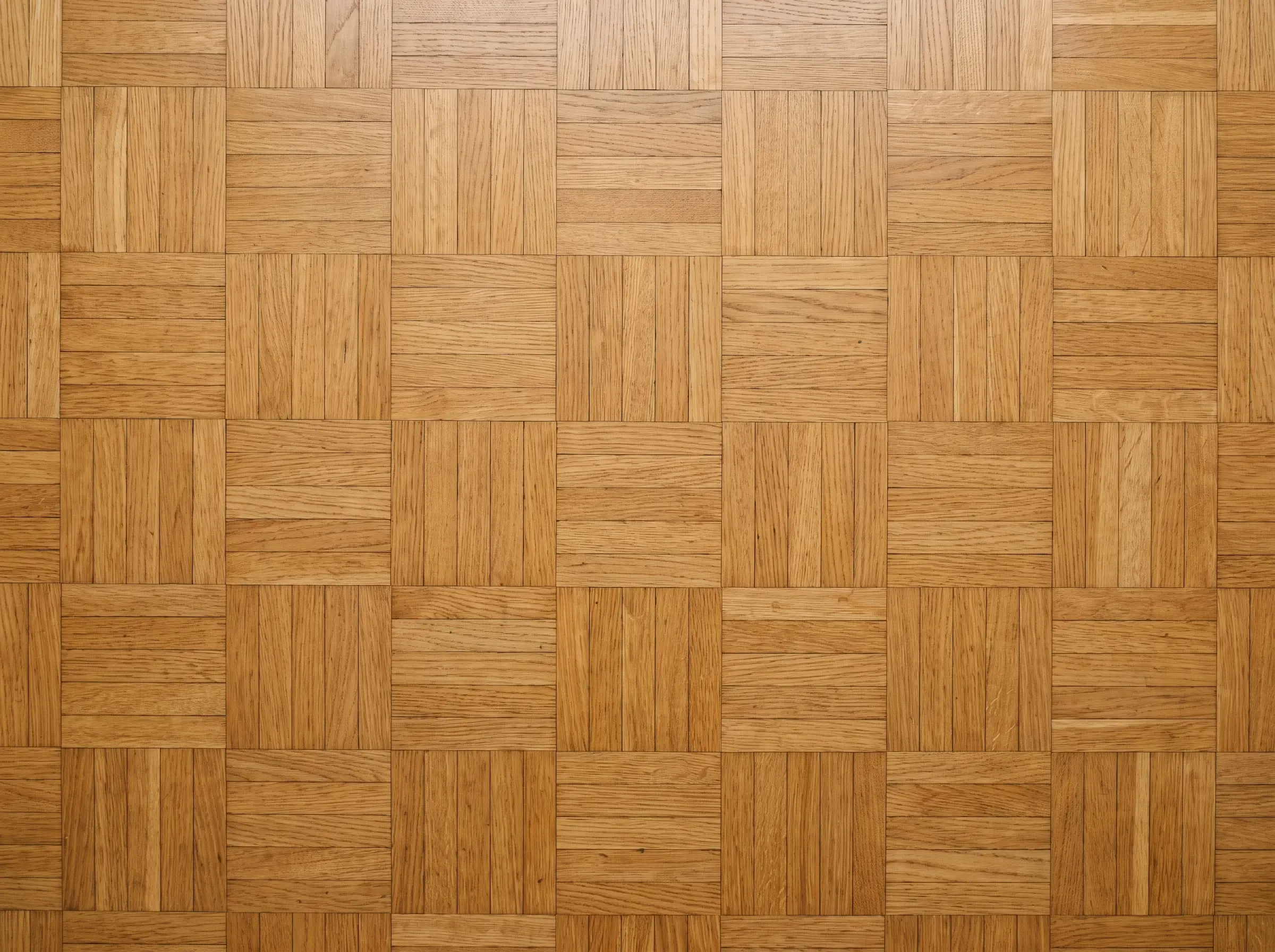
Basketweave. Pairs of blocks alternating direction, so the floor reads as woven.
Versailles panels
The most ornate option. Large square panels, each made up of an intricate lattice of diagonal and framing pieces, laid side by side. It is a classical, high-end look with real presence.
It suits large formal rooms and villas, and it is usually supplied as pre-made panels rather than built piece by piece on site. In a small apartment it overwhelms; in a large hall it is spectacular.
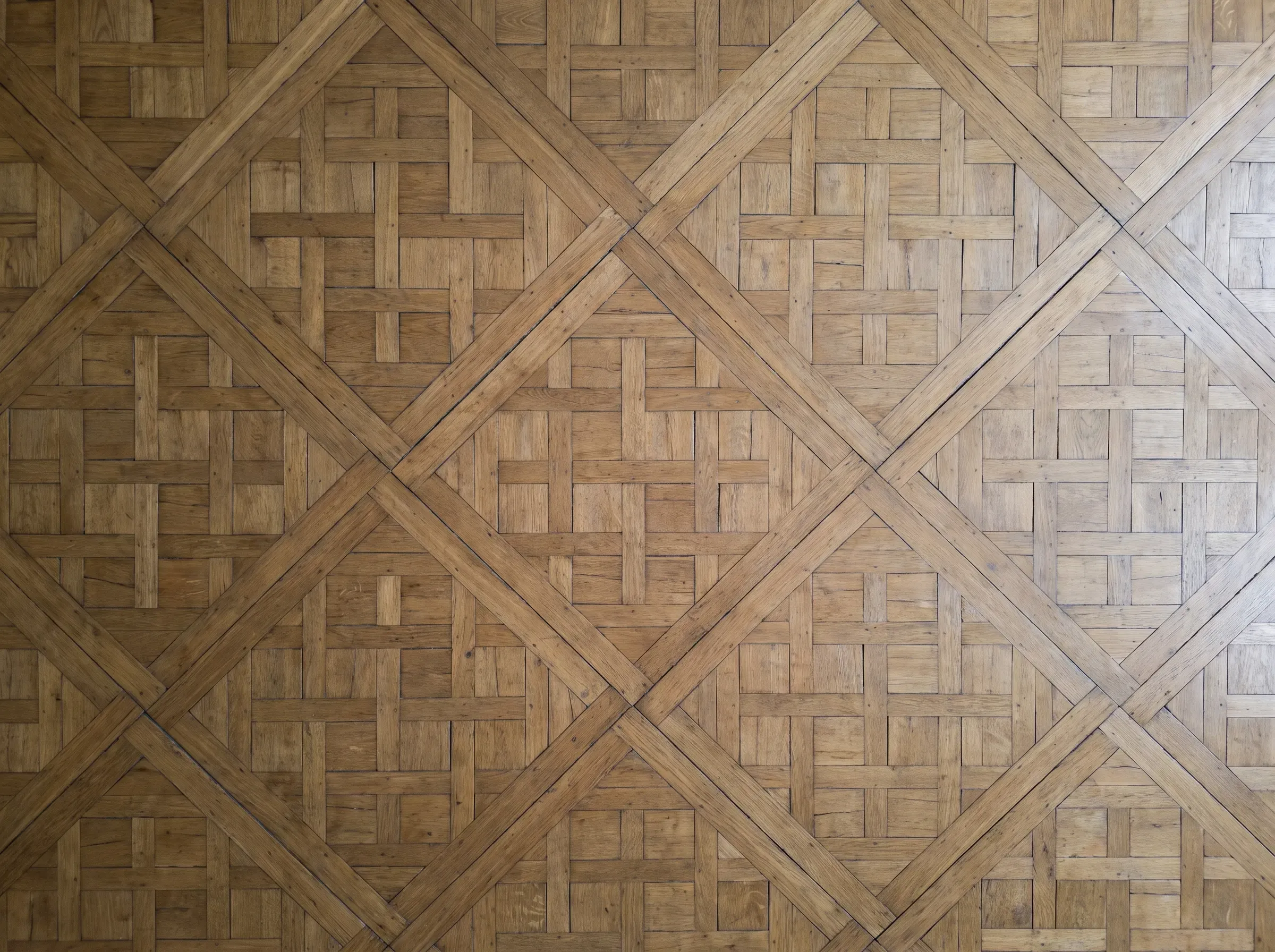
Versailles panels. Ornate, formal, and best given a large room to sit in.
Stacked and ladder patterns
Straight boards where the end joints deliberately line up rather than stagger, forming continuous lines across the floor. It is a very modern, graphic look and it has become popular in minimal interiors.
Two honest cautions. It is unforgiving, because any variation in board length or any drift in the lines is immediately visible. And aligned joints are structurally weaker than staggered ones, so it wants a very flat subfloor and careful fitting.
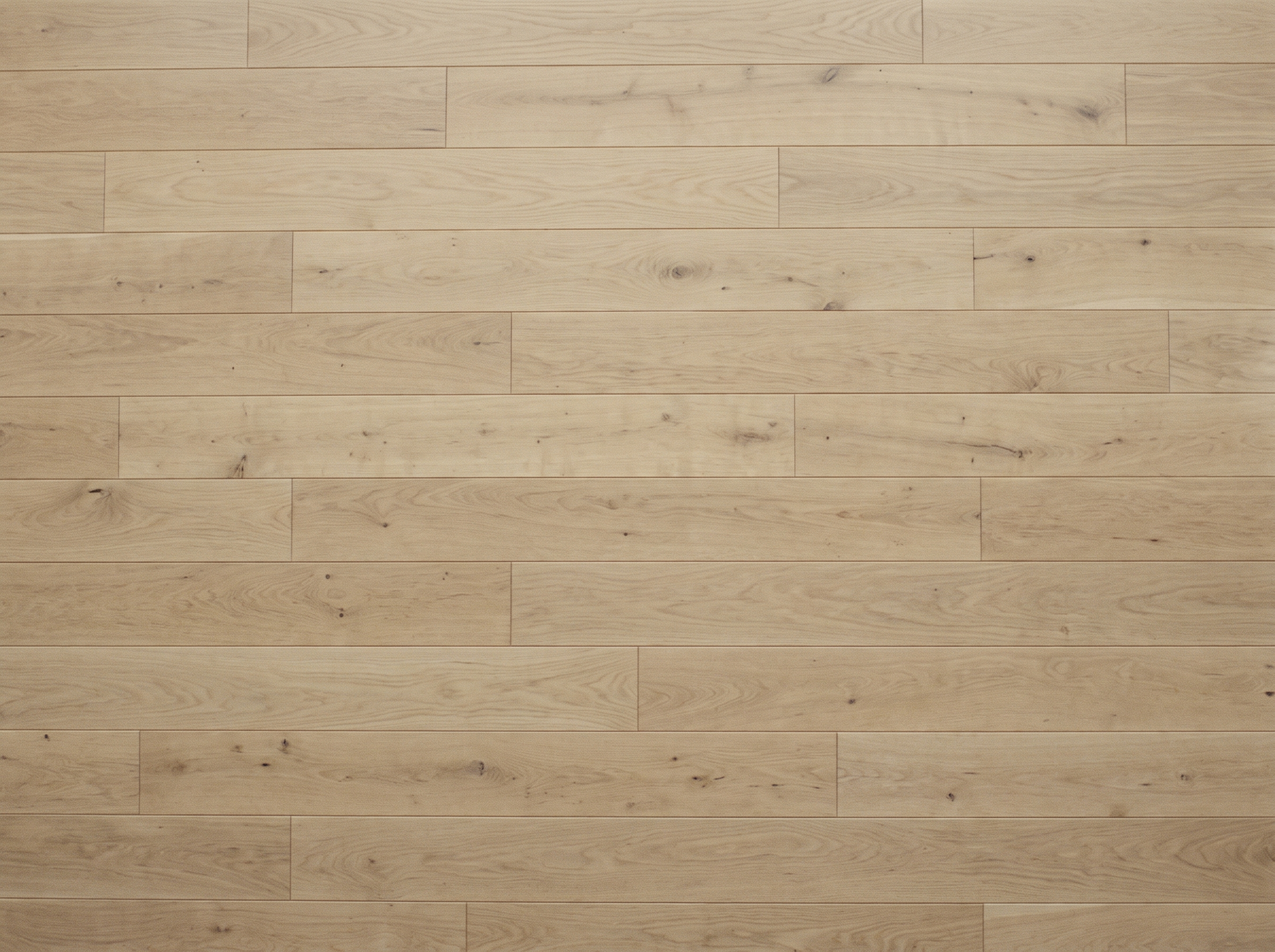
Stacked. Modern and graphic, and the least forgiving of a poor subfloor.
Which direction should the boards run?
For straight plank floors this is a real decision, and it changes how a room feels.
Running the boards along the longest wall makes a room feel longer and is usually the default. Running them toward the main window, so they follow the light, hides the joints better because the light travels along the boards rather than across them. In a narrow corridor, running them lengthways stretches it; running them across shortens it visually.
One practical point in apartments: try to keep the direction consistent through connected open-plan spaces. Changing direction at a doorway needs a threshold strip and always looks like a decision that was made halfway through.
What a pattern costs you in material and time
Nobody mentions this at the showroom, so it is worth knowing before you fall for a pattern.
Material. Every angled or short cut leaves an offcut that cannot be used. Straight plank wastes the least. Herringbone and basketweave waste more. Chevron wastes the most, because every single plank is cut at an angle at both ends.
Labour. A straight floor is fitted quickly. A patterned floor takes considerably longer, needs a precisely set starting line, and requires a fitter who has done that pattern before.
Subfloor. Every pattern here depends on a genuinely flat, dry, level subfloor. Patterns with aligned joints are the least tolerant of all. This is the part that is invisible when finished and decides everything.
So when you compare quotes, check the waste allowance each one has included. A cheaper quote with a thin allowance is not cheaper — it is a quote that runs short mid-floor.
Matching pattern to room
Small apartment or open plan — straight plank, ideally running along the longest wall
Entrance hall — herringbone or basketweave, where a pattern is seen properly
Long corridor — plank lengthways, or chevron if you want the direction emphasised
Formal living or dining room — herringbone, or Versailles panels in a large villa
Bedroom — straight plank, since most of the floor ends up under furniture anyway
Minimal contemporary interior — stacked, if the subfloor is good enough to take it
What to ask your flooring professional
Have you fitted this pattern before, and can I see one you have done?
What waste allowance is in the quote for this pattern?
How will you set the starting line, and where will the pattern centre?
Is the subfloor flat enough for this pattern, or does it need levelling first?
How will the pattern meet doorways, thresholds and other floor finishes?
What expansion gap are you leaving at the perimeter?
The last one matters everywhere. Wood moves, and a floor fitted tight to the walls has nowhere to go.
Frequently Asked Questions
What is the difference between herringbone and chevron?
Herringbone blocks have square-cut ends and overlap at right angles, so the zigzag looks stepped. Chevron planks are cut at an angle so their ends meet in a point, producing clean unbroken V shapes in straight rows. If one piece runs past the other it is herringbone; if they meet nose to nose it is chevron.
Which floor pattern is called fishbone?
Herringbone. The name comes from the resemblance to the bone structure of a fish, and it is the stepped zigzag made by rectangular blocks laid at right angles to one another.
Does a patterned floor need more material?
Yes. Angled and short cuts leave offcuts that cannot be reused, so patterned floors need a larger waste allowance than straight plank. Chevron needs the most, since every plank is cut at an angle at both ends. Always check what allowance a quote includes.
Which way should floorboards run?
Along the longest wall to make a room feel longer, or toward the main window so light travels along the boards and hides the joints. Keep the direction consistent across connected open-plan areas, since changing it at a doorway is always noticeable.
Is herringbone suitable for a small apartment?
It can work well, particularly in an entrance or a narrow room, because the outward pattern can make a space feel wider. Use a smaller block size in a small room, since oversized blocks in a tight space read as busy.
Choose the pattern, then the person who can lay it
A pattern is the cheapest way to make an ordinary timber look considered, and the most expensive thing to get wrong. Decide the look, then find someone who has laid it before and ask what allowance they have built in. Find and compare verified flooring professionals on Taamir, check their quality signals, and contact them directly.