Exterior Painting in Dubai: When to Do It and What to Ask For
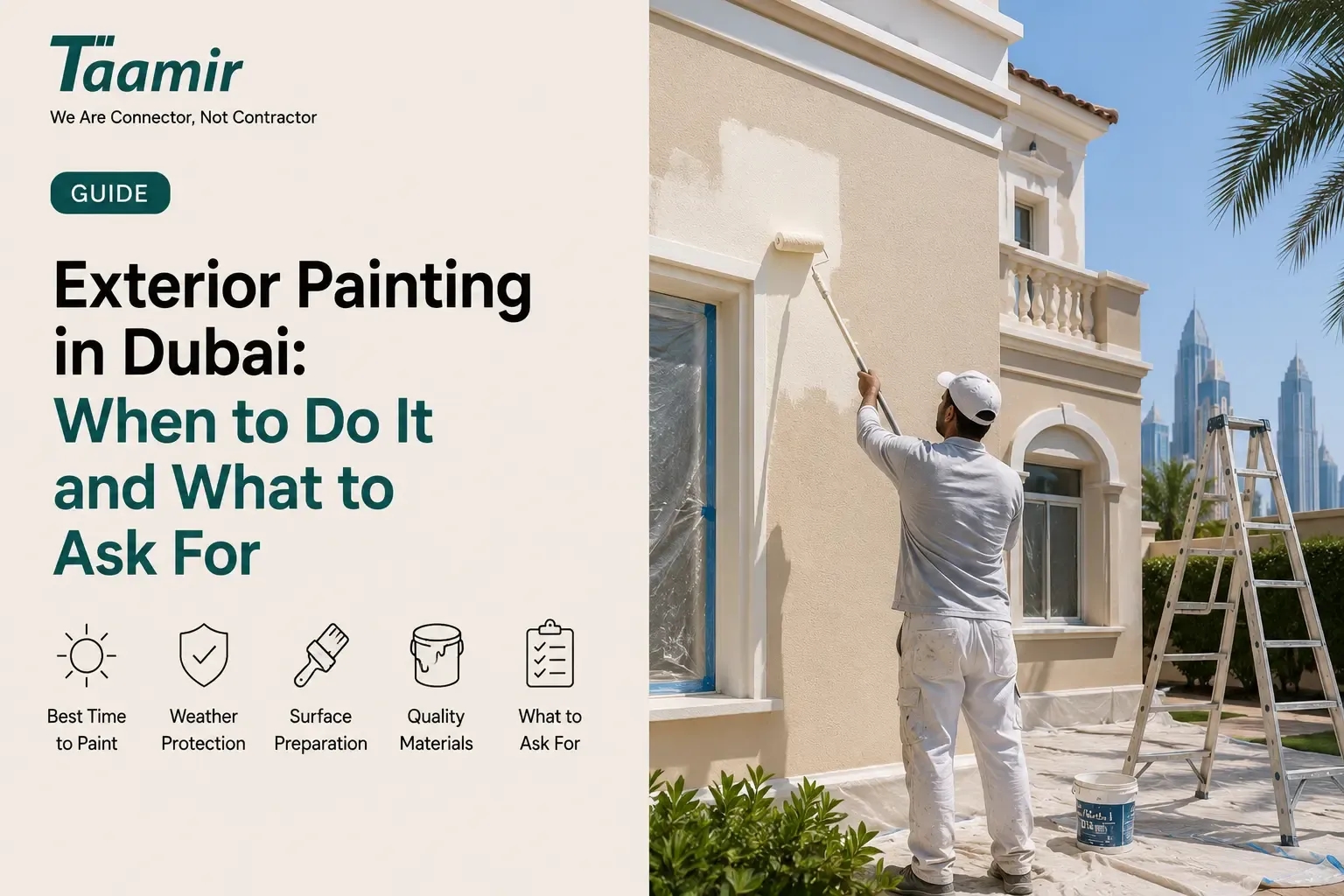
Exterior Painting in Dubai: When to Do It and What to Ask For
Painting the outside of a villa is a different job from painting a room, and the two things that decide the result are timing and preparation. Plan the work for the cooler months rather than the peak of summer, keep paint off walls in direct afternoon sun, use a proper exterior-grade product, and expect most of the effort to go into cleaning and repairing the surface before any colour goes on. If you also rent access equipment, use that window to sort everything else up high while you have it.
An exterior repaint is one of the biggest visual changes you can make to a home, and one of the easiest to get wrong. Outside walls take sun, dust and heat all year, so a product or a shortcut that would pass indoors will not survive out there. This guide covers when to do it, what a proper job involves, and what to check before you compare verified painting professionals on Taamir.
Why the outside is a different job
Indoors, a wall lives in stable, air-conditioned conditions. Outside, the same wall deals with strong sunlight, big temperature swings between day and night, dust that settles on every surface, and occasional heavy rain. That changes three things:
The product has to be made for it. Interior paint used outdoors will not last. Exterior-grade paint is built to handle sunlight and movement in the surface beneath it.
The surface is usually render or masonry, not smooth plasterboard. It needs different preparation and different primers.
Access matters. Anything above ground floor needs scaffolding or a platform, which is a real part of the job and a real part of the planning.
When to paint outside
Timing is the single easiest thing to get right, and it makes a visible difference. Paint needs to dry at a sensible pace. Too much heat on the surface and it dries on top before the layer underneath has set, which is how you get patchy finishes and poor adhesion. Very humid air slows drying in the other direction.
The National Center of Meteorology's climate reporting notes that maximum humidity in the UAE through August generally runs between 63 and 80 per cent, and that is alongside the hottest surface temperatures of the year. So the practical advice is simple:
Plan exterior work for the cooler months. Roughly October through April is the comfortable window, and it is also when the work goes faster because the crew can keep going through the day.
Follow the shade around the building. Even in a good month, a wall in direct afternoon sun is too hot to paint well. A good crew works the elevations in order, staying ahead of the sun rather than fighting it.
Start early in the day and stop before the hottest hours.
Book ahead. The cooler months are when everyone wants exterior work done, so the good crews fill up.
If you want it done this season, now is the time to get quotes rather than in October.
Preparation is most of the job
On an exterior repaint, the painting itself is the quick part. What takes the time — and what decides whether it still looks good in three years — is everything before it:
Washing down. Months of dust, and sometimes algae in shaded or damp spots, have to come off completely. Paint does not bond to dust.
Repairing cracks. Hairline cracks in render are normal movement. Wider cracks, or ones that keep reappearing in the same place, are worth understanding before they are filled and painted over.
Checking for damp. Staining, blistering, or paint lifting in one specific area usually means water is getting in from somewhere — a failed seal, a blocked outlet, or a membrane problem. That is a waterproofing job first, because paint over a damp wall fails quickly.
Making good the details. Window frames, sills, railings, gates and downpipes all need cleaning, sanding, and the right treatment. These are what people actually see up close.
Priming. Bare or repaired render, chalky old paint and glossy metalwork each need a different primer. If a quote does not mention priming, ask.
Masking and protecting windows, glass, paving and planting properly.
Choosing the right paint
A few things to raise with your contractor:
Exterior grade, not interior. This sounds obvious and it is still the most common shortcut.
A product suited to the surface. Render, concrete, timber and metalwork all want different products. One tin does not cover a whole villa.
Flexibility. Exterior surfaces move slightly with heat. Products designed for masonry are made to flex a little rather than crack.
Coverage and coats. Two coats is the normal minimum over a sound, similar-coloured surface. Big colour changes and bare repairs need more, and skimping here is visible within a year.
Colour on a villa
Colour behaves differently outside. Strong daylight lightens and flattens a shade, so a colour that looks soft on a card can read almost white across a whole elevation. Two habits help:
Test big, and test on the actual wall. Paint a large patch on the elevation you care about, and look at it in the morning, at midday and at sunset.
Lean lighter and warmer. Pale, warm neutrals sit comfortably in this light and show dust less than very dark or very cool colours.
One practical point before you commit: many communities have rules about exterior colours. If you live in a gated or master-planned community, check with your community management before ordering paint, because approval is usually needed for anything other than the existing scheme. It is a quick conversation and much easier before the work than after.
While the access is up
This is the tip that saves the most money. Once scaffolding or a platform is in place, everything up high becomes easy to reach. So it is worth looking at:
Cleaning or repainting soffits, fascias and railings.
Servicing or replacing outdoor light fittings.
Clearing roof outlets and gutters of dust.
Checking seals around upper windows.
Repainting gates and any exterior doors while brushes and access are already there.
Doing these together in one visit is far cheaper than bringing access back for each one separately.
What to ask before you book
What preparation is included — washing, crack repair, sanding, priming — and is it in the price or extra?
What products will you use on render, on woodwork and on metalwork?
How many coats, and how long between them?
How will you handle access, and is scaffolding included in the quote?
How will you work around the sun through the day?
What happens if you find damage once the walls are washed down?
How will you protect windows, paving and planting?
Is there a warranty, and what does it cover?
Those answers are also what makes two quotes genuinely comparable — a lower price with preparation left out is not actually cheaper.
Check who you are hiring
For a job this size it is worth taking a few minutes to confirm the company is properly licensed for the work before you commit.
How Taamir fits in
An exterior repaint is a large, visible job where the difference between crews shows up in the preparation you cannot see from the ground. On Taamir you can compare verified painting professionals side by side, And if you want a sense of the scope before speaking to anyone, the AI Cost Estimator gives you a scope of work and a price range in a few minutes.
Frequently Asked Questions
When is the best time to paint the outside of a villa in Dubai?
The cooler months, roughly October through April. Surfaces are not too hot to take paint properly, drying happens at a sensible pace, and crews can work through the day. Even then, a good team follows the shade around the building rather than painting walls in direct afternoon sun.
Can I use interior paint outside?
No. Exterior-grade products are made to handle strong sunlight and slight movement in the surface beneath them. Interior paint used outdoors fails quickly, and the repair costs more than using the right product would have.
How often does a villa exterior need repainting?
It depends on the product used, how well the surface was prepared and how exposed the elevations are. Rather than watching the calendar, watch the walls: chalky powder on your hand, fading, hairline cracking or paint lifting anywhere are the signs it is time.
How many coats of paint does an exterior need?
Two coats is the normal minimum over a sound surface in a similar colour. Bare render, repaired areas and big colour changes need more. If a quote is noticeably cheaper than others, the number of coats is one of the first things to check.
Do I need approval to change my villa's exterior colour?
In most gated and master-planned communities, yes — approval is usually needed for anything other than the existing scheme. Check with your community management before you order paint. It is a quick conversation, and far easier before the work than after.
Get it for the right season
Exterior painting rewards planning more than almost any other home job. Get the timing right, insist on the preparation, and it looks good for years. Find and compare verified painting professionals on Taamir, check their quality signals, and contact them directly — no commission, no hidden charges.